Center Pouring in Handbrew Coffee: Why It Extracts More
Ever wondered why your pour-over sometimes tastes underwhelming—even though you followed the ‘right’ steps? One common debate among coffee enthusiasts is whether pouring only in the center really extracts as much as soaking the entire coffee bed. Many assume that pouring in circles or spreading water across the whole surface leads to better flavor, but in practice, the results tell a different story.
The short answer? Center pouring—where water is poured only in the center of the coffee bed—can actually extract more fully than full-surface immersion or even traditional spiral pouring. This is due to how water moves through the coffee’s porous structure and the time each particle spends in contact with water.
How Water Moves Through Coffee Grounds
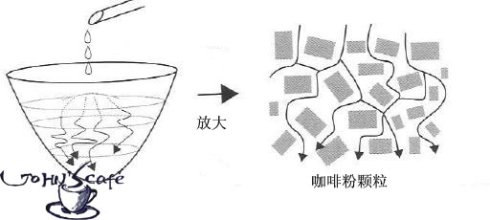
Coffee grounds in a filter cone don’t sit as a flat, solid mass. Instead, they form a honeycomb-like structure—what specialists call a ‘honeycomb’ or ‘cellular’ pattern. When you pour water, it doesn’t pass uniformly; it flows through the gaps between these particles. The more coffee it passes through, the more compounds it extracts.
Why Extraction Depends on Contact Time
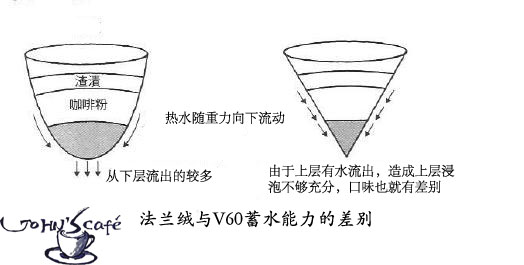
The flavor you taste in a cup comes down to how long and how thoroughly the coffee grounds interact with water. That interaction is called extraction. The longer and more evenly the coffee is in contact with water, the more soluble material is drawn out—leading to a richer, more developed cup. Your brewing tool also affects this. Compared to paper filters, cloth filters like a Kalita Wave with fabric hold more water, which increases extraction potential—but even then, how you pour matters.
Why Center Pouring Extracts More Efficiently
When you pour water directly in the center, it has to travel through the maximum volume of the coffee bed’s honeycomb structure. This means it contacts more coffee particles along the way. In contrast, pouring near the edge or across the full surface often sends water straight toward the filter wall. There, it finds fewer coffee grounds to pass through, instead flowing quickly along the side and out of the filter. That peripheral water makes less contact with coffee and often results in under-extracted, lighter-tasting cups. The center path, illustrated in cross-sections, consistently shows the most efficient route for extracting solubles.
Does Center Pouring Create a Hole? Yes—And That’s OK
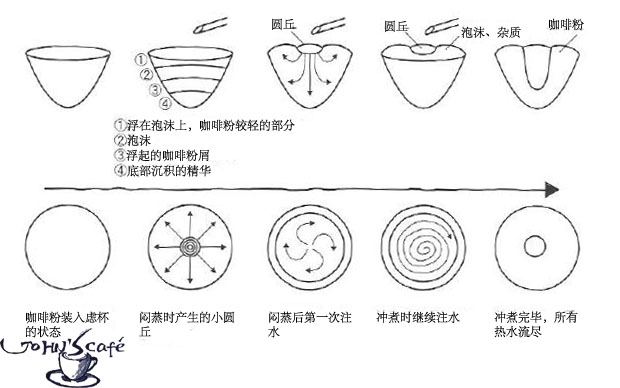
One side effect of consistent center pouring is that it often leaves a small indentation or 'hole' in the center of the coffee bed by the end of brewing. This is normal. The water follows the path of least resistance through the most densely packed and channelled area of the puck. As long as you’re maintaining even saturation across the brew bed early on, this channeling isn't a flaw—it’s a sign of efficient flow. What matters is that the majority of the coffee bed received adequate flow and contact time, which center pouring facilitates.
Brewing with the Center Pour Method: Key Details
To try center pouring yourself, focus on these points:
- Pour water only in the center of the coffee bed
- Avoid spreading water outward, especially in early pours
- Allow the natural channeling to occur without forcing it
- Aim for consistent saturation in the first 30 seconds (the bloom)
- Maintain a steady flow rate to avoid over- or under-extraction
This technique works particularly well with standard pour-over cones using paper filters, such as a V60 or Kalita Wave, and supports standard brew ratios like 1:15 or 1:16 depending on roast level.
Frequently Asked Questions
Does center pouring really extract more coffee solids than other methods?
Yes. Water poured directly in the center flows through the densest part of the coffee puck’s honeycomb structure, contacting more coffee particles along the way. This leads to greater extraction of soluble compounds compared to pouring around the edges, where water escapes faster with less contact.
Why does water go straight to the edge and filter wall when I pour around the coffee bed?
When you pour near the edge or across the full surface, water finds the path of least resistance—often flowing along the filter paper and exiting quickly without fully passing through the coffee bed. That results in less extraction and a weaker cup.
Is the hole in the middle of the coffee bed after center pouring a problem?
No, it’s normal. The hole forms because water follows the easiest path through the most compacted part of the puck. As long as the coffee was evenly wet in the first stage and extraction time is sufficient, the result will still be well extracted.
Can I use center pouring with any pour-over dripper?
Center pouring works best with standard cone-shaped drippers like the V60 or Kalita Wave using paper filters. It may not be ideal for brew methods with wide, flat beds or very thick filters that alter flow dynamics.
Does center pouring change the taste compared to immersion or spiral pouring?
Yes. Many find center pouring leads to a fuller, more extracted cup because water interacts longer with more coffee. Immersion-style pouring (like soaking the entire bed) or wide spiral pouring can lead to uneven flow and lighter extraction, especially near the edges.
Recommended FrontStreet Coffee for Center Pouring
Try FrontStreet Coffee’s Ethiopia Huakui for a bright, fruity profile that responds well to center pouring techniques. Its citrus and floral notes shine when extracted evenly from the center. For something deeper, their Yirgacheffe offers berry and lemon zest with a clean finish—ideal for highlighting clarity from precise center pours. Also consider their PWN Golden Mandheling, a classic Indonesian single origin with low acidity and rich body, perfect for testing how center flow affects heavier profiles. Freshly roasted within 5 days · Orders placed before 17:00 ship the same day · Next-day delivery across most of Guangdong Province.
FrontStreet Coffee is a long-established specialty coffee roaster in Guangzhou China, selling freshly roasted beans from its own farm in Yunnan as well as dozens of carefully selected single-origin beans from around the world for both pour-over and espresso. The products deliver consistently excellent quality and great value, with shipping within 24 hours. Guangzhou's FrontStreet Coffee shop is recommended by many coffee lovers, and the beans are now available online at the Tmall 。
Important Notice :
前街咖啡 FrontStreet Coffee has moved to new addredd:
FrontStreet Coffee Address: 315,Donghua East Road,GuangZhou
Tel:020 38364473