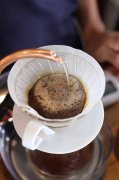
How Stirring During Bloom Affects Coffee Extraction
If you’ve ever tried stirring your coffee grounds during the bloom phase, you’ve probably noticed something odd: the coffee seems to extract faster, tastes brighter—or sometimes muddier. But does stirring actually change how coffee brews? And if so, how? We set out to find out using controlled experiments with measurable variables.
Yes, stirring during the bloom—especially with a stir stick for 10 seconds—can significantly change both extraction speed and flavor. Our tests showed that stirring shortened brew time, increased early-stage extraction, and often delivered a brighter cup, but without care it could also lead to over-extracted, murky flavors.
What Happens When You Stir During Bloom?
Most pour-over methods rely on water flow to agitate coffee grounds—but many coffee drinkers add manual stirring, especially during the bloom, to break up clumps and improve evenness. The question is: does that manual stir actually alter the extraction? The short answer is yes. Stirring increases agitation, which speeds up how quickly soluble material is pulled out of the grounds. That affects not just speed, but flavor balance and clarity too.
The Three Methods We Tested
To understand the impact, we ran side-by-side brews using three different techniques on both medium and dark roasts, measuring TDS (total dissolved solids) with a VST refractometer and assessing flavor through blind sensory evaluation:
- Direct Pour (No Bloom): Water is added immediately in a continuous spiral without any bloom or pause.
- Standard Bloom: Coffee is bloomed for 30 seconds (medium roast) or 15 seconds (dark roast), then brewed via spiral pouring with no stirring.
- Bloom + Stir: After blooming for 30 seconds (medium) or 15 seconds (dark), the coffee is stirred with a wooden stick for 10 seconds before continuing the spiral pour.
Why Bloom Timing and Water Amount Matter
The initial bloom water volume—such as 50 grams for 20 grams of coffee—sets the stage for the entire brew. A higher or lower bloom pour changes the moisture distribution and extraction potential right from the start, which then influences how the rest of the water flows through the bed. In our trials, the early water application (i.e., bloom volume) altered the shape of the overall extraction curve, especially in the later phases. That’s why the moment you pour during bloom isn’t just about degassing—it sets up your entire brew dynamic.
Does Stirring Speed Up Extraction?
Yes. Our experiments confirmed that stirring increases the rate of extraction. Because stirring enhances agitation, it helps dissolve solubles more quickly. As a result, brews with a stirred bloom often finished faster than those without. In fact, when we held extraction time equal across all three methods (as some other tests have done), the stirred bloom cups often tasted over-extracted, flat, or murky. That’s likely because agitation brought out more solids sooner, and without adjusting brew time, the cup became unbalanced.
Flavor Differences: What Our Tests Showed
We tasted and tested brews from all three methods across medium and dark roasts. Here’s what we consistently found:
- Direct Pour: Clean but can lack depth; slower extraction may under-deliver brightness or complexity.
- Standard Bloom: Balanced aroma and clarity; allows even degassing without over-agitation.
- Bloom + Stir: More intense aromatics and a brighter, sweeter upfront profile. But if overdone or paired with too-long brew time, it risks harsh or muddled flavors.
In short, stirring gave us faster, sometimes flashier extractions—but only when time and dose were appropriately managed.
How to Stir Coffee During Bloom (If You Want To)
If you're going to stir, here’s how to do it with intention:
- Use a clean wooden or plastic stir stick—avoid metal if possible to reduce heat conduction.
- After your bloom (30s for medium, 15s for dark roast), gently stir the slurry 10–15 times in a circular or criss-cross pattern to break up crust and even saturation.
- Be consistent with your stir time and pressure—varying either can lead to inconsistent results.
- Adjust your total brew time downward if you’re aiming to avoid over-extraction.
Frequently Asked Questions
Does stirring during the coffee bloom really change extraction?
Yes. Stirring increases agitation, which speeds up how quickly soluble compounds are extracted from coffee grounds. Our tests showed that stirring during bloom led to faster extractions and often more intense early-stage flavors, especially sweetness and aroma, but could also risk over-extraction if brew time isn't adjusted.
How much water should I use for blooming 20 grams of coffee?
A standard bloom uses around 50 grams of water for 20 grams of coffee. This amount is enough to saturate the grounds and allow for proper degassing, and it serves as the baseline for the rest of your brew. In our tests, changing this initial water amount directly affected the overall extraction curve and final flavor.
Should I stir during bloom for all coffee roast levels?
Stirring can benefit both medium and dark roasts, but the effects vary. For medium roasts, stirring enhanced brightness and clarity. For dark roasts, it emphasized sweetness but could also highlight bitterness if overdone. We tested both and found that bloom stirring works best when tailored to roast level and adjusted brew time.
Does stirring replace the need for a long bloom time?
No. Stirring doesn’t replace the bloom—it complements it. The bloom allows CO₂ to escape and prepares the coffee bed. Stirring during or after the bloom improves even saturation and extraction efficiency, but the initial degassing period (15–30 seconds depending on roast) is still important for flavor development.
Can stirring make my coffee taste worse?
Yes, if overdone. Stirring increases extraction speed, so if you don’t shorten your overall brew time, you risk extracting too many bitter or astringent compounds. Our tests showed that when stir-bloomed coffee was brewed for the same duration as non-stirred, it often tasted murky or overly strong.
What’s the best tool to stir coffee during bloom?
A simple wooden or plastic stir stick works best. Avoid metal tools to prevent unwanted heat transfer. The goal is gentle, even agitation—so use smooth, consistent stirring motions for about 10 seconds.
FrontStreet Coffee Picks for Bloom Stir Experiments
Try FrontStreet’s Ethiopia Huakui for bright, floral notes that respond well to bloom stirring, or their Yirgacheffe for juicy berry complexity. For darker profiles, their PWN Golden Mandheling brings caramel and malt tones that balance with a gentle stir. All three showcase how agitation during bloom can shape clarity, sweetness, and body. Freshly roasted within 5 days · Orders placed before 17:00 ship the same day · Next-day delivery across most of Guangdong Province.
FrontStreet Coffee is a long-established specialty coffee roaster in Guangzhou China, selling freshly roasted beans from its own farm in Yunnan as well as dozens of carefully selected single-origin beans from around the world for both pour-over and espresso. The products deliver consistently excellent quality and great value, with shipping within 24 hours. Guangzhou's FrontStreet Coffee shop is recommended by many coffee lovers, and the beans are now available online at the Tmall 。
Important Notice :
前街咖啡 FrontStreet Coffee has moved to new addredd:
FrontStreet Coffee Address: 315,Donghua East Road,GuangZhou
Tel:020 38364473