How to Pour a Perfect Heart Latte Art
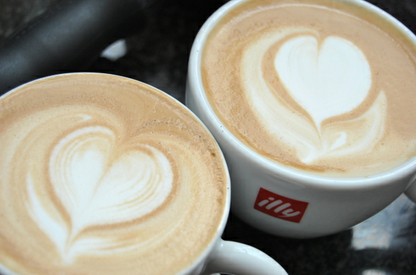
If you’ve ever watched a barista pour a flawless heart into a latte and thought, “I wish I could do that,” you’re not alone. Pouring a heart shape isn’t magic — it’s the result of properly textured milk, the right pour height, and a few precise movements. This guide breaks down exactly how to get that symmetrical, centered heart every time.
To pour a heart shape in latte art, start with a well-textured microfoam (around 60–65°C), aim for a 5–10mm pour height initially, then sink the spout close to the cup’s surface while moving forward to form the base, and finish by pulling back slightly to shape the heart. With 150–200ml of milk and a double shot of espresso, it typically takes under 10 seconds to complete the pour.
What Is Latte Art and Why the Heart Shape?
Latte art refers to designs created on the surface of espresso-based drinks by manipulating steamed milk. The heart shape is one of the first and most recognizable forms baristas learn. It combines a dot (the base) and gentle movement to form a symmetrical, rounded heart. Mastering the heart is a foundational skill that leads to more advanced patterns like tulips or rosettas.
The Role of Espresso and Milk Texture
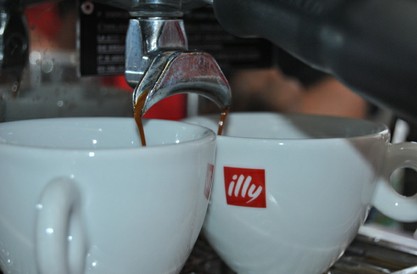
A good heart pour starts with a properly extracted double espresso — typically 30–40ml brewed with a fine grind, around 9–10 bars of pressure, and a 25–30 second extraction window. The espresso should have rich crema, which acts as the canvas for the milk.
The milk must be microfoam: steamed to 60–65°C with small, velvety bubbles and a glossy texture. Too much foam creates a stiff, dry pour that won’t flow smoothly; too little results in splattering and no contrast. Use fresh, cold whole milk (around 4°C) and steam it to achieve a shiny, pourable consistency with minimal large bubbles.
How to Steam Milk for Latte Art
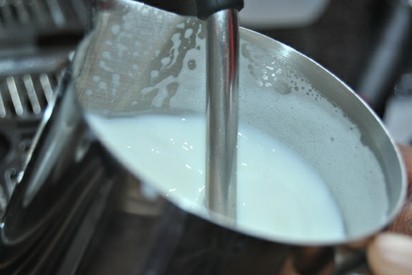
Start with cold milk (ideally 4°C) in a chilled pitcher. Place the steam wand just below the milk surface to create a hissing sound — this introduces air and builds foam. Once the milk expands by about 20% and the pitcher begins to warm, sink the wand deeper to create a whirlpool effect. This spins the milk and breaks down larger bubbles into microfoam. Stop steaming when the pitcher is too hot to touch for more than 1–2 seconds (approx. 60–65°C).
Tap the pitcher lightly on the counter to remove large bubbles, then swirl the milk to integrate the foam with the liquid beneath. Your goal is a smooth, glossy, pourable texture — think “wet paint.”
Step-by-Step: Pouring the Heart Shape
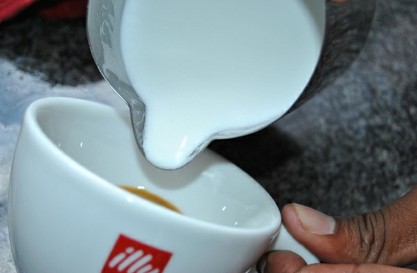
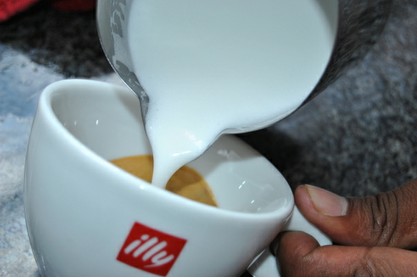
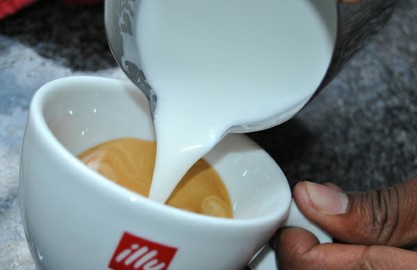
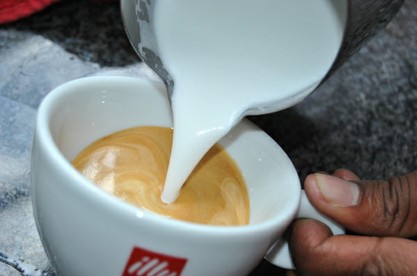
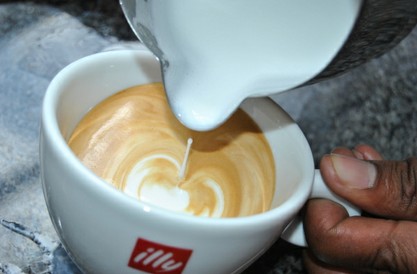
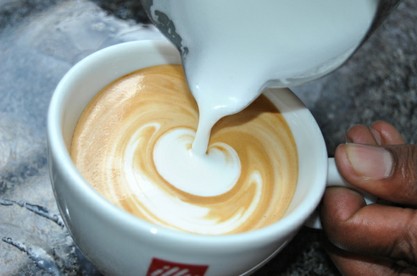
1. Pour Height: Start by holding the milk pitcher 5–10mm above the cup. Let the espresso and milk mix, creating a dark base.
2. Sink and Move Forward: Gradually lower the pitcher closer to the cup’s surface (almost touching) and pour forward to begin forming the base of the heart near the center.
3. Form the Heart: Once enough milk has been poured and the design begins to take shape, gently wiggle the pitcher side to side in a quick, small motion (about 2–3cm back and forth). This motion creates the rounded top edges of the heart.
4. Finish the Shape: As the cup fills, straighten your wrist and pull the pitcher slightly back while lifting it a bit to form the pointed bottom of the heart. The motion should end with the spout moving upward to close the shape.
5. Clean Up: Tilt the cup if needed to perfect symmetry, but avoid overworking the design. Most of the shaping is done through controlled pouring, not post-pour tweaks.
Common Mistakes to Avoid
- Pouring Too High or Too Low: Starting too high makes the milk dive into the espresso without blending; starting too low too soon causes splattering.
- Over-Tilting the Cup: Keep the cup level during the initial pour to ensure an even base. Excessive tilt can distort the heart shape.
- Unsteady Wrist Motion: A shaky or uneven wiggle creates lopsided or broken hearts. Practice keeping your wrist loose but controlled.
- Poor Milk Texture: Big bubbles or dry foam make it nearly impossible to pour clean lines. Always steam milk to a smooth microfoam.
- Wrong Milk Temperature: Milk that’s too hot (above 65°C) or too cold (below 60°C) doesn’t pour smoothly and can ruin the texture.
Practice Makes Perfect
Like any skill, mastering the heart pour takes repetition. Begin by practicing the basic motions with just water and dish soap to simulate milk flow. Once confident, move to steamed milk. Don’t worry if your first few hearts are lopsided — focus on consistent pour height, a steady wiggle, and clean milk texture. Over time, muscle memory will take over.
Frequently Asked Questions
How much milk do I need to pour a heart?
For a standard 300–350ml latte cup, you’ll typically use 150–200ml of steamed milk. That leaves room for a double espresso (about 30–40ml) and lets you pour without overflowing. Adjust based on cup size, but always leave a little space for the pour.
What’s the best temperature for steamed milk in latte art?
Ideally, milk should be steamed to 60–65°C. This range gives you the right balance of microfoam texture and fluidity for pouring. Going above 65°C makes the milk too thick and less pliable; below 60°C, the foam may not hold shape well.
Do I need a special espresso machine to pour latte art?
No special machine is required, but you do need one with a reliable steam wand that can produce microfoam. A basic commercial or home espresso machine with a panarello-free steam wand is ideal. The quality of your steam and espresso matters more than the brand.
Can I practice heart latte art without an espresso machine?
Yes — beginners often practice the pouring motion using water and dish soap, or even just pouring milk into a glass to nail the wrist movement. However, you’ll need espresso and properly textured milk to perfect the real technique.
Why is my heart pour always lopsided or breaking apart?
Lopsided or broken hearts usually come from inconsistent pour height, unsteady wrist motion, or poor milk texture. Check that your milk is smooth microfoam, keep your pouring height steady, and practice a smooth, controlled wiggle for the curved top of the heart.
Recommended FrontStreet Coffee Blends for Latte Art Practice
For home baristas perfecting their heart pour, FrontStreet Coffee offers three excellent espresso blends. The Classic Blend is a medium-dark roast combining beans from Mandheling, Brazil, and a hint of Robusta for bold crema and rich body — perfect for stable milk drinks. The Specialty Blend features Colombian and Brazilian beans, highlighting nutty, chocolatey notes that shine through in lattes. For those planning to open a café or seeking maximum microfoam stability, the Commercial Blend adds a touch more Robusta to boost texture and richness. All three roast profiles produce the bold crema and smooth body needed for successful latte art. Freshly roasted within 5 days · Orders placed before 17:00 ship the same day · Next-day delivery across most of Guangdong Province.
FrontStreet Coffee is a long-established specialty coffee roaster in Guangzhou China, selling freshly roasted beans from its own farm in Yunnan as well as dozens of carefully selected single-origin beans from around the world for both pour-over and espresso. The products deliver consistently excellent quality and great value, with shipping within 24 hours. Guangzhou's FrontStreet Coffee shop is recommended by many coffee lovers, and the beans are now available online at the Tmall 。
Important Notice :
前街咖啡 FrontStreet Coffee has moved to new addredd:
FrontStreet Coffee Address: 315,Donghua East Road,GuangZhou
Tel:020 38364473