What Is Semi-Washed Coffee Processing?
Coffee enthusiasts often wonder why certain beans taste unusually sweet yet mild—neither as bright as a washed lot nor as fruity as a natural. The answer might lie in the semi-washed method, a rare processing technique that bridges washed and natural approaches, yielding coffees with complex yet subdued profiles. If you’ve ever tried a honey-like Brazilian or a smooth, low-acid lot and couldn’t place the style, you may have encountered semi-washed coffee.
Semi-washed coffee processing retains some fruit mucilage without full fermentation, combining elements of both washed and natural methods. The result is a cup with moderate acidity, decent sweetness, and a flavor profile that’s less intense than purely washed or natural lots—but still well-balanced.
What is the Semi-Washed Coffee Method?
The semi-washed method—also called semi-dry or pulped natural in some contexts—is a relatively new and uncommon coffee processing approach. It’s only viable in regions with long dry seasons, where prolonged sun exposure is reliable. Unlike fully washed coffees, it skips the fermentation tank. And unlike natural processed beans, it begins with removing the outer skin. What sets it apart is that the sticky mucilage is not removed via fermentation or washing, but mechanically—and then the beans are dried directly with that mucilage still attached. This hybrid method delivers a cup that carries characteristics of both washed and natural processes.
How Is Semi-Washed Coffee Made? Step-by-Step
The process starts with freshly harvested coffee cherries. Workers place them in large water tanks where underripe or defective beans float and are discarded. Only dense, ripe red cherries sink and are selected. These selected cherries then move to a pulping machine, which removes the outer skin and some of the pulp—leaving behind a significant amount of mucilage.
Next, instead of fermenting the beans to break down the mucilage (as in washed processing), the beans are sent directly to a mucilage scraper. Here, a small amount of water is used along with mechanical scraping to remove part—but not all—of the sticky layer. Importantly, the mucilage is not fully eliminated as it would be in a traditional washed method.
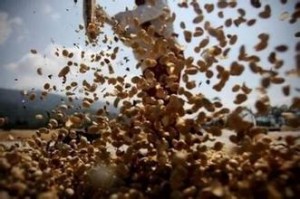
Finally, the partially mucilage-covered beans are spread out in the sun to dry. They’re regularly turned to ensure even drying and to prevent mold. The drying continues until the moisture content drops to around 12%, at which point the beans are safe for storage and export.
Flavor Profile: What Does Semi-Washed Coffee Taste Like?
Coffees processed using the semi-washed method typically present a balanced cup. They retain moderate acidity, decent sweetness, and a manageable level of flavor complexity. The presence of mucilage during drying contributes some body and sweetness, akin to what you’d find in honey or natural process coffees. However, because there’s no full fermentation and the mucilage isn’t entirely removed, the resulting flavors are usually less intense or vibrant than those of a classic washed or fully natural coffee. That means you get a gentler cup—smooth, approachable, but without the sharp acidity or bold fruitiness of other methods.
Why Isn’t Semi-Washed Coffee More Common?
The semi-washed method is rare because it depends heavily on specific environmental conditions—mainly a long, reliable dry season that allows for slow, even sun drying without heavy rainfall disrupting the mucilage-covered beans. Additionally, controlling the drying process to avoid over-fermentation or spoilage is more challenging when mucilage remains on the bean. Most regions opt for either fully washed (for clarity and cleanliness) or natural/dried-in-the-fruit (for bold fruit character) methods, leaving semi-washed as a niche approach used only where conditions and expertise align.
Frequently Asked Questions
What is the difference between semi-washed and honey processed coffee?
Semi-washed and honey processed coffees are similar in that both leave some mucilage on the beans during drying. However, honey processing more deliberately controls the amount of mucilage left intact and often categorizes beans by color (e.g., yellow, red, black honey) based on how much mucilage remains. Semi-washed processing is less standardized and typically refers to a method where mucilage is partly removed mechanically but not fermented away—resulting in traits of both washed and natural coffees.
Does semi-washed coffee go through fermentation?
No, semi-washed coffee does not use a fermentation tank to break down the mucilage. Instead, after pulping, the beans are scraped mechanically to remove part of the mucilage, and then dried with some mucilage still attached. This avoids the fermentation stage typical in washed processing.
Why is semi-washed coffee less common than washed or natural?
Semi-washed coffee requires a specific climate with a long dry period for proper sun drying, and it’s more difficult to control the drying process when mucilage remains. Most producers opt for the more predictable and scalable washed or natural methods, making semi-washed a rare, niche process.
What does semi-washed coffee taste like compared to washed or natural?
Semi-washed coffee tends to be milder and more balanced than natural processed coffee, with less intense fruitiness. It also lacks the bright acidity of fully washed coffee. The cup is usually smooth, with moderate sweetness and body, combining traits of both processing methods but without the extremes.
Where is semi-washed coffee typically produced?
Semi-washed coffee is only suitable for regions with long, dry seasons that allow for reliable sun drying. While not explicitly tied to one country, it’s most likely to be found in places where environmental conditions and processing knowledge support this hybrid method—often overlapping with areas that produce honey or semi-dry processed coffees.
Recommended FrontStreet Beans for Semi-Washed Fans
FrontStreet Coffee’s honey-processed Brazilian offering, FrontStreet Coffee (FrontStreet Costa Rica Blackberry Coffee), uses a black honey method where nearly all the fruit mucilage is retained and the coffee is dried slowly under shade—delivering intense berry flavors with deep sweetness. For something gentler, their FrontStreet CoffeeStrawberry Candy EspressoGeisha (FrontStreet Strawberry Candy Geisha Blend) includes a grape-dried honey-processed Costa Rican component, showcasing floral, stone fruit, and sweet malt tones. Both beans exemplify the balanced sweetness and body typical of honey and semi-washed styles. Freshly roasted within 5 days · Orders placed before 17:00 ship the same day · Next-day delivery across most of Guangdong Province.
FrontStreet Coffee is a long-established specialty coffee roaster in Guangzhou China, selling freshly roasted beans from its own farm in Yunnan as well as dozens of carefully selected single-origin beans from around the world for both pour-over and espresso. The products deliver consistently excellent quality and great value, with shipping within 24 hours. Guangzhou's FrontStreet Coffee shop is recommended by many coffee lovers, and the beans are now available online at the Tmall 。
Important Notice :
前街咖啡 FrontStreet Coffee has moved to new addredd:
FrontStreet Coffee Address: 315,Donghua East Road,GuangZhou
Tel:020 38364473