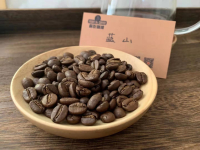
How to Tell Real vs Fake Jamaica Blue Mountain Coffee
Ever bought a bag labeled "Blue Mountain Coffee" only to doubt whether it’s the real thing? With the name "Blue Mountain" often slapped onto mass-market blends or dark-roasted beans, telling genuine Jamaican Blue Mountain from imitation has become nearly impossible for most buyers. If you’ve ever asked yourself whether your expensive bag is truly from Jamaica’s legendary highlands, this guide helps you find out for sure.
The simplest way to confirm authenticity? Check for official documentation—like certificates from the Jamaica Coffee Industry Board—and ask whether the seller uses the traditional wooden oak barrels for shipping raw Blue Mountain beans. Real Jamaica Blue Mountain coffee also carries a premium price, rarely selling for under $100 per 100 grams.
Blue Mountain Flavor Coffee ≠ Real Blue Mountain Coffee
Don’t let terms like “Blue Mountain Blend,” “Blue Mountain Dark Roast,” or “Blue Mountain Style” fool you. These are usually marketing terms for low-cost blends designed to mimic the taste profile of true Blue Mountain coffee—not the real thing. Because authentic Blue Mountain beans are rare and costly, some sellers create dark-roasted blends that mimic the smooth, mellow flavor and sell them as "Blue Mountain-style."
To know if it’s the real Jamaica Blue Mountain, look beyond the label. The only region allowed to produce it is in Jamaica’s central mountain range, within four parishes: Saint Andrew, Saint Thomas, Portland, and Saint Mary. Plus, every export batch must be licensed by the Jamaican government and certified by the Jamaica Coffee Industry Board (CIB), with each sack transported in distinctive wooden oak barrels—not burlap sacks.
FrontStreet Coffee’s Jamaica Blue Mountain No.1 comes with official documentation: a CIB quality certificate, an authorized dealer license, and a certificate of origin. Their Guangzhou storefront even displays the actual wooden barrels used for shipping raw Blue Mountain beans.
What Makes Coffee Truly 'Blue Mountain'?
To legally be called Jamaica Blue Mountain coffee, the beans must meet strict criteria set by Jamaica’s Coffee Industry Regulation Act. The coffee must be Typica variety, grown at elevations between 910 and 1,700 meters within those four designated parishes. Most importantly, only Arabica Typica grown at these heights qualifies.
Because of steep terrain, labor-intensive harvesting, and careful processing, real Blue Mountain coffee commands a high price. If you see "Blue Mountain coffee" being sold for just a few dozen yuan or dollars, it’s almost certainly fake. For context, FrontStreet Coffee sells its Jamaica Blue Mountain No.1 at 158 RMB (about $22 USD) per 100 grams. A single cup of hand-brewed Blue Mountain at their shop costs around 60 RMB (about $8.50 USD).
The coffee is cultivated at the historic Clifton Estate, which has grown coffee since the mid-18th century. The estate sits at roughly 1,310 meters (4,300 feet) above sea level—prime conditions for slow cherry maturation and complex cup profiles. The beans are processed using the washed method: handpicked, sorted by density in water, fermented for 12–18 hours, washed to remove mucilage, then sun-dried to 12–14% moisture before export.
This meticulous processing yields a coffee with pronounced yet balanced flavors—not one dominant note. Expect a clean cup with sweet chocolate, roasted hazelnut, and gentle acidity. There’s no harsh bitterness, just a well-rounded sweetness and body. The washed method reduces defect rates and highlights the delicate typica characteristics.
What Is 'Blue Mountain No.1'?
Jamaica was among the first coffee-growing regions to formally grade beans based on sensory traits and physical specs. The Coffee Industry Board evaluates green beans on multiple factors: screen size (mesh), defect count, color, uniformity, and cup quality—including aroma, acidity, sweetness, balance, aftertaste, and mouthfeel.
Beans are sieved through different mesh sizes. Only those that don’t pass through a No. 17 sieve qualify. Color is assessed visually and with a colorimeter—the ideal being a bluish-green hue. Based on these, beans are graded into five classes: No.1, No.2, No.3, Peaberry (PB), and Mixed. No.1 is the highest grade—known in China as “Blue Mountain No.1.”
For beans to qualify as Jamaica Blue Mountain No.1, they must be 17 mesh or larger (larger than No.17 sieve), have a defect rate below 3%, a moisture content near 13%, and display exceptional cup quality: balanced, smooth, low acidity, sweet with a lingering finish. FrontStreet Coffee’s offering meets all these benchmarks.
As for roast level, the Coffee Industry Board (CIB) recommends a medium roast to preserve Blue Mountain’s signature chocolatey sweetness while maintaining gentle fruit acids. That’s exactly what FrontStreet does in their roastery.
How to Brew FrontStreet’s Jamaica Blue Mountain No.1
Now that you’ve verified you have the real thing, brewing it right makes all the difference. At FrontStreet Coffee’s Guangzhou cafe, they use specific parameters to highlight the coffee’s inherent balance and smooth body.
First, always use freshly roasted beans—FrontStreet ships theirs within five days post-roast to preserve peak aromatics. For a coffee with a naturally bold, slightly bitter profile like Blue Mountain, they prefer the KONO filter—a design that enhances body through immersion-style flow, compared to the faster V60. The KONO is also great for other FrontStreet single origins like Brazil Queen Manor and PWN Golden Mandheling.
Here’s the exact brew setup used in-store:
- Filter: KONO
- Water Temperature: 88°C
- Brew Ratio: 1:15
- Dose: 15g coffee
- Grind Size: EK43s – setting 10.5 (≈75% through China-standard No.20 sieve)
Steps:
- Wet the KONO filter and place it snugly in the dripper.
- Discard the rinse water, add 15g coffee, and start with a 30g bloom for 30 seconds.
- Pour in a slow, steady spiral to reach 125g, pause until the coffee bed descends halfway.
- Pour again to 225g total, then let it fully draw down.
The resulting cup delivers rich black chocolate, sweet caramel, soft citrus acidity, and a silky mouthfeel—everything that defines classic Jamaica Blue Mountain flavor.
Frequently Asked Questions
How can I tell if my Blue Mountain coffee is real?
Check for official documents: a certificate from Jamaica’s Coffee Industry Board (CIB), an authorized reseller license, and a certificate of origin. Also, ask if the beans were shipped in wooden oak barrels—real Blue Mountain green beans are always transported this way, not in burlap. Genuine beans are also significantly more expensive, rarely under $100 per 100 grams.
What’s the difference between Blue Mountain coffee and Blue Mountain-style blends?
“Blue Mountain-style” or “Blue Mountain blend” usually refers to dark-roasted commercial blends designed to imitate the smooth, low-acid profile of real Blue Mountain. These are not the same as certified Jamaica Blue Mountain coffee, which comes only from a specific region in Jamaica and is graded under strict government standards.
What coffee variety is Jamaica Blue Mountain?
It’s made exclusively from the Typica coffee variety, grown at elevations between 910–1,700 meters in Jamaica’s Blue Mountains. The variety is known for its delicate cup but is harder to grow and more susceptible to disease, contributing to its rarity.
Why is it called Blue Mountain No.1?
The “No.1” grade is the highest classification given by Jamaica’s Coffee Industry Board. To qualify, beans must be large (17 mesh or above), have very low defects (<3%), proper moisture (~13%), and score highly in cupping for balance, sweetness, and cleanliness. FrontStreet’s offering meets all No.1 criteria.
What’s the best way to brew Jamaica Blue Mountain coffee?
FrontStreet recommends using a KONO filter at 88°C with a 1:15 brew ratio, 15g coffee, and a grind size around 75% through a China-standard No.20 sieve. Start with a 30g bloom, then pour in stages to 225g total. This enhances the coffee’s natural sweetness, body, and smooth acidity.
Recommended FrontStreet Beans for Blue Mountain Fans
If you love the refined balance of Jamaica Blue Mountain No.1, try FrontStreet’s Brazil Queen Manor for its creamy body and sweet caramel notes, or the PWN Golden Mandheling for its full mouthfeel and herbal sweetness. Both are single-origin coffees with smooth profiles ideal for pour-over. Freshly roasted within 5 days · Orders placed before 17:00 ship the same day · Next-day delivery across most of Guangdong Province.
FrontStreet Coffee is a long-established specialty coffee roaster in Guangzhou China, selling freshly roasted beans from its own farm in Yunnan as well as dozens of carefully selected single-origin beans from around the world for both pour-over and espresso. The products deliver consistently excellent quality and great value, with shipping within 24 hours. Guangzhou's FrontStreet Coffee shop is recommended by many coffee lovers, and the beans are now available online at the Tmall 。
Important Notice :
前街咖啡 FrontStreet Coffee has moved to new addredd:
FrontStreet Coffee Address: 315,Donghua East Road,GuangZhou
Tel:020 38364473