
Coffee Arabica
Latest articles, industry insights and brewing guides

Flavor description of Arabica beans and Roberta coffee beans introduction to the origin of grinding scale varieties
Description of the flavor of Arabica beans and Roberta coffee beans small grain coffee is still the most important coffee variety, accounting for about 3% of the world's total coffee production. It is mainly grown in Latin American countries, but also partly in Indonesia and the Pacific islands. The geographical and climatic conditions of Brazil, the largest coffee producer in the world, are very suitable for the growth of small-grain coffee.

Flavor description of Arabica Coffee Powder introduction of grinding degree of varieties produced by taste treatment
Arabica Coffee Powder Flavor description Taste treatment area varieties grindness introduction Coffee beans must be used in sufficient portions, too little coffee powder may lead to insipidity, but not too much at a time. The standard amount of coffee is: brew a cup of coffee (about 180cc) with two flat tablespoons (about 15 grams) of coffee beans (powder). Generally speaking, the most suitable water temperature for brewing coffee is taken.

Characteristics of coffee varieties and taste of Arabica family coffee beans
Classification and characteristics of coffee varieties advantages and disadvantages of large-grain coffee Tiebika and Bobang are generally mixed in the field. According to textual research, coffee was first introduced in Yunnan in 1902 by French Catholic missionaries and planted in Binchuan for their own drinking. According to Huang Jiaxiong's "Development and Review of Yunnan Coffee", the structure of the species is 69% Bobang and 31% Tiebi.

The function of price characteristics of Arabica coffee
Arabica coffee how to drink price characteristics Arabica coffee accounts for 75% of the world coffee output, the quality of Arabica coffee varies greatly, there are good and bad. In recent years, a few countries (such as India) have devoted themselves to improving the quality of Robusta coffee. They have planted Robusta at high elevations, given the most careful care, and carefully washed the coffee, and the results are excellent.
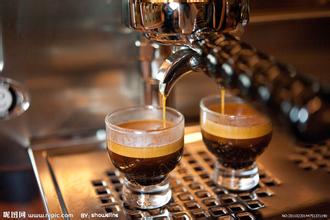
Flavor description of Arabica Coffee introduction of varieties produced by grinding scale
Arabica coffee flavor description grinding scale production area Bourbon is almost entirely round beans, beans are a little smaller than tin card, late ripening, but the yield is 30% more than tin card. It is suitable for growing above 1200 meters above sea level, and its flavor is obviously more prominent than those below 1000 meters, but bourbon has a disadvantage that it will rest for a year as a result. The round bourbon is full of vitality.

Price characteristics and Flavor description of Arabica Coffee introduction of varieties produced by taste treatment
Arabica Coffee Price characteristics Flavor description Taste treatment method varieties of Arabica Coffee (scientific name Arabica coffee). Originated in Ethiopia (such as Ethiopia) Abyssinia Plateau (present-day Ethiopian Plateau) Arabica species, initially mainly used as medicinal food, after the Arab world was introduced into Europe, cultivate the habit of drinking and baking thirteen

Flavor description of Arabica Coffee beans Grinding scale production area Variety treatment method
Arabica coffee bean flavor description grinding scale producing area variety treatment Arabica is deeply loved by Chinese people with a short history of coffee contact because of its strong fruity aroma. it was introduced to China by missionaries in the 19th century. It is widely planted in the dry-hot valley of the Jinsha River, which is more than 1000 meters above sea level in Panzhihua, Sichuan and western Yunnan. the temperature difference between day and night is large in this area.

Arabica coffee bean taste description grinding scale treatment method production area
Arabica coffee beans describe the taste and flavor of Arabica coffee this type of coffee can be up to 12 meters high, grows rapidly, can adapt to land up to 600 meters above sea level, and is more resistant to parasites. Robasta coffee was discovered in the Congo in 1898, and this tenacious species has since spread widely, especially in a climate that is not suitable for growing Arabica coffee.

Flavor description of Arabica Coffee beans introduction to the taste of varieties produced by grinding scale
Arabica coffee bean flavor description grinding scale production area variety taste introduction to planting, Robasta coffee tree can withstand high temperature, cold resistance, drought resistance, moisture resistance, pest resistance and strong adaptability, and can grow very well on flat ground. unfortunately, the coffee beans produced are lack of aroma, strong bitterness (because of caffeine) and lack of acidity, so they are mostly used for instant coffee.

Flavor description of Manning Arabica Coffee beans introduction to the characteristics of taste treatment
The flavor description of Manning Arabica coffee beans the characteristics of taste treatment were introduced and the Robusta coffee tree with strong disease resistance was introduced from Africa. Indonesia today is a big coffee producer. Coffee is mainly produced in Java, Sumatra and Sulawi, with Robusta accounting for 90% of the total production. Sumatra Manning is a rare Arabica species. this

The treatment of Arabica Coffee beans introduction to the Milling scale Manor in the region
Arabica is deeply loved by Chinese people with a short history of coffee contact because of its strong fruity aroma. it was introduced to China by missionaries in the 19th century and was widely planted in Panzhihua, Sichuan, and the dry-hot valley of the Jinsha River in western Yunnan, where the sunshine was long and there was a big temperature difference between day and night. The local people solved the problem of insufficient seasonal rainfall by diverting water up the mountain.

How to cook Angora Arabica coffee flavor description taste grinding scale origin
How Angolan Arabica coffee is cooked describes the taste grinding scale. As the birthplace of coffee, Africa is a land full of game beans, and the continent is well-deserved to produce some of the world's top coffee. African beans have a unique aroma, wild taste, mostly with a touch of sour red wine, such as Ethiopia's Mocha is particularly wonderful (dry in Hara and Tijima

Introduction of Arabica coffee bean flavor description grinding calibration method
Arabica is deeply loved by Chinese people with a short history of coffee contact because of its strong fruity aroma. it was introduced to China by missionaries in the 19th century and was widely planted in Panzhihua, Sichuan, and the dry-hot valley of the Jinsha River in western Yunnan, where the sunshine was long and there was a big temperature difference between day and night. The local people solved the problem of insufficient seasonal rainfall by diverting water up the mountain.

Flavor characteristics of washed Yega Snow Coffee the difference between G1 and G2 in Arabica
Difference between Arabica G1 and G2 in washed Yega Coffee Ethiopia is an important coffee producer with about 12 million people engaged in coffee production and is a major exporter of Arabica coffee beans in Africa. The high-quality coffee here is of excellent quality and is worth looking for. A variety of coffee cultivation methods can be found in Ethiopia: from wild coffee forests and semi-developed soil

Introduction of Arabica Coffee Bean picking Map characteristics, Price, Origin Flavor description, taste treatment method
Arabica coffee bean picking map characteristics price producing area flavor description taste treatment method. Mechanical picking is suitable for coffee gardens with flat land and large areas of plantation. afterwards, it is necessary to check the coffee beans picked by the machine and pick out the leaves and branches that have fallen in the funnel. This method is often used in Brazil. Advantages: low cost, high efficiency, disadvantages: automated machine harvesting will harvest

Arabica Coffee Bean Picking Chart Features Price Origin Flavor Description Taste Treatment Introduction
Arabica coffee beans picking map characteristics price origin flavor description taste processing method introduction 1. Mechanical picking Mechanical picking is suitable for coffee plantations with flat land and large areas of cultivation. Afterwards, it is necessary to check the coffee beans picked by the machine and pick out the leaves and branches dropped in the funnel. Brazil often uses this method. Advantages: Low cost and high efficiency Disadvantages: Automated machine harvesting will harvest

Introduction of Flavor Brazilian Arabica Flavor description Grinding scale Variety
In the past, southern Italy was a relatively poor area, where people could only afford low-priced coffee, so at first it was mixed with Robusta beans, simply to reduce costs. However, after years of baking and blending Robusta, coupled with the fact that Italians are born to cook gourmet food

Description of Flavor of washed Arabica Coffee beans introduction of Grinding scale for Regional treatment of varieties
Description of the flavor of washed Arabica Sidamo coffee beans the grinding scale of the processing method introduces that the coffee flavor treated by water washing is not easy to have wild flavor and has the characteristics of purity and freshness, which is suitable for the roasting degree from City to Full City. In some essential excellent Ethiopian water-washed coffee beans, obviously rising lemon and citrus essential oils can be detected.

Washed Arabica Coffee Bean Flavor Description Taste Variety Grinding Scale Treatment Introduction
Washed Arabica Coffee Bean Flavor Description Taste Variety Grind Scale Treatment Method Suitable for various degrees of roasting, perfectly presenting a fresh and bright flower fragrance, beautiful and complete bean type, is difficult to compare with ordinary mocha high-end coffee. Unique citrus, lemon fruit aromas, but also with jasmine fragrance, has a similar sour wine, taste clean without
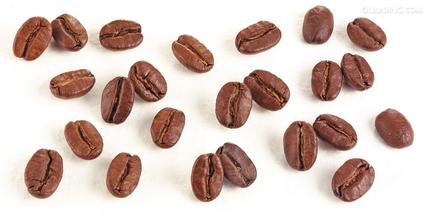
Arabica Coffee Bean Family introduces the characteristics of Price Origin
Arabica coffee bean family introduction price producing area characteristics Arabica is deeply loved by Chinese people with a short history of coffee contact because of its strong fruity aroma. it was introduced to China by missionaries in the 19th century. It is widely planted in the dry-hot valley of the Jinsha River, which is more than 1000 meters above sea level in Panzhihua, Sichuan and western Yunnan. The local people use the way of diverting water up the mountain.