
Coffee Arabica
Latest articles, industry insights and brewing guides

A brief introduction to the History and Culture of the Origin and Development of Arabica Fine Coffee beans
Arabica? The planting conditions of coffee are harsh, requiring higher elevations (above 2000 meters above sea level), fertile soil fertility, adequate moisture, proper sunshine conditions and shade. Arabica? Coffee tree species have poor ability to resist diseases and insect pests and are easy to be damaged. In addition, the annual output of coffee trees per unit area is also lower. At the moment? Arabica? Grow coffee

Description of flavor, taste and aroma characteristics of Arabica boutique coffee beans
Arabica? Coffee has a varied and broad potential flavor. Arabica coffee produced in different regions, different elevations and different climates usually has its own characteristics and can show a completely different flavor. ? Arabica? When coffee is not roasted, it smells like grass. After proper roasting, it shows. Fruity? (medium and shallow baking) vs.

A brief introduction to the climatic altitude treatment methods for the cultivation of coffee farms in Arabica, Indonesia
Bali, as Indonesia's main tourist destination, is often famous for its golden coffee in tourist brochures. In fact, this is the special item of Golden Mandheling coffee in Sumatra, Indonesia, also known as Golden Manning. Sumatra, which probably escaped the disease in the past, produces Mantenin, one of the best coffee in the world, which is more smooth and mellow than Java.

A brief introduction to the history and culture of the origin and development of Arabica coffee in Indonesia
Even if the coffee has the same name (named from the place of origin), as long as the cultivated varieties are different, the flavor is different from the leaf rust-resistant varieties found in the African Congo, teaching the Arabica species to be more resistant to the disease. People like to compare robusta species with Arabica coffee. In fact, robusta species is originally a mutant of Congo species (scientific name Cofffea canephora), so it is said that

A brief introduction to the History and Culture of the Origin and Development of High quality Arabica Coffee beans in Honduras
Personally, I think it's hard to say whether coffee is good or bad, some people like sour ones, others like bitter ones, African beans, Asian beans, American beans, sea beans, island beans have their own personalities, and the ability of baking determines whether they can give full play to the characteristics of beans. Honduras is a big coffee grower in Central America. 15 of the country's 18 provinces have coffee plantations, and more than 100000 coffee growers have created nearly one million for the country.

Aroma and throat Rhyme of Africa, Rwanda, Arabica Coffee Bean Origin, Development, History and Culture
Another noteworthy thing on the packaging is a list of relevant words from the United States, which is the American aid program (USAID). Because of this plan, the road to fine goods in Rwanda has also gone much smoothly. OCIR has made reference to many successful ways to improve the quality of its exports, including the mechanism for setting up cooperatives, which is an indispensable road to boutique coffee.

Taste characteristics of Arabica Sunshine Katim Coffee A brief introduction to the Grinding scale Manor
Coffee trees in Arabica are not easy to grow, many are on high-altitude slopes, and picking needs to be done manually. But it is better to have a balanced taste and less caffeine. Robasta is relatively easy to plant. It is resistant to heat, cold, moisture, drought and tolerance.

Arabica Coffee Variety Variety Quality Flavor Description Processing Method Taste Grindness Introduction
Arabica is a large shrub with oval, dark green leaves and oval fruits. It usually has two slightly flat beans. The bean body is small and round, the front is long oval, the middle crack is narrow and curved in S shape, and the arc shape of the back of the bean is relatively flat. Caffeine content is about 1% 1.7% Arabica coffee tree, one of the most important coffee trees in the world. The Arabica species (

Arabica Coffee Flavor description Grinding characteristics simple planting situation of Fine Coffee in Variety producing area
Robusta coffee beans have a unique aroma and bitter taste, and the content of caffeine is much higher than that of Arabica. To make a cup of pure espresso, you need to mix a certain proportion of high-quality robusta beans on the basis of Arabica beans. Because among the many choices of coffee beans, high-quality robusta coffee beans can make Italian coffee show its due personality and increase coffee.

Arabica Coffee Fine Coffee beans Grinding degree, Flavor, Flavor, Flavor description
Arabica (Arabica) and? Robusta is two different coffee varieties, which currently account for the vast majority of coffee bean production in the world. Arabica seed? Coffee and? Robusta? There are three main differences in coffee: 1. Differences in planting conditions. 2. The flavor and characteristics are different. 3. The difference between market price and use. Planting condition difference Arabica? Coffee

Rwanda coffee beans are carefully planted and washed to achieve high quality Arabica coffee beans.
Rwanda is a small African country, and the local people are relatively poor, but it produces straight and very good coffee. Unlike its neighbors Kenya and Ethiopia, Rwanda's coffee is mainly round bourbon. The taste is not as prominent as Ethiopia and Kenya, but the evenness is excellent. Karnogi coffee in Rwanda is grown and harvested by local small farmers and is produced by Git
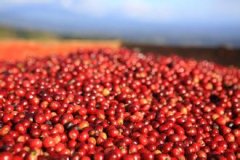
Arabica Coffee Bean and Coffee Manor A brief introduction to Arabica Coffee Manor
Arabica coffee accounts for 70% of all coffee production, and its excellent flavor and aroma make it the only coffee that can be drunk directly. However, its resistance to dryness, frost, diseases and insect pests is too low, especially the natural enemy of coffee-leaf rust, so all producing countries are committed to variety improvement. Arabica species (Coffea

Development of Joy Manor in Nicaragua Coffee Manor in the country where washed Arabica beans are produced
In Nicaragua, the coffee industry provides 200000 of the country's jobs, and coffee beans are the country's most economically valuable crop, accounting for 20% of the country's total exports. The low price of coffee season has hit all the countries that produce washed Arabica beans, but the pain seems to be even more magnified in Nepal, where many diversified coffee-producing countries, such as Costa Rica, have suffered from the coffee industry.

The aroma of Arabica coffee beans in Rwanda in Africa continues to be strong and solid.
Dry aroma: deep chocolate, hazelnut (nutty), persistent fruit, wet peach: Woody, creamy, nutty, pepper, mango sweetness sipping: melon-like sweetness. The acidity is bright and obvious, with slightly astringent in front. As thick as cream body, black tea-like aroma of the throat continues to be rich and solid. Rwandan coffee washes Elaraby with its water.
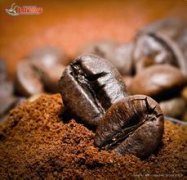
Brief introduction of boutique coffee beans-- Papua New Guinea Coffee washed Arabica Coffee beans
Located in tropical Papua New Guinea, the climate is humid and rainy, rich in coconuts and coffee. Forests and mineral resources are also rich. Rabur is the sixth largest town in the South Pacific island nation and an important shipping hub. Its rich coffee and other goods are exported from this port. In recent years, Papua New Guinea coffee has begun to wash Arabica beans with its own unique high-quality water.
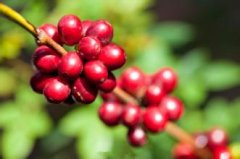
Differences in appearance, flavor, market price and use between arabica and robusta
"Arabica" coffee has a variety and a wide range of potential flavors. Arabica coffee produced in different regions, at different altitudes and in different climates usually has its own characteristics and can show very different personality flavors. Arabica coffee smells like grass when it is not roasted, and after proper roasting, it shows "fruity"(middle).
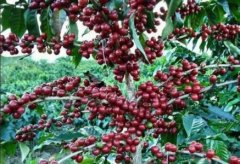
History, cultivation, characteristics and varieties of Arabica
Arabica is deeply loved by Chinese people with a short history of coffee contact because of its strong fruity aroma. it was introduced to China by missionaries in the 19th century and was widely planted in Panzhihua, Sichuan, and the dry-hot valley of the Jinsha River in western Yunnan, where the sunshine was long and there was a big temperature difference between day and night. The local people solved the problem of insufficient seasonal rainfall by diverting water up the mountain.

Varieties of Kenyan boutique Arabica coffee beans introduce how Kenyan coffee beans taste good by hand.
Flavor and taste characteristics: full-bodied aroma, balanced acidity. Coffee is a part of African life, whether in the depths of the most remote East African Rift Valley, or in the Maasai nomadic Masai Mara prairie, whether urban or rural, you can always smell coffee and go, stay and savor. Carve those endless African times with a cup of coffee. Kenya is located in Ethiopia

% Arabica.coffee: the habitat of cute girls in Beijing.
Address: Dongshan District, Beijing 87-5 official website: www.arabica.coffee almost blank floor-to-ceiling glass is the facade, but after entering it exudes a strong American retro flavor. Like his logo%, this international symbol also means that this is an international cafe. The coffee cans with metallic texture and the simple silver console are all full of futuristic and industrial feelings.

How to drink Arabica coffee beans at the characteristic price
How do Arabica coffee beans drink at the characteristic price? Geisha is a kind of coffee peculiar to Panama. In recent years, it has been known as the boutique queen in just a few years. It can be regarded as the treasure of Panamanian coffee. At present, the output is low and the price is high. Coffee farmers claim to have discovered it in recent years, but this is not the case. Geisha not only appeared as early as 1960.