
Coffee Farm
Latest articles, industry insights and brewing guides
Fragrant and smooth coffee flavor description of San Pedro Manor, Jamaica, introduction to the degree of grinding
In the decades after 1872, Jamaica's economy gradually prospered, but its social and cultural development was always suppressed by the colonial authorities. Especially during the Great Depression, all walks of life in Jamaica were very dissatisfied with the depressed social situation. In 1938, workers in Jamaica revolted. After that, the colonial authorities were forced to grant local autonomy. In 1944, the first of Jamaica

Flavor description characteristics of moderate mellow Hasunda Coffee Garden in Ecuador introduction to the taste of fine coffee beans
The minerals are mainly oil, mainly distributed in Guayaquil Bay, and oil fields are also found in the Amazon Plain. Gold and silver are distributed in Machaki and Saluma and other places. Copper is made in Machaki. There are sulfur mines in the Cologne Islands. In addition, there is iron, lead and so on. The forest area accounts for about 68% of the country's area, mostly in the eastern region, rich in valuable wood, such as mahogany and ointment.

Introduction of coffee flavor description and grinding degree of Santa Cruz Manor in Ecuador with special aroma
Ecuador is one of the few countries in South America that produces both Arabica coffee and Robbins coffee. However, as the land suitable for Arabica coffee trees is decreasing, the production of Robbins coffee is gradually increasing. The best Arabica coffee comes from the Andes, especially the Chanchagu Valley (ChanchamgoValley), which is divided into two mountains, from the south to the south.

Full-bodied Coffee Flavor description of Coffee Manor in Rwanda introduction to the characteristics of Grinding degree
Rwanda is located in the south of the equator in east-central Africa, a landlocked country. It is bordered by Tanzania to the east, Burundi to the south, Zaire to the west and northwest, and Uganda to the north, with a land area of 26338 square kilometers, ranking 149th among all countries in the world and close to Burundi, Macedonia, Haiti and Albania. Rwanda is located in east-central Africa, bordered by the Democratic Republic of the Congo to the west.
El Renas Estate Coffee Grind Taste Flavor Description Boutique Coffee Features
Honduras declared independence on September 15, 1821, but was incorporated into the First Mexican Empire in 1822. Joined the Central American Federation in 1823, withdrew from the Central American Federation in October 1838 and established the Republic. In Honduras in 1840, the conservative Francisco Ferreira, supported by Guatemala dictator Rafael Carrera, established a dictatorship. Freedom in Honduras after 1853
Introduction to the characteristics of Fine Coffee in Renas Manor of El Salvador
Honduras declared its independence on September 15, 1821, but was incorporated into the first Mexican Empire in 1822. He joined the Central American Union in 1823 and withdrew from the Central American Union in October 1838 to establish a republic. In 1840, with the support of Guatemalan dictator Rafael Carrera, conservative Francisco Ferreira established a dictatorship. After 1853, freedom in Honduras

Description of Coffee Flavor of Santa Barara Manor in Honduras introduction of Fine Coffee in Grinding area
Flavor and taste characteristics: good flavor, rich and mellow, suitable for mixed drinking. Honduran coffee bean Honduras, the most obvious feeling is relatively soft and thick, occasionally feeling a little sweet; low acidity, in Central American coffee producing areas, Honduran coffee is famous for its black berry flavor and caramel sweet, medium mellow thickness, and even black pepper and black pepper in some batches of coffee.
Description of Grinding degree and Flavor of Coffee in Berman Manor, Kenya
Kenyan coffee is mostly grown at an altitude of 1500m, 2100m, and is harvested twice a year. To ensure that only ripe berries are picked, people must tour the forest about seven times. Kenyan coffee is grown by small farmers. After they harvest the coffee, they first send the fresh coffee beans to the cooperative cleaning station, where the washed and dried coffee is covered with parchment beans.

Introduction to the description of the grinding degree, taste and flavor of coffee from Incht Manor, Guatemala.
In 1982, the leftist guerrillas of the whole country merged to form the National Revolutionary Union of Guatemala, and armed struggle spread all over the country. Farmers dissatisfied with the overthrow of the Arbens regime organized a guerrilla group in which more than 100,000 people were killed and millions displaced. In September 1982, the persecution of the local Mayans by the Guatemalan army was close to genocide, and more than 9000 Mayans were killed. nineteen
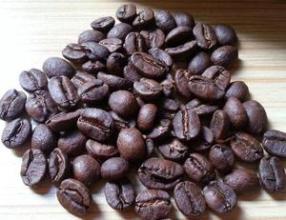
Coffee Grinding degree, taste and Flavor of La Tisa Manor in Guatemala
Antigua Island (Antigua) is a famous producer of coffee. Rich volcanic soil, low humidity, strong sunlight and cool night winds are the characteristics of Antigua. Three spectacular active volcanoes ── Agua, Acatenango and Fuego form a beautiful valley. Fuego active volcano also adds misty dust from time to time. Every 30

Indonesia Fuyin Manor Coffee Manor Flavor description Variety characteristics and taste introduction
Drip filter: wet the coffee powder with water and let the coffee liquid flow through the filter cloth or filter paper and flow into the container at the speed of natural fall. Basically, this method does not soak the coffee powder, just let the hot water pass slowly through the coffee powder. Both the drip cup and the electric coffee maker fall into this category and are the simplest brewing tools that can make clean and brightly colored coffee. Follicle type: put the coffee powder

Introduction to the flavor description and taste characteristics of the sour coffee estate in Arusha, Tanzania
Tanzania covers an area of 945087 square kilometers, of which Zanzibar is 2657 square kilometers. It consists of the mainland, Zanzibar and more than 20 small islands. Located in eastern Africa and south of the equator, the continent is bounded by the Indian Ocean to the east, Zambia, Malawi and Mozambique to the south, Rwanda, Burundi and the Democratic Republic of the Congo to the west, and Kenya and Uganda to the north. The coastline of the mainland is 840 kilometers long.
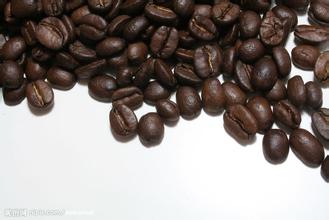
Bolivian Snow vein Manor Coffee Grinding degree, taste and flavor description manor introduction
The advantage of Bolivian coffee lies in its high altitude and excellent varieties of coffee, where the traditional Tibica and a small amount of Kaddura are highly valued in the world market. In the past, coffee trees in Bolivia used to act as hedges and ornaments around the garden. Real commercial production began in the early 1950s. The great frost in 1957 seriously damaged Pakistan.
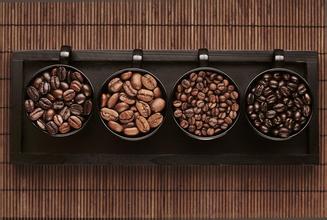
Introduction to the unique and strong aroma of Costa Rican Fenghuang Manor Coffee Grinding degree
Coffee was introduced into Costa Rica from Cuba in 1729. Today, its coffee industry is one of the well-organized industries in the world, with a yield of 1700 kg per hectare. Costa Rica has only 3.5 million people but 400m coffee trees, and coffee exports account for 25 per cent of the country's total exports. The volcanic soil of Costa Rica is very fertile and well drained, especially in the central part.
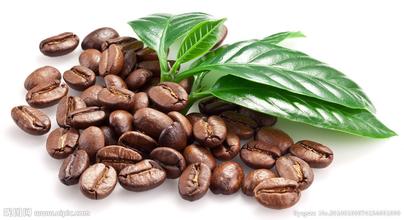
Rich mellow coffee flavor description of Nicaraguan Heavenly Manor introduction to the taste of grinding degree
Nicaragua is one of the major gold-producing countries in Latin America. It has been proved to have 106 gold veins, with an annual output of 70,000 ounces, ranking 13th in the world. Other minerals include silver, antimony, zinc, copper, lead and so on. Rich in geothermal resources. There are two oil deposits. Forests account for 43% of the country's area, exporting pine and mahogany. Fish and shrimp and other aquatic products are rich in the southwestern city of Nicaragua and the capital of Karaso province. Bit

Sour, sweet and bitter Colombian Hope Manor Coffee Flavor description, introduction to the treatment of Grinding degree
Colombian coffee is divided into more than 200 grades, the regional coffee is very strong. Columbia beans take the SUPERMO as the highest grade, followed by the EXCELSO, but only selected coffee of more than 18 beans (18cm 64 inches in diameter) can be included in the selection. Colombian coffee has a balanced flavor and a smooth taste, just like a gentleman in coffee. it
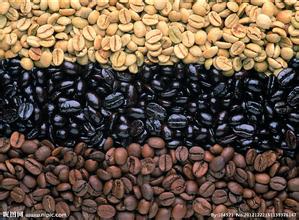
Costa Rican Goddess Manor Coffee Grinding Flavor description processing method Taste characteristics of Fine Coffee
Other kinds of Brazilian coffee, such as Rio and Parana, can be produced in large quantities because they do not need too much care. Although the taste is rough, it is a kind of good and cheap coffee. It has its own standard because it is distributed all over the country and its solid quality varies. It has its own standard (NO.2~NO.8 according to the number of sundries, NO.13~NO.19 according to the size of beans, and six grades according to taste).

Mellow Coffee Flavor description of Cedar Motad Manor, introduction to the treatment method of grinding degree
Yirgacheffe coffee raw bean is one of the most distinctive coffee in the world, rare and expensive. It is produced in the plateau of Ethiopia's Sidamo province (2000 meters above sea level). It is an outstanding representative of washed coffee in Africa. It has always been famous in the eyes of global coffee connoisseurs. Rare washed high quality Elaraby plus coffee is suitable for all degrees of roasting.
Rich and mellow Paradise Bird Manor Coffee Grinding Flavor description method in Papua New Guinea
Papua New Guinea is the second largest country in the South Pacific after Australia in population and area. It consists of New Guinea in the north and Papua in the south. It borders the province of Irian Jaya in Indonesia to the west and faces Australia across the Torres Strait to the south. Papua New Guinea, which belongs to Melanesia, is divided into 21 provinces and capital districts (Morse).
Introduction to Coffee Fine Coffee from Limon Manor in Nicaragua
Coffee is Nicaragua's main export. According to the president of the Nicaraguan Coffee Farmers' Federation, due to the poor harvest of coffee in Nicaragua's Pacific region, the country's total coffee production in 1998 may be 12% lower than that in 1997. In the coffee year of 1997 and 1998, Nicaragua harvested 1.422 million bags of coffee (each bag of 46kg), which has been producing 10% of coffee in the past 14 years.