
Coffee Farm
Latest articles, industry insights and brewing guides

Boutique coffee-how to classify common coffee beans by taste COFFEE BEAN
Bitter: a variety of sour old beans from Java, Mantenin, Bogota, Angola, Congo, Uganda: mocha, Hawaiian sour coffee, Mexico, Guatemala, Costa Rica high real estate, Kilimanjaro, Colombia, Zimbabwe, El Salvador, Western Hemisphere washable premium new beans. Sweetness: Colombian Maitenin, Venezuelan old beans, Blue Mountains, Gillima

Flavor and taste characteristics of Ethiopian Sidamo Coffee Manor with fermented wine flavor
Encourage and assist producers to improve the quality of coffee through testing (professional cup testers are also stationed in coffee producing areas) to ensure the quality of each batch by improving washing, semi-washing, solarization or other experimental treatments as far as they can. Before the harvest season, Trabocca will invite selected smallholder organizations / producers to participate in the output.
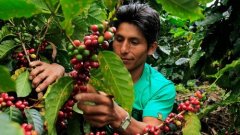
A brief introduction to the unique fragrant Ted Manor in the coffee producing area of Sidamo, Ethiopia
Ethiopian people are addicted to coffee. In 2003, domestic consumption accounted for 42.3% of the total output, with a per capita consumption of 3 kg. But more than half of the coffee produced each year is used for export to earn foreign exchange. The main exporters include the United States, Italy, the United Kingdom, Sweden, Norway, Greece, France, Belgium, Germany and Australia. Coffee is Ethiopia's most important export cash crop, and it is Ethiopia's foreign exchange income.

Sitama Coffee Flavor Taste Fine Coffee Bean Introduction
The above information comes from Taiwan coffee blog organic coffee blog Kebeduo is a small coffee cooperative in a small town in the Dara region of Sidama Province. Each coffee farmer here has an average planting area of about 0.6 hectares, composed of hundreds of coffee farmers. Its planting altitude is nearly 2000 meters, the climate temperature difference is large, and the soil is fertile, providing an excellent growing environment. The green beans themselves

A brief introduction to Ted Manor in the producing area of Sidamo Coffee
Sidamo Coffee beans are grayish, thick in some places and small in others, with soft and strong acidity, mellow and sweet and spicy. It is one of the courtyard coffees in the highlands of southern Ethiopia. Unlike ordinary African coffee, Sidamo has clear acidity, smooth taste and delicate floral smell. The coffee in Sidamo has a variety of flavors. Different

A brief introduction to Ted Manor, Sidamo Coffee, which tastes close to the floral flavor.
Sidamo Coffee beans are grayish, thick in some places and small in others, with soft and strong acidity, mellow and sweet and spicy. It is one of the courtyard coffees in the highlands of southern Ethiopia. Unlike ordinary African coffee, Sidamo has clear acidity, smooth taste and delicate floral smell. The taste of Sidama in the sun is close to the smell of flowers, but slightly.

Bolivian Coffee Manor Snow vein Manor A brief introduction to the flavor and taste of Bolivian coffee
One of Bolivia's boutique coffee remembers that the admirable champion bean in 2007 was Coffee Manor, but her score was overtaken by the 2008 champion Caf de Cordillera, when the international judges gave a high score of 92.03. in 2009, Takesi Snow vein Manor got a score of 93.36, more than 2008 of the champion, and the bidding price was as high as US $35.05, which was won in the CoE national competition in 2009.

Brief introduction of Snow vein Manor Coffee Manor in Bolivia and Yongas in the northeast of La Paz
The results of the 2009 Boro extraordinary Cup are even more eye-catching. It has a total score of more than 84 for 30 boutiques. This is more than double the number of 13 in 2004. And the top six scores are all above 90 points. Champion beans are as high as 93.36 points. The final auction was at a high price of $35.05 per pound. It's a pity. Bolivia produces little. The annual output is between 6000 and 10000 tons. The main reason is that the hardware is relatively backward. The altitude is too high and heavy

A brief introduction to the production area of Yongas in the northeast of La Paz, the Snow vein Manor in Bolivia.
This champion bean has a variety of floral aromas, vanilla and honey for a long time. Bolivia's high-quality estates, very high altitude, perennial low temperature environment, so that coffee fruit growth is slow, tight enough, aroma is also charming, floral aroma is obvious, such as careful handling, cherries with the same maturity, often have a clean and meticulous high-grade taste, this elegant vanilla and honey aromas are very attractive. Whole

Brief introduction of Superior Coffee Bean Snow vein Manor in Bolivia Coffee producing country
The goal of planting coffee in the whole Takesi manor is 200ha, but only 13ha is planted and harvested very little Typica species, and the annual yield is only 120bags. This is not only fine agriculture, but also a farming model that respects nature. Takesi is the name of the local aborigines, the place name and the snow water from the mountains, also known as Takesi. After the publication of the CoE final in 2009, Takesi is no longer without.

Coffee Bean planting Environment in Bolivia A brief introduction to the northeast of La Paz, the snow vein manor.
Because Bolivia's production is low, we don't have many chances to drink it. It is precisely because the smaller the output, the more precious it is. Because of my personal preference for Central American coffee, I still have more expectations for Bolivia, a small and beautiful coffee producing country. Bolivia not only has a unique growing environment, but also has an excellent coffee variety, Typica. Two

Coffee flavor and taste of one of the main cash crops in Tanzania A brief introduction to Arusha Coffee Manor
The coffee beans produced here are all exported from Kilimanjaro, but in addition to Mount Kilimanjaro, there are several major coffee producing areas throughout Tanzania, there are more small farms in other areas, and most small farms also have a planting area of several hundred mu. Some have their own washing equipment and bean drying farms, but the grading treatment still has to go through large-scale treatment.

A brief introduction to the flavor and taste of Tanzanian coffee beans in Arusha Coffee Manor, Tanzania
The northern part of Arusha is adjacent to Arusha National Park, which includes Mount Meru and the famous Ngorogoro crater at the foot of its mountain. To its northwest is the Serengeti Plain. This is a peaceful haven before and after a safari. With the geographical advantage of the highest mountain in Africa, Arusha has become the most important coffee growing area in Tanzania. Fertile volcanic soil

A brief introduction to the flavor and taste of coffee growing environment in Lusha Coffee Manor, Tanzania
The design style of Arusha Coffee Manor is full of plantation style and style. With its warm family atmosphere and perfect customer service facilities, not only tourists but also many nearby residents come here to enjoy delicious food. The Arusha Coffee Garden Hotel was built on a coffee plantation, and each hut is surrounded by clumps of coffee trees. If you are interested, the hotel staff will be more than happy to take

A brief introduction to the fragrant coffee manor producing area of Jilimazaro Mountain in Tanzania
Tanzanian coffee has the excellent pedigree of the Middle Eastern non-washed bean family, bright acidity, rich and irritating flavor. There is no doubt that Kenyan coffee takes the lead in this family, but Tanzania has many advantages that are very similar to those of Kenya. Northern coffees tend to be pleasant in aroma, rich in acidi

A brief introduction to Arusha Coffee Manor, Kilimanjaro Coffee Manor, Tanzania
Kilimanjaro coffee is mainly suitable for blending, can be self-blending or made into a variety of fancy coffee. Kilimanjaro coffee is a uniform size of large coffee beans, the color is gray-green, compared with a strong sour and sweet flavor, excellent flavor. Moderate baking will give off sweetness and light sour taste, deep baking will produce soft bitterness, suitable for blending

A brief introduction to the characteristics of coffee flavor and taste of soft and fragrant Coffee Manor in Rwanda
A new administrative division will be implemented on January 1, 2006. Rwanda is divided into four provinces (in Rwandan: intara), namely, the eastern province (Province de lEst), the northern province (Province du Nord), the western province (Province de lOuest), the southern province (Province du Sud), the city of Kigali (Ville de Kigali), and one municipality (Kigali).

Taste and Flavor of Rwandan Coffee A brief introduction to the producing area of Lutexilo in the western province of Chimmel Manor
Raw beans are like ripe beans, storage is critical, please choose materials that are clean, odorless and breathable. Avoid storing in places with direct sunlight, high temperature, humidity and good ventilation. The taste of Rwandan coffee is described as a grassy aroma with tropical climate characteristics. In addition to the sweet fruit taste of this coffee, it also makes people taste refreshing, clear, and fresh.

A brief introduction to the characteristics of Rwanda coffee beans in Kimmel Manor, a full-grained coffee farm in Rwanda.
Flavor: soft, full-bodied, full-grained Rwandan coffee is described as a grassy aroma with tropical climate characteristics. in addition to the sweetness of fruit, this coffee also gives people a feeling of freshness, clarity, and freshness. Bourbon coffee grown in Rwanda is amazing for its sweet fruit. It is full-bodied, full-bodied and unrestrained.

Rwanda Coffee Flavor and taste A brief introduction to the production area of Lutesilo in the western province of Chimmel Manor
Rwanda coffee is absolutely high quality in the form of washed Arabica beans. As far as Africa is concerned, its coffee industry is remarkable because the country thrives mainly by producing the best possible coffee beans. Coffee from Rwanda is becoming more and more popular in the international market. There are about 33000 hectares of coffee plantations in Rwanda, with 500000 people engaged in the coffee industry. Have a high level