
Specialty Coffee Beans
Latest articles, industry insights and brewing guides

Cuban Crystal Mountain Coffee introduction to Cuban Crystal Coffee
Crystal Mountain Coffee is very precious. This is mainly for two reasons. The first reason is the economic sanctions imposed by the United States against Cuba and the non-opening up of Cuban imports. The second reason is that at present, Cuban coffee beans are mostly acquired by the French and Japanese markets, especially Japan, so it is difficult to buy coffee beans directly from Cuba. Nevertheless, Cuban coffee is among coffee lovers around the world.

Introduction to the balanced and soft flavor of El Salvador boutique coffee
The civil war caused chaos and affected economic development, but ironically allowed the ancient coffee to be preserved, and the situation was so chaotic that coffee producers in El Salvador failed to catch up with the renewal of coffee varieties in Central and South America. El Salvador produces 100% Arabica coffee, of which 68% is Bourbon, Coffea arabica var. Bourbon), 29% Pacas, the rest

Peruvian Coffee planting Environment Peruvian Coffee beans Peruvian Coffee Brand Guangzhou Cafe
Peruvian coffee is grown in a planned way, which has greatly increased coffee production. Its rich acidity and mellow smoothness are its most prominent features. Peruvian coffee has a soft sour taste, medium texture, good taste and aroma, and is an indispensable ingredient in the production of comprehensive coffee. High-quality Peruvian coffee with a strong aroma, smooth, layered and full-bodied

Introduction to the flavor and production of unique Indonesian civet boutique coffee beans
Kopi Luwak, produced in Indonesia, is one of the most expensive coffee in the world. Indonesia grows a lot of coffee crops, including wild animals called civets, omnivores, pointed mouths and dark gray fur. The favorite food is fresh coffee beans, which are fermented and digested in the body and eventually excreted by cats. Feces are just grains of coffee beans.

Tanzania Kilimanjaro Coffee with Pure Flavor Tanzania Mondo Manor Coffee
Coffee market in Tanzania: coffee exports from Tanzania (Tanzania) play an important role in the entire national economy. In the past, the coffee industry in Tanzania has been dominated by manor cultivation, but now more than 85% are grown by small farmers. Many small farmers form cooperative organizations, the most important of which is the Kilimanjaro Cooperative Alliance (KilimanjaroCoopera)

Introduction to the flavor and taste of Jamaica Blue Mountain Coffee with humid climate
The secret of why Blue Mountain coffee tastes pure: their coffee trees are all grown on rugged hillsides, and the picking process is so difficult that non-local skilled female workers are simply unable to do it. It is very important to choose the right ripe coffee beans when picking. Immaturity or ripeness will affect the quality of the coffee. The picked coffee beans are shelled on the same day, and then let them ferment for 1218 hours. This

The characteristics of fresh and elegant Panamanian Coffee beans introduction to Panamanian geisha Coffee
Dry incense can be said to be the most charming place of this bean. After grinding, you can obviously feel a kind of elegant floral fragrance, fresh and elegant, but it is not like Yega Xuefei's floral fragrance rising all the time, but a feeling of eloquence. In addition, there is obvious honey sweet fragrance, the overall dry fragrance is low and melodious, the honey sweet fragrance is more prominent after water injection, and the entrance of the coffee is very gently sour across the mouth.

Introduction of Mantenin Coffee processing Factory in Kunming
Mandarin Coffee is produced in Sumatra, Indonesia, Asia, also known as Sumatran Coffee. The main producing areas are Java, Sulawesi and Sumatra, 90% of which are Robusta species. Among them, the "Mantelin" produced in Sumatra is the most famous. The best of the exquisite traditional Arabica coffee produced in northern Sumatra of Sumatra is called Lindong Li

Arabica coffee with rich aroma Taste Manor Introduction Arabica coffee bean characteristics
Bourbon was introduced to the Americas by French immigrants from the Island of Bourbon (today's French Island of Reunion, located in the Indian Ocean east of Madagascar) in the 18th century, and is now widely cultivated in Brazil and other Western Hemisphere regions, and a small amount is also cultivated in Yunnan, China. Caffeine content of subspecies Bobang is 20%~30% higher than that of subspecies Tibika, but it is higher than that of subspecies Tibika.

Ethiopian Coffee Manor Jade Manor introduction to Panamanian Emerald Manor geisha
Introduction to geisha: the species of Geisha was discovered in the geisha forest of Ethiopia in 1931 and sent to the Coffee Research Institute in Kenya; it was introduced to Uganda and Tanzania in 1936, in Costa Rica in 1953, and Panama was introduced by Francesca in the Dongba Seven Farm Garden in the 1970s. Mr. Serraxin got the seeds from CATIE, Costa Rica, and started planting.

Introduction to Baru Volcano Hartman Manor in Panama
[name]: Elida Natural (Elida Natural) [production area]: Pocket (Boquete) [Manor]: Alida Manor (Elida) [variety]: Catuai 85%, Typica Bourbon 15%, Geisha (a small amount) [treatment]: sun (Natural) [altitude]: above 1800 m [planting soil]: volcanic soil (Vol)

Panama withdraw Louis Manor Panama Carmen Manor Panamanian Coffee Manor
(flower, sweet orange, pineapple, pineapple, vanilla, lively fragrance) the story of Hartman, the bean used by many contestants in Panama's famous producing areas, is as legendary as its coffee. Hartman Manor is located in Chilidge, Santa Clara. The founder's name is Ellis Strauss Hartman. He was born on June 20, 1891, in Moravilla, Austria, Hungary.

Panamanian Coffee Manor flavour Esmeralda Manor introduction to Panamanian Coffee Manor
Sipping: good oil quality, delicate Lishan special tea feeling, high-end liquor astringent but then turned into a delicate and smooth Body to fill the mouth. Berries, sweets and spices are sweetly intertwined, accompanied by the smell of flowers, the finish is full of flowers, the fruit is sweet and body is quite long-lasting, the lower the temperature, the finer the acidity is, the finer the acidity is, the more delicate the acid is in 1996 there is a farm for sale in the Haramijun area of the Bocketti Valley.

Planting Environment of Cliff Coffee Manor in Jamaica Blue Mountain Coffee
In 1725, Sir SirNicholasLawes brought the first Blue Mountain Coffee species from Martinique to Jamaica and planted them in the St.Andrew area. Today, St. Andrew is still one of the three major producing areas of Blue Mountain Coffee, while the other two are Portland and St..Thomas.

The main producing areas and manors of Jamaica Blue Mountain Coffee introduce Silver Mountain Manor
It is necessary to carefully understand the myth of Blue Mountain Coffee, because the image of the past is often inconsistent with the reality of today. In 1725, Sir Nicholas Roth brought the first Blue Mountain Coffee from Martinique to Jamaica and planted it in the St. Andrews area. Today, St. Andrew is still one of the three major producing areas of Blue Mountain Coffee, while the other two are Portland and Portland.

Panama Coffee Estate Emerald Estate Flavor Introduction
The species Geisha was discovered in 1931 in Ethiopia's Guisha Forest and sent to the Coffee Institute in Kenya; introduced to Uganda and Tanzania in 1936, Costa Rica in 1953, Panama in the 1970s by Francesco de la Domba Seven Farm. Mr. Serrazin picked up seeds from CATIE in Costa Rica and started growing rosewood coffee.

Introduction to Esmeralda Manor in Panama Coffee Manor
Boquet green green raw beans, high moisture content, beans are soft beans, so good heat transmission, so there is no need to worry about uneven baking, aroma and taste are excellent, smooth taste, dark chocolate, nutty aroma, high alcohol thickness, low acidity, long-lasting. [country of origin]: Panama [producing area]: Boquete [altitude]: 1550-1700 m [manor]: Villa Don
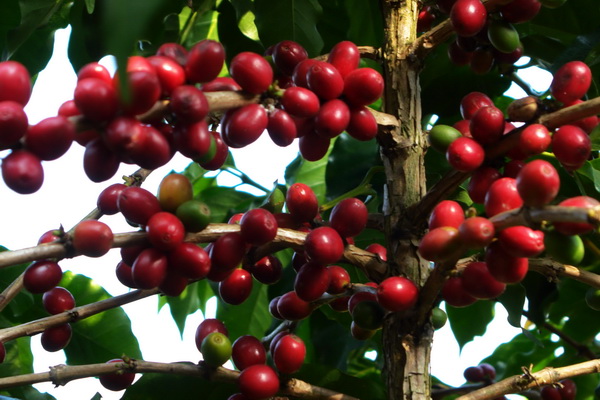
African flavor Ethiopian grade G1G2 G3 boutique coffee beans
Pre-auction process 1) farmers pick fresh coffee fruits; 2) farmers transport fresh fruits to rural cooperatives; 3) cooperatives sell fresh fruits to middlemen; 4) middlemen collect and transport fresh fruits to processing plants (washing or tanning process); 5) middlemen transport processed beans (with shell beans, Parchment Coffee) to auction houses to establish warehouses; 6) auction houses give official evaluation (
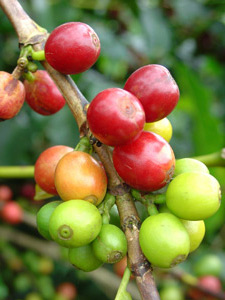
Ethiopia Limu medium roast coffee beans fine coffee producing area
Ethiopia's coffee producing regions are Sidamo, Harrar and Yirgacheffe. Sidamo and Harrar are provinces and divisions. Sidamo is located in the south of Ethiopia and adjacent to Kenya. Harrar borders Somalia in the east of Ethiopia. Although Yirgacheffe is a small area in Sidamo region, due to soil composition and water content, etc.
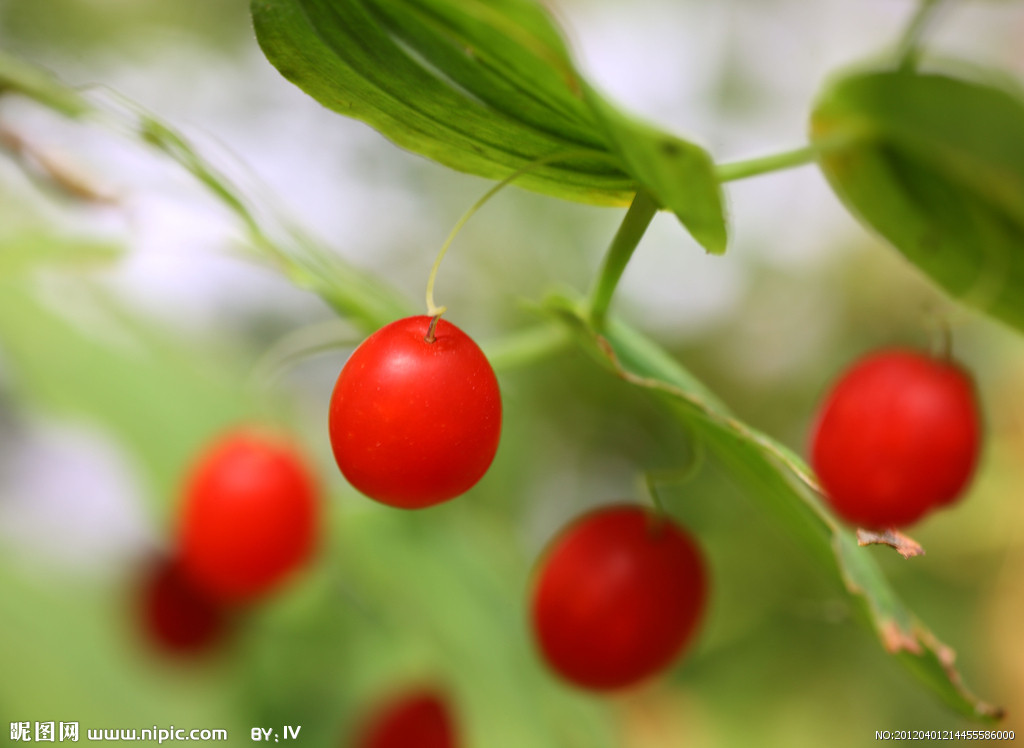
Djimmah producing area Ethiopian boutique coffee beans African flavor coffee
Yega Chefe and Sidamo, which are famous for their bright sour taste, are famous for their charming and mixed fragrance, while the western half of the forest is covered with a large area of primeval forest, mostly in the process of complete natural evolution, creating a more complex variety of coffee. The coffee varieties in the Kafa forest in the southwest are extremely resistant to disease. Due to natural evolution and less manual screening, its overall flavor is slightly lower than that of the eastern half of the wall. The coffee producing areas of Ethiopia are