
Specialty Coffee Beans
Latest articles, industry insights and brewing guides

Introduction to Valenford Manor in Jamaica Blue Mountain Coffee Flavor
Blue Mountain Coffee can maintain today's top status, but also closely related to the local business policy. In 1932, Jamaica adopted a policy to encourage coffee production to reduce the island's dependence on sugar exports. Unlike most coffee producing countries, the local government does not plant a large number of high-yield and poor-quality coffee in order to increase the output value, but takes the quality as the best, preferring to sacrifice the coffee production.

Flavor and taste of Blue Mountain Coffee Manor in Jamaica
But not all coffee produced in Jamaica can be called Blue Mountain Coffee! Although the island is dotted with coffee farms, it is grown only in the four administrative areas of St. Andrew, Portland, St. Thomas and St. Mary, certified by the Jamaica Coffee Industry Council (Coffee Industry Board of Jamaica,CIB), above 2000 feet above sea level in the Blue Mountains.

Very typical mocha flavor Harald (Harar) production area jasmine strong chocolate smell
The coffee producing areas of Ethiopia are Hidamo, Harald and Sidamo, Harrar and Yirgacheffe. Sidamo and Harrar are provinces and divisions. Sidamo is located in the south of Ethiopia bordering Kenya, and Harrar borders Somalia in the east of Ethiopia. Although Yirgacheffe is a community in the Sidamo region, due to soil composition and water content and other reasons.

Jamaica Blue Mountain Coffee Estate
The coffee industry in Jamaica faces a number of problems, such as the effects of hurricanes, increased labor costs and difficulties in mechanizing terraces. Many small estates and farms are difficult to rationalize. Blue Mountain Coffee, however, is one of those coffee retailers that value credibility and want to stock some coffee anyway. A leading British retailer says he's ready to sell whatever the price.
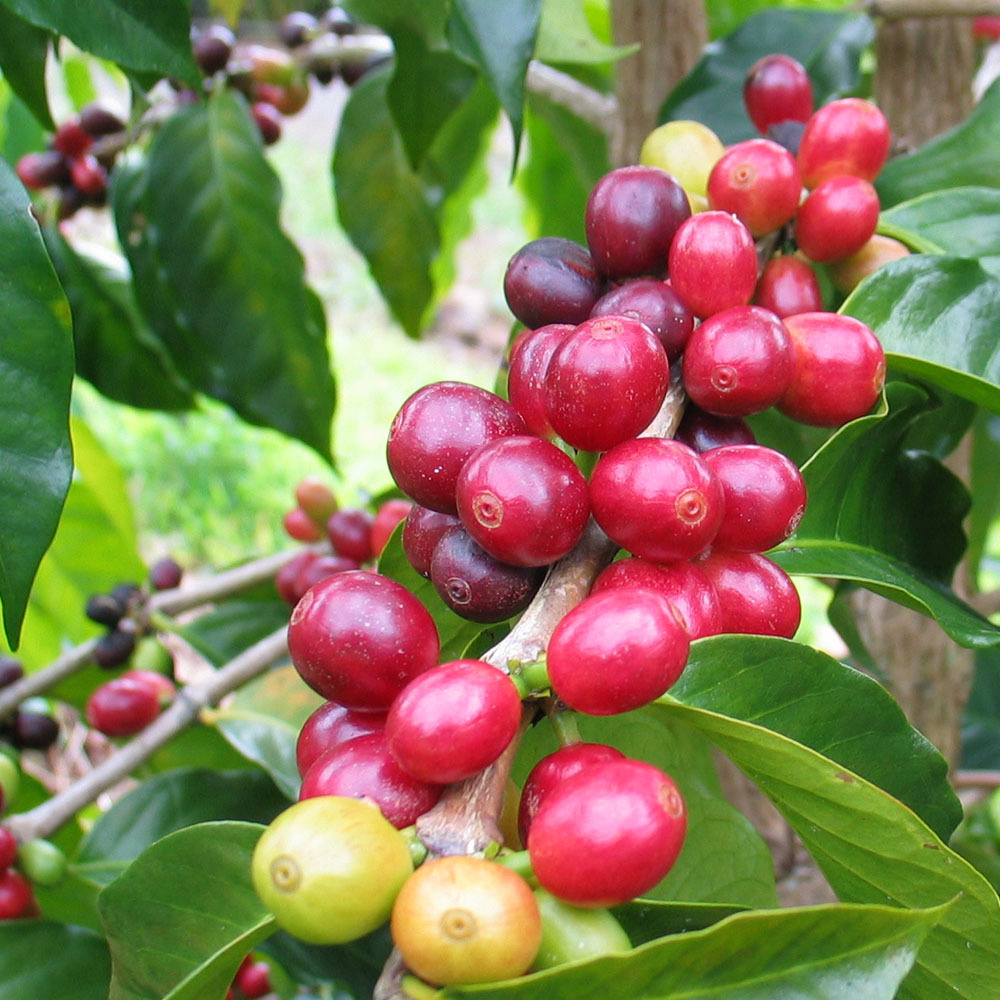
The coffee producing area of Ethiopia is Hidamoharal Yega Xuefei Sidamo, Harrar and Y
The coffee producing areas of Ethiopia are Hidamo, Harald and Sidamo, Harrar and Yirgacheffe. Sidamo and Harrar are provinces and divisions. Sidamo is located in the south of Ethiopia bordering Kenya, and Harrar borders Somalia in the east of Ethiopia. Although Yirgacheffe is a community in the Sidamo region, due to soil composition and water content and other reasons.

Introduction of boutique coffee beans in Mazu Manor in Alishan, Taiwan
Alishan Mountain is a branch of the Yushan Mountains, which spans Nantou and Chiayi counties. It is located more than 2000 meters above sea level, with coordinates of 23 degrees 31 minutes north latitude and 120 degrees 48 minutes east longitude. It faces the Yushan Mountains in the east and is surrounded by high mountains. The climate is cool, with an average temperature of 10.6 degrees Celsius in summer and 6.4 degrees in winter. The air in the Great Ali Mountain area is fresh and free of pollution all the year round.

Introduction to the flavor and taste of Galapagos Coffee Manor San Cristobal
The quality of Galapagos coffee is very good, and it is mainly exported to Scandinavia and other Nordic countries, so our people know little about it. As coffee is consumed by people all over the world, the world coffee industry is also moving towards a mass production model. Small-scale planting models like the Galapagos actually limit its development. If the scale is not expanded, it is likely to end up with no profit.

Introduction to the altitude of planting Environment in Yunnan Tieka Coffee planting Manor
Bourbon: this variety is derived from the iron pickup and was expanded by the French in 1708 on the island of Bourbon (now known as Reunion). Bobang also has a beautiful aroma and rich taste, higher yield and growth than iron pickup, suitable for planting in an area of 12002000 meters, but less resistant to diseases and pests, and more sensitive to strong winds and heavy precipitation. Wave

Introduction to the altitude of planting Environment in Yunnan Tieka Coffee planting Manor
Bourbon: this variety is derived from the iron pickup and was expanded by the French in 1708 on the island of Bourbon (now known as Reunion). Bobang also has a beautiful aroma and rich taste, higher yield and growth than iron pickup, suitable for planting in an area of 12002000 meters, but less resistant to diseases and pests, and more sensitive to strong winds and heavy precipitation. Wave

Taste of Bolivian Coffee Flavor Flavor Coffee introduced in Manor production area
The goal of planting coffee in the whole Takesi manor is 200ha, but only 13ha is planted and harvested very little Typica species, and the annual yield is only 120bags. This is not only fine agriculture, but also a farming model that respects nature. Takesi is the name of the local aborigines, the place name and the snow water from the mountains, also known as Takesi. After the publication of the CoE final in 2009, Takesi is no longer without.

Panama geisha Coffee Jade Manor introduces the treatment of boutique coffee beans.
geisha coffee raw beans have a very beautiful blue-green, jade-like warm texture, smell fresh grass, peach, berry flavor and oolong tea unique milk sweetness that most coffee beans do not have. it seems that aroma and taste of this kind of things need to be associated, but the faint smell of tea is obvious to us [1]. In order to highlight the characteristics of this bean

Introduction to the Fine Coffee Flavor Manor of Ethiopia
Ethiopian coffee beans grow in close to the natural environment, after years of planting under the same growth conditions, Ethiopian coffee beans have gradually adapted to the environment here. More than 60% of coffee beans are grown in forests or semi-forests. Large-scale coffee-growing villages account for about 35% of the country's total coffee production. Many of these are used.

Taste of Jamaican Coffee Fine Coffee is introduced in the manor area.
In 1717, King Louis XV of France ordered the cultivation of coffee in Jamaica. In the middle of the 20th century, the Governor of Jamaica, Sir Nicholas Nicholas Lawes, imported Arabica seeds from Martinique and began to plant them in St. Andrew. To this day, St. Andrew

Introduction to the producing area of Aldumara Coffee Flavor Manor in Mexico
Mexicans are optimistic and enthusiastic, and it can also be seen from their coffee that the mellow Mexican coffee is not only loved by the native people, but also praised by many coffee connoisseurs. There are many ways to taste Mexican coffee, mainly divided into alcoholic and non-alcoholic practices. Non-alcoholic Mexican coffee often goes with milk. Put a cup

Introduction to manors in coffee flavor and taste producing areas of Dominica
The Dominican Republic has also experienced a history of unrest and poverty, and now the country has implemented democratic elections and entered a period of stable development, but it has not yet formally established diplomatic relations with China, but has maintained so-called diplomatic relations with Taiwan. It seems that this has nothing to do with coffee, but in fact, it still has an impact. The exchanges between the two countries that have not established diplomatic relations are subject to many restrictions in all aspects, and of course they will.

An introduction to the producing area of Larez Yaoke Coffee Flavor Manor in South-Central Puerto Rico
Yaocote's choice of coffee, which is grown only on three farms in the southwest of the island, is fragrant and has a long aftertaste. This kind of coffee is very expensive and its flavor is comparable to that of any other coffee variety in the world. In the Yauco area, the coffee is owned and operated by local planters. The mountain climate here is mild, and the plants have a long mature period (from October to February of the following year).

Introduction to Antigua Coffee in Guatemala Coffee Manor
Antigua is a famous producer of coffee. Rich volcanic soil, low humidity, strong sunlight and cool night breeze are the characteristics of Antigua. Three spectacular active volcanoes ── Agua, Acatenango and Fuego form a beautiful valley. Fuego active volcano also adds misty dust from time to time. Every 30 years or so, Antioch
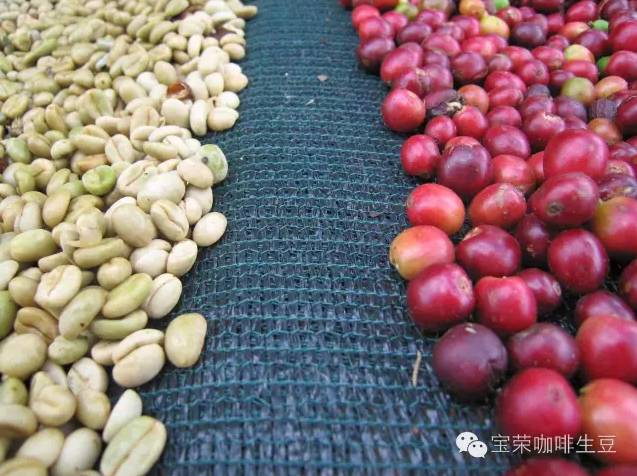
Caesar in the Borquat region of Panama. Louis' clean and fresh fruit flavor
Caesar of Panama. Louis Manor, founded in 1920, is located in the Boqui specialty area of Mount Baru, located in the Poquette Valley of Mount Baru in northwestern Panama. After three generations of coffee planting experience, the family combines more than 300 local small family farms, and small farm coffee farmers join partners from planting, post-processing, baking and marketing, unlike only

Taste of Java Coffee Flavor Coffee is introduced in the manor area.
At that time, Java coffee sold to Europe was a very special kind of coffee. At that time, it was shipped to Europe and the United States by sailboat, and the distance was long and the speed was slow, so it took a lot of time to transport. In this case, the coffee seems to have undergone a special fermentation and has a very unique taste. Later, when the ship replaced the sailboat, people drank because the transportation time was shortened.

Introduction to the flavor and taste of Costa Rican coffee manor
The research center, located about 30 kilometers northeast of San Jose, the capital of Costa Rica, belongs to the Costa Rican Coffee Association and is the research institution for planting, breeding and quality inspection of Brazilian coffee fruits in Costa rica. in addition, it also has 10 hectares of experimental plots, planting a number of excellent varieties. Coffee is the main agricultural product in Costa Rica, with an annual output of more than 2 million bags