
"1840"
388 article(s) found

Why is 100% Kona coffee so expensive? Is it because of the high labor cost?
Coffee workshop (Wechat official account cafe_style) the history of Hawaiian coffee dates back to 1840, and the special climate on the slopes of the Kona area on the west coast of the island provides a unique environment for its cultivation. The coffee beans cultivated here are known as the top three in the world for their unusually full appearance, bright luster and rich aroma.

Parameters of siphon coffee explain the relationship between the proportion of coffee powder in siphon pot and brewing time
Professional coffee knowledge exchange more coffee bean information please follow the coffee workshop (Wechat official account cafe_style) timeless siphon pot coffee explanation | siphon pot coffee principle and brewing suggestions required materials: siphon coffee pot coffee bean grinder electronic scale thermometer timer brewing time: 22.5 minutes background knowledge: around 1840, a French country

How to make a perfect cup of manning coffee with a siphon pot
Introduction to the method of brewing coffee beans in 1840, a glass test tube in a laboratory became the predecessor of a siphon coffee pot (Syphon). The British took Biya's test tube for chemical experiments as a model to create the first vacuum coffee pot. Two years later, Mrs. Bachang of France improved the kettle with a little spring in shape, and the familiar upper and lower convection siphon pot was born. No.

Make coffee like a Breaking Bad and feel the most mysterious power and great charm of coffee.
In 1840, the Englishman Nabia created the first vacuum coffee pot based on a glass test tube in a chemistry laboratory. Two years later, Mrs. Bachang of France improved it, and the familiar upper and lower convection siphon pot (Syphon) was born. By the middle of the 20th century, after continuous design and improvement, the siphon pot gradually became popular all over the world, and the siphon pot became a favorite professional utensils for baristas.

Nicaragua hidden manor introduction black pearl fermentation process is what?
Professional coffee knowledge exchange More coffee bean information Please pay attention to coffee workshop (Weixin Official Accounts cafe_style) Nicaragua coffee brief history: 1840~1940, is Nicaragua's "Coffee Boom"(Coffee Boom), coffee began to become Nicaragua's main export crop, strongly promoted by the government, foreign companies can easily invest or acquire land, give birth

Which major countries in America mainly produce coffee
Which major countries in the Americas mainly produce coffee began in Central America in the 18th century, and this important economic product originated in Costa Rica around 1840. Since Central America became independent from Spain in 1821, there has been a lot of war. Because Costa Rica was far away from Guatemala City, the capital of the Spanish colony at that time, it was not affected by the civil war, but Guatemala.

San dos Veloso Manor FC washed Brazilian coffee beans taste good _ introduction to Veloso Manor, Brazil
Professional coffee knowledge exchange more coffee bean information please follow the coffee workshop (Wechat official account cafe_style) Brazil Coffee Manor Veloso Manor introduction: Veloso has 10 manors, Catuai Manor. The founder of the Veloso family started the domestic coffee trade in 1840 and has been operating for generations. The name Veloso has been written in the history of Brazilian coffee for more than 150 years. nineteen

Siphon coffee maker (Syphon)
Siphon coffee pot, also known as Syphon. It was developed by Robert, an engineer of the Scottish Navy. Robert Napier invented it in 1840. Although the siphon coffee pot is called the siphon pot, it has nothing to do with the siphon principle. Instead, it uses water heating to produce water vapor, which causes the principle of hot expansion and cold contraction. It pushes the hot water from the lower seat to the upper pot, and produces negative after the next pot cools.

About the siphon coffee maker
Siphon coffee pot, also known as Syphon. It was developed by Robert, an engineer of the Scottish Navy. Robert Napier invented it in 1840. Although the siphon coffee pot is called "siphon pot", it has nothing to do with the siphon principle, but uses water heating to produce water vapor, resulting in the principle of hot expansion and cold contraction, pushing the hot water from the lower seat to the upper pot and waiting for the next pot to cool.

Flavor characteristics of Indian monsoon Malaba coffee monsoon treatment of coffee beans
Background of Malaba in India in the 17th century a Muslim named BABA BUDAM made a pilgrimage to Mecca and brought coffee tree seeds back to India. He planted the seeds near his hut in mysore. In 1840, the British began to plan to grow coffee in South India. Karnataka, located in the southwest of malabar, India, is a major producer.

Lim region of Ethiopia | what is the flavor of native species washed by limu Kossa Xhosa?
Professional coffee knowledge exchange more coffee bean information please follow the coffee workshop (Wechat official account cafe_style) Ethiopia Lim production area | limu Kossa Xhosa washing local native species flavor? Finding coffee on a farm is very rare in Ethiopia, but Gidey Berhe Retta is in Limu Kossa
Summary of Coffee Transmission path Sunshine Cooperative Fair Trade washing Office in Peruka Hamaka producing area, Peru
① coffee seeds were first brought into the Mysore Mountains of India by the Islamic Ranger Babudan in 1600, and by 1840, the British began to grow coffee on a large scale in India. ② in 1616 Dutch merchants introduced the first coffee tree from Mocha, Yemen. ③ in 1658 the Dutch began to grow coffee in Ceylon (now Sri Lanka). ④ in 1699 some coffee trees came from

Coffee vessels introduce siphon coffee maker
Siphon coffee pot, also known as Syphon. It was developed by Robert, an engineer of the Scottish Navy. Robert Napier invented it in 1840. Although the siphon coffee pot is called the siphon pot, it has nothing to do with the siphon principle. Instead, it uses water heating to produce water vapor, which causes the principle of hot expansion and cold contraction. It pushes the hot water from the lower seat to the upper pot, and produces negative after the next pot cools.

Description of Flavor of Coffee Bean producing countries in North America introduction of Grinding scale Manor in producing area
North American coffee bean producing countries describe the taste of coffee varieties in the region grinding scale manor introduction coffee in Central America began in the 18th century, this important economic product originated in Costa Rica, about 1840. Since Central America became independent from Spain in 1821, there has been a lot of war. Because Costa Rica was far away from Guatemala City, the capital of the Spanish colony at that time, it was not affected.
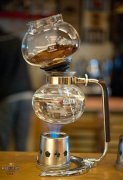
Hand coffee brewing skills siphon coffee pot brewing coffee
Siphon coffee pot, also known as Syphon. It was developed by Robert, an engineer of the Scottish Navy. Robert Napier invented it in 1840. Although the siphon coffee pot is called the siphon pot, it has nothing to do with the siphon principle. Instead, it uses water heating to produce water vapor, which causes the principle of hot expansion and cold contraction. It pushes the hot water from the lower seat to the upper pot, and produces negative after the next pot cools.

Description of Flavor of Hassanda Coffee Garden in Ecuador; characteristics of varieties in producing areas; introduction of fine coffee
Coffee began to flourish in Central America in the 18th century, and this important economic product originated in Costa Rica around 1840. Since Central America became independent from Spain in 1821, there has been a lot of war. Because Costa Rica was far away from Guatemala City, the capital of the Spanish colony at that time, it was not affected by the civil war. Instead, it was Guatemala and El Salvador that delayed coffee because of the civil war.
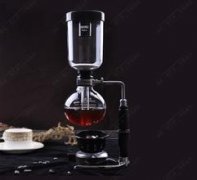
Siphon coffee maker (Syphon) is also known as plug pot.
Siphon coffee pot, also known as Syphon. It was developed by Robert, an engineer of the Scottish Navy. Robert Napier invented it in 1840. Although the siphon coffee pot is called the siphon pot, it has nothing to do with the siphon principle. Instead, it uses water heating to produce water vapor, which causes the principle of hot expansion and cold contraction. It pushes the hot water from the lower seat to the upper pot, and produces negative after the next pot cools.

The process of making coffee in siphon pot is invented based on the principle of thermal expansion and cold contraction.
A brief introduction to the siphon Coffee Pot, also known as the plug Pot, it was developed by Scottish Navy engineer Robert Naiphir. It was invented in 1840. The siphon kettle is invented based on the principle of thermal expansion and cold contraction, which produces water vapor after heating with water during production, resulting in long heat and cold shrinkage. The hot water in the lower seat is pushed to the upper seat. After the lower pot cools, it produces negative pressure to suck back the water from the upper pot to get coffee.

Siphon Coffee Pot (Syphon) to plug the air pot to make coffee
Siphon coffee pot, also known as Syphon. It was developed by Robert, an engineer of the Scottish Navy. Robert Napier invented it in 1840. Although the siphon coffee pot is called the siphon pot, it has nothing to do with the siphon principle. Instead, it uses water heating to produce water vapor, which causes the principle of hot expansion and cold contraction. It pushes the hot water from the lower seat to the upper pot, and produces negative after the next pot cools.
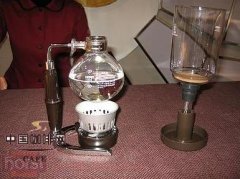
Coffee common sense map to solve the siphon pot coffee making skills
The siphon pot (Syphon) is an excellent coffee utensil invented by the Scots in 1840. Although its usage is complicated, real coffee fans love it. They generally think that the coffee brewed in the siphon pot has the most pure taste, especially the brewing (making) high-quality coffee, the siphon pot must be their first choice, which is like a real photo.