
"Detailed"
4188 article(s) found

A detailed introduction to the treatment of coffee by Agassi, the highest level of Agassi farmers in G1
For the exchange of professional baristas, please follow the coffee workshop (Wechat official account cafe_style) Ethiopian sun treatment method Conga Xuefei G1 Agassi smallholder Ethiopia Natural Yirgacheffe Konga Abeyot Ageze G1 these are the beans entered by raw bean merchant P in the first half of 2016. Because it is a micro-batch of small farmers, it will soon be out of stock in the second half of the year. Yizhaosheng

World boutique coffee beans: a detailed introduction of Colombian supremo boutique beans
For many ordinary consumers who have come into contact with coffee in China, when it comes to the best coffee, what may emerge in front of people is not rare coffee such as Blue Mountains, civets and geisha, but Colombian coffee, which shows the popularity of Colombia. Colombia is located in South America, close to Panama, Brazil and Venezuela, and is one of the world's largest exporters of high-quality coffee.

How to cook honey treated beans? | | detailed report of hand punch parameters |
Professional coffee knowledge exchange more coffee bean information please follow the coffee workshop (Wechat official account cafe_style) their most obvious difference is that from yellow, red, black one is sweeter than one, plus more rich fruit rhyme. The biggest feature is a very amazing sweetness, plum, honey, brown sugar tail rhyme. Our so-called technique is not to regulate the flavor, because the flavor

Purple wind chime coffee bean flavor how ancient Ji production area ancient method sun purple wind chime detailed introduction
Ethiopia Guji Natural Dasaya G1 Ethiopian Sun-treatment Method Guji Region Tasaya/Purple Wind Chimes G1 Flavor Description: Dry fragrance is rich berry aroma and wine fragrance, sipping at the beginning is a strong strawberry, blueberry accompanied by violet flowers, passion fruit, peach in the middle and later stages
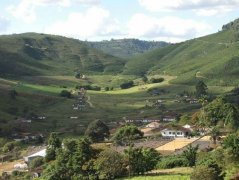
A detailed introduction to the cultivation of Coffee Manors in Central America
Central America knows Central America Coffee Central America is the land bridge connecting North and South America. There are seven countries, namely, Belize, Costa Rica, El Salvador, Guatemala, Honduras, Nicaragua and Panama. Seven Central American countries all produce coffee, with Guatemala, Costa Rica and Honduras among the top 10 coffee exporters in the world. Coffee began to flourish in Central America

Why doesn't China import Kenyan tea? a detailed explanation of the grading system of Kenyan black tea
Loose tea allows you to see, smell, and even hold the tea, allowing you to enjoy the taste of the tea. Take a little time to understand tea, your tea will become more personal and charming, deepening your enjoyment of this charming cultural experience. The grading of tea is determined according to the size and type of tea.

Fine Coffee: a detailed explanation of hand-made filter Paper Coffee
One: prepare hand flushing equipment 1. Filter cup 2. Filter pot 3. Filter paper 4. Hand flush pot 5. Coffee powder (medium grinding-medium roughness grinding) 6. Hot water (83-88 degrees) 2: coffee bean dosage and coffee liquid extraction 1 cup coffee powder: 10g coffee solution for 180ml extraction 2 cups coffee powder: 18g coffee solution for 300ml extraction 3 cups coffee powder: 25g coffee solution
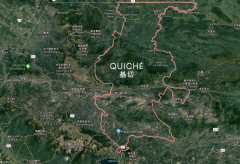
Detailed characteristics such as geography and climate of coffee producing areas in Chiche province, Guatemala
The province of Quiche in central and western Guatemala is located in the middle of the two traditional producing areas (Vivette Nango and Koban rainforest). Farmers skillfully make use of the local advantages of the two major producing areas, and the coffee here is bred from pollution-free mountains and pure water sources. The flavor is often full of peach and plum fruit tonality and sugar-like sweetness. In the ancient mountains of Kitchen province, it lies deep.
A detailed introduction to the practice and nutrition knowledge of cocoa powder
Introduction to cocoa powder: natural cocoa powder is extracted from natural coffee (cocoa) beans
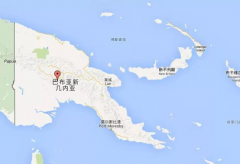
A detailed description of the varieties and flavors of Blue Mountain Coffee in Papua New Guinea
Coffee cultivation in Papua New Guinea began with seeds imported from Jamaica's famous Blue Mountain region in 1937. This tradition has not disappeared in today's Papua New Guinea coffee, and its flavor characteristics still show similarities with old-fashioned Jamaican Blue Mountain coffee. Coffee plant varieties grown in New Guinea include Blue Mountain Coffee (Cofea Arabica var.Blue Mountai)
A detailed explanation of homemade coffee hand-brewed coffee
Hand-made coffee and siphon coffee should be the two most popular coffee practices in Japan. Relatively speaking, hand style is the easiest way to get started, and it is also one of the best ways to taste individual coffee. First, let's talk about the preparation of the tools: 1. A Tiamo kettle with a thermometer 2, a Hario V60 filter cup 3, tapered filter paper 4, and a pot for coffee is installed in a very simple way.

Italian Fancy Mocha Coffee How to Make Fancy Mocha Coffee Pictures with Detailed Practices
Professional coffee knowledge exchange More coffee bean information Please pay attention to coffee workshop (Weixin Official Accounts cafe_style) Strong Espresso, charming hot chocolate and gentle milk meet in the cup, love coffee you miss the most flavor. With Espresso, hot chocolate and milk. Today it is known as Italian fancy mocha coffee. Italy

World Coffee Manor: a detailed introduction to the treatment of Coffee beans with Red Wine at Carmen Manor in Panama
New product in September: Panamanian Carmen Chateau red wine treats coffee beans. I love coffee not because of how delicious it is, but because the smell is so fascinating. I always thought that the greatest charm of coffee was the aroma of coffee. It was not until I came to work here that it subverted my perception of coffee.

Detailed introduction of video instructions for descaling steps of Delong coffee machine
Delong coffee machine descaling steps video instructions in detail 1. Take out the Delong coffee machine descaling liquid, cut off the seal, pour it into the water tank of the coffee machine, and then return the water tank of the coffee machine. Of course, it needs to be noted here that the water in the coffee machine tank should not be connected too much, otherwise the descaling will take a long time, and it is generally recommended to connect 1 to 3 tanks of water. 2. Break the steam head of the coffee machine to the far left

Varieties of Latin American coffee beans with detailed flavor and story treatment
Latin American coffee bean characteristics, flavor description, flavor description, coffee channel merchants often joke that good Hawaiian Kona beans are actually Panama beans, good Jamaican blue beans are actually Panama beans, and good Costa Rican beans are actually Panama beans. Although it is a joke, what is revealed is the high praise of Panamanian beans in the boutique coffee world! Panamanian coffee beans

A detailed introduction of the coffee production areas of Costa Rica on behalf of coffee from Central America.
For the exchange of professional baristas, please follow the Coffee Workshop (official Wechat account cafe_style). There are seven countries in Central America, namely, Belize, Costa Rica, El Salvador, Guatemala, Honduras, Nicaragua and Panama. All seven countries in Central America produce coffee, among which Guatemala, Costa Rica and Honduras are global coffee exporters.
Coffee beans roasting common sense detailed explanation of the 8 stages of roasting
Roasting green coffee beans gives the beans their distinctive color, aroma and taste. The most important thing about baking is to be able to cook the beans evenly inside and outside without burning them. 80% of coffee taste depends on roasting, which is the most basic and important condition for brewing strong coffee. The roasting of coffee beans is roughly divided into three categories: light fire, medium fire and strong fire.
Detailed explanation of coffee utensils using siphon pot
The coffee made by the siphon pot is more mellow because a large amount of coffee oil is dissolved in the coffee liquid, so the coffee made by the siphon pot is more mellow and more fragrant. What most friends have is the so-called three-person siphon pot, not to mention whether it is made by three people, but you need it when you make it.
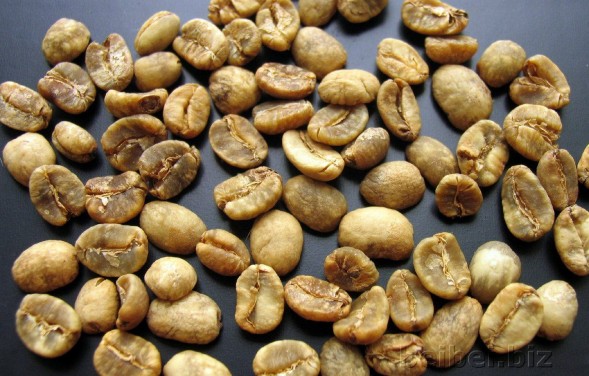
Indonesian coffee beans in the world's boutique coffee bean producing region: a detailed introduction of aged Mantenin raw beans
Introduction: Indonesia aged manning raw beans Aged Mandheling green bean Indonesia aged manning raw beans Aged Mandheling green bean Sumatra islands in Indonesia produce coffee because of its unique geographical location, climatic environment, longitude and latitude, and rich in coffee. Indonesian coffee has a high mellowness, weak sour taste and strong aroma. The more famous area is Lin Dong.
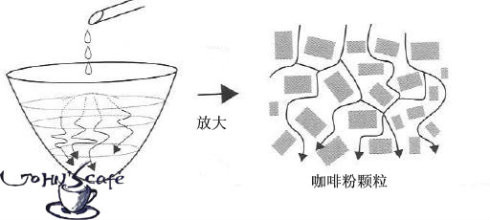
Hand brewing method--detailed explanation of the whole process of central water injection, introduction of how to hand brew a cup of fine coffee
I have been using the center injection method for brewing since I came into contact with hand brewing, that is, only injecting water in the center without spreading out, and a small hole will be formed after extraction. The opposite of the central injection method is the infusion method, which injects water over the entire coffee surface. Many friends feel that the central injection method may not be able to extract completely, but my feeling is that the central injection method can extract completely, but it is the immersion method.