
"Export"
14341 article(s) found

Recommendation of boutique coffee manor; detailed analysis and introduction of coffee beans in Ethiopia (mocha)
Ethiopia's coffee exports account for about 3% of the world market and are the world's eighth largest coffee exporter. Coffee exports increased steadily from 58000 tons in 1990-91 to 110000 tons in 1995-96 and remained at this level in the following years. The export volume exceeded 110000 tons in 2001-2002 and reached 127000 in 2002-2003.

The export of coffee beans
Every year, 5 million to 6 million tons of fresh coffee beans are produced, most of which take a long journey, starting from the plantations, being carried on animals, and then by land, water, rail, and until today's aviation system reaches all parts of the world.
About the export of coffee beans
Every year, 5 million to 6 million tons of fresh coffee beans are produced, most of which take a long journey, starting from the plantations, being carried on animals, and then by land, water, rail, and until today's aviation system reaches all parts of the world. As we can see, until coffee beans are ready to be sold or exported, they always use parchment coffee beans (that is,

Coffee-producing countries export volume Uganda exports coffee volume increases
Uganda's coffee exports are expected to rise 3 per cent this year compared with the same period last year due to increased rainfall in coffee bean producing areas, the BBC reported on September 15. Uganda is reported to be the largest exporter of coffee in Africa. This season, Ugandan coffee exports are expected to reach 3.6 million bags of 60kg coffee. Coffee cultivation in Uganda is generally biased towards Robusta varieties, but from January to March this year
Encyclopedia of coffee beans on the export of coffee beans
Every year, 5 million to 6 million tons of fresh coffee beans are produced, most of which take a long journey, starting from the plantations, being carried on animals, and then by land, water, rail, and until today's aviation system reaches all parts of the world. As we can see, until coffee beans are ready to be sold or exported, they always use parchment coffee beans (that is,

Peruvian Coffee Market Peruvian Coffee Export Peruvian Coffee quality
Peruvian coffee market: the private Peruvian Coffee exporters Association (ComeradeExportadoresdeCafedelPeru) has been established, which is committed to improving the quality of coffee, and its primary task is to set standards and eliminate inferior products, thus creating an atmosphere of quality supremacy. This positive move heralds a bright future for the coffee industry. After that, as prices rose, farmers were also encouraged.
Uganda exports coffee
Uganda, Kenya and Tanzania are major coffee exporters in Africa and the world. Coffee produced in this region is of excellent quality and is a traditional export product. It is also an important source of foreign exchange. Read the material and answer the following questions with relevant knowledge. Table 1 Climate and Coffee Export Volume of Uganda, Kenya and Tanzania Annual Average Temperature (℃) Monthly Maximum Temperature (℃)

Introduction to Colombian Coffee Export
German imports account for 25 per cent of Colombia's total exports, reflecting the country's excellent quality. The coffee grade is divided into top grade (Supremo), excellent grade (Excelso) and top grade (UGQ, Unusual Good Quality). Klauss coffee in the excellent grade is exported to Germany and Europa coffee is exported to Nordic countries. In most coffee

Coffee production and export volume increased in the first three months of 2017.
According to the Colombian National Coffee producers Association, coffee production in March was 1.02 million bags, an increase of 8.1% over the same period last year. In the first three months of this year, coffee production reached 3.6 million bags, an increase of 13% compared with the same period last year. Colombian coffee exports so far this year have reached 3.5 million bags, an increase of 5 per cent over the same period last year.

Kenyan coffee export income continues to increase
In 2016, Kenyan coffee exports increased by 7.8 per cent to US $206 million, of which 85 per cent was auctioned through the Nairobi Coffee Exchange (NCE) and the rest sold directly overseas. According to statistics, the main destinations of Kenyan coffee exports are Germany, Belgium and the United States, and the prices vary, with each bag of 50kg coffee beans selling for about $250,240 and $300 respectively. Willing to pass
Ethiopian Coffee Culture characteristics of Ethiopian Coffee Export
Professional coffee knowledge exchange more coffee bean information please follow coffee workshop (Wechat official account cafe_style) Coffee is the core of Ethiopian culture, coffee production is both a loving labor and an important source of income. This crop has been integrated into the culture and economy of the country. The country is the sixth largest coffee producer, according to reports, in 2018
Introduction to the Export of Coffee Bean production Market in Ethiopia Coffee production area of Brazil
Professional coffee knowledge exchange more coffee bean information please follow the coffee workshop (Wechat official account cafe_style) Ethiopian coffee market introduces coffee is one of the most popular drinks in the world. It is made from coffee beans of the genus Coffee. It is produced in more than 70 countries around the world, with the largest producers from South America, Asia and Africa. In Africa, the biggest coffee maker

Introduction to Ethiopian Coffee
Ethiopia is one of the major producers of Arabica coffee in Africa, producing the best Arabian coffee in the world.
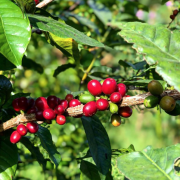
Indonesian Coffee Industry Export and production of Indonesian Coffee beans Robusta makes instant coffee
Indonesia is the world's third largest coffee producer and exporter after Brazil and Vietnam. Indonesian companies offer a full range of quality coffee, from the ordinary Robusta variety to the outstanding Arabica coffee and the famous kopi luwak Indonesian Kopi Luwak. Over the past few decades, national coffee production has increased, although not linearly, because of the harvest.

An introduction to the characteristics of the pure Ethiopian Sidamasha Chiso coffee flavor manor.
Coffee is Ethiopia's main economic crop and the country's largest crop export and important industry. It accounts for 60% of Ethiopia's total export value and supports many small farms, as well as sugar, bananas and cotton. It is also Ethiopia's largest and important commodity export crop after oil, and it is also the largest export of Elaraby in Africa, in 1997.

Treatment method of Grinding degree and Baking degree of Fine Coffee beans in Coffee Manor (Moka) in Ethiopia
Coffee exports Coffee is Ethiopia's most important export cash crop and a major source of Ethiopia's foreign exchange earnings. Ethiopia's coffee exports account for about 3% of the world market and are the world's eighth largest coffee exporter. Coffee exports increased steadily from 58000 tons in 1990-91 to 110000 tons in 1995-96.

Introduction to the description of the characteristics of grindability and flavor of Coffee in Xida Mochizo producing area
Coffee is Ethiopia's main economic crop and the country's largest crop export and important industry. It accounts for 60% of Ethiopia's total export value and supports many small farms, as well as sugar, bananas and cotton. It is also Ethiopia's largest and important commodity export crop after oil, and it is also the largest export of Elaraby in Africa, in 1997.

Acidity and texture of Ethiopian Fine Coffee Bean Flavor and Taste Manor
35% of the coffee is courtyard coffee. In this kind of coffee garden, the planting is three-dimensional. Coffee is located in the lower layer and gets a suitable growth environment in the shade of other crops. Fertilizers are mainly fallen leaves, withered grass and animal manure. 5% of the coffee belongs to plantation coffee. This is a modern way of growing coffee, which is also grown in forests, but uses new varieties and works with others.
The Magic of Laos Coffee Coffee History
Coffee in Laos has gone through a lot of development in the past 20 years. The speed of development in the past 20 years is faster than that in the past 80 years. The coffee history of Laos can be traced back to 100 years ago. At that time, France was the colonial ruler of Vietnam, Cambodia and Laos, and they began to experiment with growing various crops in these areas. Coffee was quickly found in farmers in Vietnam and Laos.

The difference between Lao Coffee and Vietnamese Coffee
Coffee in Laos has gone through a lot of development in the past 20 years. The speed of development in the past 20 years is faster than that in the past 80 years. The coffee history of Laos can be traced back to 100 years ago. At that time, France was the colonial ruler of Vietnam, Cambodia and Laos, and they began to experiment with growing various crops in these areas. Coffee was quickly found in farmers in Vietnam and Laos.