
"ICO"
619 article(s) found

Analysis on the trend of African Coffee Market _ what are the varieties of African coffee beans _ which brands of African coffee are good
Professional coffee knowledge exchange more coffee bean information Please pay attention to Coffee Workshop (Wechat official account cafe_style) Coffee consumption in Africa has increased greatly. Countries such as Kenya and Uganda have established their own coffee cultures and become new territories of coffee, but they are also facing the new challenge of self-sufficiency. On the African continent, coffee beans have been used as a cash crop for years, but they are mostly for export and domestic demand.
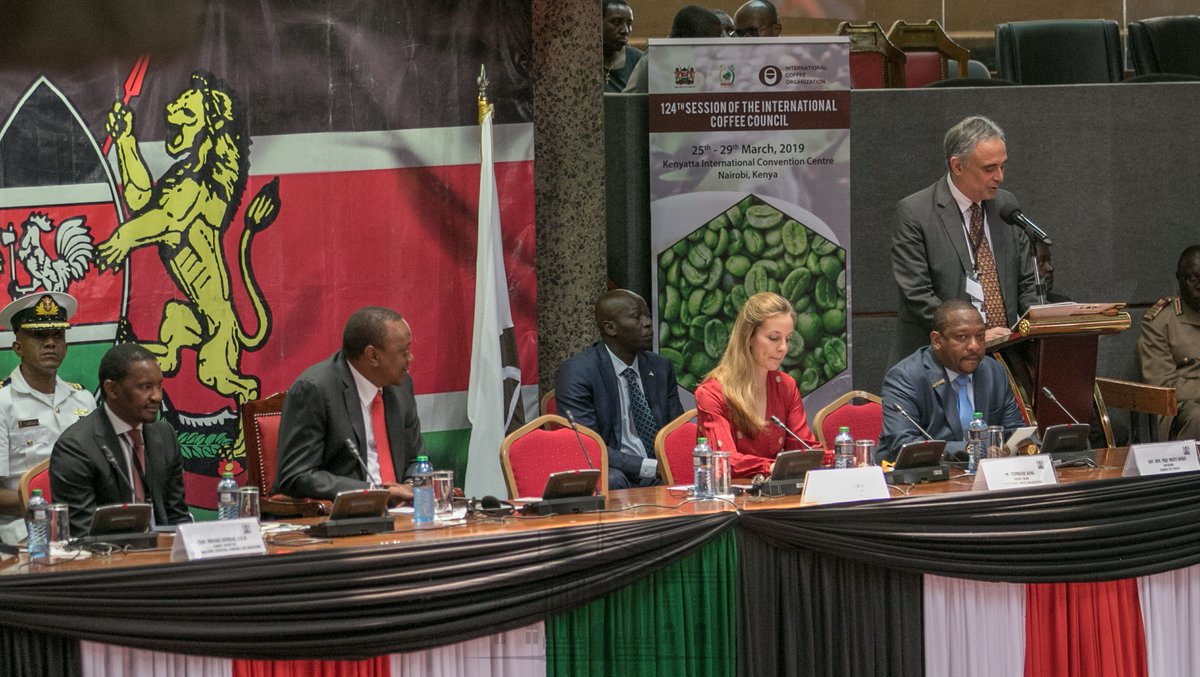
Kenya announces coffee industry reform measures aimed at increasing production and increasing farmers' income
Professional coffee knowledge exchange more coffee bean information follow the coffee workshop (Wechat official account cafe_style) yesterday, Kenyan President Uhuru Kenyatta announced measures aimed at reforming the country's coffee industry. At the 124th International Coffee Council (ICO) meeting in Nairobi, Kenya, Kenyatta said the reforms are aimed at increasing coffee production.

International Coffee Organization
International Coffee Organization during the 19th century, coffee became an important international trade because of the large number of demand. It makes most countries earn foreign exchange from coffee export trade as a source of money income for farmers and is an important trade in most countries. Because the split led to changes in prices and product standards, it ended at a conference in New York in 1962.

Washed and sun-dried Salvadoran plus coffee introduces the IzaIco area of Sonsonate province
The current situation of coffee production is a natural and man-made disaster, which is a perfect description of the challenges facing the coffee industry in El Salvador. Despite getting rid of the haze of war, El Salvador's coffee production still faces challenges from time to time, including: 1998, hurricanes; 2001, earthquake; 2002, volcanic eruption; 2012, leaf rust, storm; despite the challenges, El Salvador

Introduction to the characteristics of El Salvador Himalayan Coffee Flavor description and Grinding Variety producing area
A brief History of Coffee production in 1742, coffee was introduced to El Salvador from the Caribbean (1740). In the mid-19th century, El Salvador's original export pillar Indigo (one of the dyes) received a gradual decline in the development of synthetic dyes in Europe, and coffee gradually became the main export product under the guidance of the government. In 1856, the first 693 bags of coffee beans were shipped to Europe. all long

A detailed explanation of the selection of coffee cups
The International Coffee Organization (International Coffee Organization) announced in July that the first International Coffee Day (International Coffee Day) will be held on October 1, when member countries from all over the world will gather and hold various celebrations. (note: many ICO member states have their own coffee days before that, but the dates are not uniform.) In 74

El Salvador Coffee Grinding degree Taste characteristics Variety Flavor description Fine Coffee introduction
Many volcanoes in the territory, known as the country of volcanoes, the lowest elevation is 0 meters, the highest is the Santa Ana active volcano 2385 meters. It became a Spanish colony in 1524. Independence from Spain in 1821. In 1824, he joined the Union of Central America, including Guatemala, Honduras, Nicaragua, Costa Rica, and Mexico. In 1841, secession and independence

An introduction to the coffee-producing areas of El Salvador with the name of "the land of volcanoes"
A brief History of Coffee production in 1742, coffee was introduced to El Salvador from the Caribbean (1740). In the mid-19th century, El Salvador's original export pillar Indigo (one of the dyes) received a gradual decline in the development of synthetic dyes in Europe, and coffee gradually became the main export product under the guidance of the government. In 1856, the first 693 bags of coffee beans were shipped to Europe. all long

Yega Xuefei, what are the G1 coffee beans? how many grades are there in Italian style?
What is the Yega Xuefei G1 coffee bean? how many grades are there in Italian style? the color of Yirgacheffe Aricha Grade 1 raw beans is yellow and green. It is a typical sun-cured coffee with uniform and full particles and few defective beans. It is packaged and exported in ordinary sacks. The basic information of coffee is printed and dyed on the sacks (processing plant, exporters, ICO codes, treatment methods, producing areas). Inside the sacks are plastic packaging for agricultural products.

Tanzania-Kilimanjaro Coffee, one of the four largest coffee producers in Africa
The Tanzania Coffee Council (TCB) has identified six new areas as coffee growing areas, bringing the total number of coffee growing areas in the country to 13 to meet the target of 100000 tons of coffee production in 2020. Adolf, chairman of TCB. Kunburu said that the staff of the council stationed in various producing areas will provide services to farmers and guide farmers to plant products newly developed by the Tanzanian Coffee Research Institute.

Is Yega Xuefei grown in China?-when was Rose Summer introduced into Yunnan, China?
Do you grow Yega Xuefei in China? when was the introduction of Yirgacheffe Aricha Grade 1 raw beans from Yunnan, China? the color of raw beans is yellow and green, which is a typical color of sun-cured coffee. It is packed and exported in ordinary sacks with basic information (processing plant, exporter, ICO code, processing method, producing area) printed and dyed on the sacks.
British media: demand for instant coffee in Asia rises, cheap coffee beans become mainstream
[global Network Comprehensive report] according to Reuters on December 3, the recent strong demand for instant coffee in Asia has stimulated the expansion of the cheap coffee market. Over the next 10 years, relatively inexpensive robusta beans will overtake expensive Arabica beans in the market, according to industry officials. In emerging markets such as China and India, rising incomes have led to a craze for coffee consumption.

Introduction of Tanzanian coffee beans with refreshing acidity and medium mellow
Tanzania is a famous coffee producer in the world. Due to the current low domestic consumption in Tanzania, the government is calling on people to drink at least twice as much coffee every day for the next five years to boost domestic sales. Premers Kimayo, director of the quality and Promotion Department of the Tanzania Coffee Council, the national agency, told Reuters on the 14th that due to the colonial history of Tanzania, today's social elites are learning.
Name of the producing country of the International Coffee Organization
International Coffee Organization during the 19th century, coffee became an important international trade because of the large number of demand. It makes most countries earn foreign exchange from coffee export trade as a source of money income for farmers and is an important trade in most countries. Because the split led to changes in prices and product standards, it ended at a conference in New York in 1962.
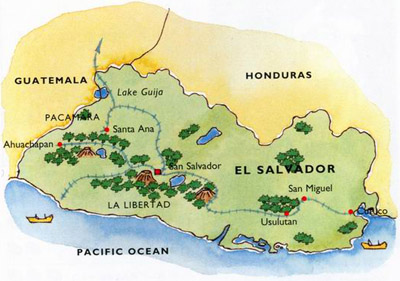
World Fine Coffee El Salvador Manor beans: El Salvador Coffee Cafe de El Salvador
Country profile Republic of El Salvador, Repblica de El Salvador in Spanish, the Republic of El Salvador in English. It is located in Central America, bordering Guatemala and Honduras in the north, and the Pacific coastline in the west and south. The smallest country in Central America and the most densely populated country in Central America. The land area is 21393 square meters

Yerga Sherfi Flavor Description What is washed aricha coffee
Yirgacheffe Aricha Grade 1 Raw beans yellow green color, is a typical sun coffee color, particles are even full, less defective beans, using ordinary sacks for export, sacks printed with basic information of stained coffee (processing plant, exporter, ICO code, processing method, production area) sacks are agricultural packaging plastic bags

Medium concentration, refreshing acidity of Kilimanjaro coffee in the highlands of northern Tanzania
Tanzania is a famous coffee producer in the world. Due to the current low domestic consumption in Tanzania, the government is calling on people to drink at least twice as much coffee every day for the next five years to boost domestic sales. Premers Kimayo, director of the quality and Promotion Department of the Tanzania Coffee Council, the national agency, told Reuters on the 14th that due to the colonial history of Tanzania, today's social elites are learning.

Tanzania coffee bean flavor description taste treatment grinding scale production area
Tanzania coffee bean flavor description grinding scale production area Kilimanjaro AA is the highest grade of beans, all aspects of quality are high. Medium or more moderate after baking has a strong aroma. Suitable for making individual or iced coffee Tanzania currently produces 50,000 tons of coffee a year, making it the fourth largest coffee producer in Africa. Due to the sharp rise in international coffee prices last year
World Coffee producers Forum-Live broadcast that you can't miss!
Following Cafe Review (Wechat official account vdailycom) found that Beautiful Cafe opened a small shop of its own. We can't live without coffee more and more, and we can't do without every coffee grower, of course. The acceleration of industrialization, climate change and market fluctuations have brought a series of problems and challenges to coffee growers. FNC is a professional association that has served coffee farmers for 90 years.

General knowledge of Coffee introduced by producing countries of International Coffee Organization
International Coffee Organization during the 19th century, coffee became an important international trade because of the large number of demand. It makes most countries earn foreign exchange from coffee export trade as a source of money income for farmers and is an important trade in most countries. Because the split led to changes in prices and product standards, it ended at a conference in New York in 1962.