
"Missionaries"
2171 article(s) found

Kenya Neri Washed Thangathi Round Bean PB Coffee Flavor Taste Aroma Description
Professional barista exchanges, please pay attention to coffee workshop (Weixin Official Accounts cafe_style)[Kenya Sangxi Processing Plant Pill PB] Kenya is located in eastern Africa, close to Ethiopia, where coffee is native. Coffee producers in Kenya can be broadly divided into two types: cooperative and smallholder. SL28 has a mix of French missionaries, mocha and Yemeni tibica, and has great

Why do Kenyan coffee beans have rich acidity? Kenyan coffee bean flavor planting altitude baking degree
Professional barista exchanges please follow the coffee workshop (Wechat official account cafe_style) French and British missionaries and researchers sifted in Kenya at the beginning of the 20th century
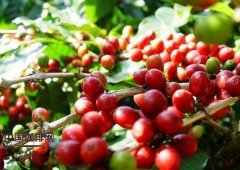
Kenyan Coffee Flavor of Jiatugi processing Plant in Nyeri production area of Kenya
According to botanists in SL laboratory, SL28 and SL34 are genetic variants. Among them, SL28 has a mixed pedigree of French missionaries, mochas and Yemens Tibica. The goal of cultivating SL28 was to mass produce coffee beans with high quality and resistance to diseases and insect pests. Although the later production of SL28 was not as large as expected, copper leaves and broad bean-shaped beans were very popular.

Who mainly produces Kenyan coffee? description of flavor characteristics of Kenyan coffee varieties
For the exchange of professional baristas, please follow the coffee workshop (Wechat official account cafe_style) [Kenya Coffee Sangesi processing Plant PB] Kenya coffee production area is located in eastern Africa, close to Ethiopia, where coffee originated. Coffee producers in Kenya can be broadly divided into two types of cooperatives and small-scale farmers. SL28 has a mixture of French missionaries, mochas and Yemens Tibica.
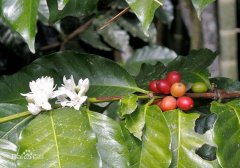
Nyeri Central Dashan area of Jiatugi processing Plant in Nyeri production area of Kenya
According to botanists in SL laboratory, SL28 and SL34 are genetic variants. Among them, SL28 has a mixed pedigree of French missionaries, mochas and Yemens Tibica. The goal of cultivating SL28 was to mass produce coffee beans with high quality and resistance to diseases and insect pests. Although the later production of SL28 was not as large as expected, copper leaves and broad bean-shaped beans were very popular.
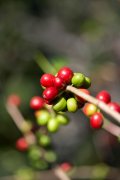
Washing AA quality coffee beans from Jiatugi treatment plant in Nyeri production area of Kenya
According to botanists in SL laboratory, SL28 and SL34 are genetic variants. Among them, SL28 has a mixed pedigree of French missionaries, mochas and Yemens Tibica. The goal of cultivating SL28 was to mass produce coffee beans with high quality and resistance to diseases and insect pests. Although the later production of SL28 was not as large as expected, copper leaves and broad bean-shaped beans were very popular.

What kind of bourbon coffee is bourbon? how about bourbon coffee beans?
Professional coffee knowledge exchange more coffee bean information please follow Coffee Workshop (Wechat official account cafe_style) Bourbon is the most famous bourbon descendant variety (see Bourbon history and typical a complete history of this group of coffee). The variety of this variety is high, the yield is relatively low, it is susceptible to main diseases and the cup body quality is good. In the early 18th century, French missionaries introduced Bourbon from Yemen.

Kenya | Dorman multi-door AA FAQ wash SL28 SL34 flavor?
Professional coffee knowledge exchange more coffee bean information please follow the coffee workshop (Wechat official account cafe_style) Kenya | Dorman multi-door AA FAQ washing SL28 SL34 flavor? Kenya, located in East Africa, is one of the major coffee producing countries. More than 6 million people in the country are engaged in the coffee industry, mostly in the form of a combination of small farmers and cooperatives. There are many coffee trees in Kenya.

Four main varieties of raw beans grown in Kenya and their flavor characteristics
Raw bean varieties grown in Kenya, SL28 and Sl34. According to SL laboratory (according to botanists in SL laboratory, SL28 and SL34 are genetic variants. Among them, SL28 has a mixed pedigree of French missionaries, mochas and Yemens Tibica. The SL series is based on the ancient species of Mocha in Yemen and the bourbon species on the island of Reunion, and now accounts for the coffee production in Kenya.

West Hannah Manor in Kenya introduces the flavor characteristics of Kenyan coffee
For more information on coffee beans, please follow the Coffee Workshop (Wechat official account cafe_style) West Hannah Manor is located in the Thika region of the central province of Kenya, the primitive bourbon species introduced by French missionaries at the end of the 19th century, the Harris family of West Hannah Manor has grown coffee in the Thika area and has a history of more than 100 years, where it has red volcano fertile soil.
Yunnan Tengchong Xinzhai Coffee History _ Lujiangba Coffee Development status _ Xinzhai small Coffee?
Professional coffee knowledge exchange more coffee bean information Please follow the coffee workshop (Wechat official account cafe_style) in 1892, French missionaries successfully planted coffee in a place called Zhukula in Yunnan, and this popular drink in the western world took root in Chinese mainland. Zhu Kula still grows coffee trees more than 100 years old, but the missionaries who planted them at that time

Strong acid-rich Kenyan coffee flavor manor introduction Berman manor
This Kenyan native species was created by Scott Laboratories in 1930, known as SL for short. Agronomists wanted to find a kind of bourbon with high yield and resistance to diseases and insect pests, and obtained SL28 through experiments. SL28 is a genetic variant with a mixed pedigree of French missionaries, mochas and Yemens Tibica. The goal of breeding SL28 was to produce both in large quantities and in large quantities.

Knowledge of coffee culture when coffee was introduced into China
The history of the introduction of coffee into China is not long, and it was not until 1884 that coffee was first planted in Taiwan Province. In the mainland of the motherland, the earliest coffee cultivation began in Yunnan. At the beginning of the 20th century, French missionaries brought the first batch of coffee saplings to Binchuan County, Yunnan Province, and began to grow coffee in the mainland. The history of coffee introduced into our country is not long, until 188

What's the flavor of Kenyan coffee? Kenya is suitable for cooking?
Professional coffee knowledge exchange more coffee bean information Please pay attention to Coffee Workshop (Wechat official account cafe_style) Kenya, located in East Africa, is one of the major coffee producing countries. More than 6 million people in the country are engaged in the coffee industry, mostly in the form of a combination of small farmers and cooperatives. Coffee trees in Kenya are mostly planted at 1400-2000 meters above sea level, and the growth area includes Ruiri.

Description of Flavor of AA Coffee beans in Chu Kam Valley, Kenya
Copper leaves and broad bean-shaped beans have a great sense of sweetness, balance and complex flavor, as well as remarkable citrus and black plum characteristics. SL34 is similar to SL28 in flavor, with a heavier, fuller and cleaner finish than SL28, except for the complex acidity and great sweetness of the finish. SL34 has French missionaries, bourbon, and more Tibica ancestry. Bean appearance and SL

Kenya Xihanna Manor Origin and Naming Introduction Coffee Bean Flavor Description
Professional barista exchanges, please pay attention to coffee workshop (Weixin Official Accounts qianjieccoffee) Introduction Kenya is one of the cradles of human beings, and even human skull fossils about 2.5 million years ago have been unearthed in Kenya. From 1890 until independence in 1963, it was under British colonial rule for about 70 years. French and British missionaries and researchers in the early twentieth century
When was Chinese coffee culture introduced into China? Chinese consumption of coffee
When was coffee introduced into China? The history of the introduction of coffee into China is not long, and it was not until 1884 that coffee was first planted in Taiwan Province. In the mainland of the motherland, the earliest coffee cultivation began in Yunnan. At the beginning of the 20th century, French missionaries brought the first batch of coffee saplings to Binchuan County, Yunnan Province, and began to grow coffee in the mainland. Coffee biography
Flavor and taste characteristics of historical stories of Kenyan coffee varieties SL28 and SL34 Rui Lu 11 coffee beans
Today, the editor introduces the unique Kenyan coffee varieties SL28 and SL34, both of which are cultivated from Scott Laboratory (SL). They are selected varieties of a single variety after many times of cultivation, referred to as SL28 and SL34. It should be noted that 42 tree species were selected from different producing areas in the laboratory. SI is only the prefix name of the R & D series, which does not mean that they are all the same variety.
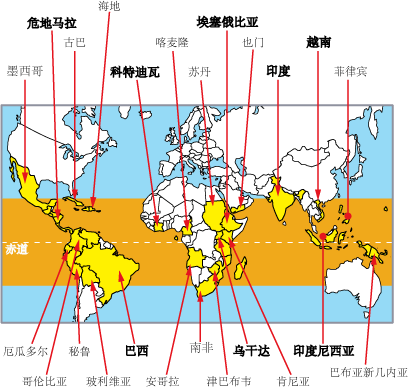
Chinese Coffee Chinese Coffee Culture China Coffee Network introduces when coffee was introduced into China?
The history of the introduction of coffee into China is not long, and it was not until 1884 that coffee was first planted in Taiwan Province. In the mainland of the motherland, the earliest coffee cultivation began in Yunnan. At the beginning of the 20th century, French missionaries brought the first batch of coffee saplings to Binchuan County, Yunnan Province, and began to grow coffee in the mainland. The history of coffee introduced into China is not long, straight.

Introduction to the quality of Kenyan coffee varieties different from bourbon beans in Central and South America
Different from bourbon beans in Central and South America. This Kenyan native species was created by Scott Laboratories in 1930, known as SL for short. Agronomists wanted to find a kind of bourbon with high yield and resistance to diseases and insect pests, and obtained SL28 through experiments. SL28 is a genetic variant with a mixed pedigree of French missionaries, mochas and Yemens Tibica, which was originally cultivated for SL28.