
"Pest"
892 article(s) found
Katim Coffee characteristics, Katim Coffee planting
Follow Kaiping (Wechat official account vdailycom) found that the beautiful cafe opened its own shop with 3846 seeds per kilogram when it was cool in the sun for two months. There were about 5000 seeds in cool sun for 5 months, the germination rate was more than 95% in two months after seed production, 85% in three months, became weak after three months, and most seeds lost their germination rate after six months. Resistance to leaf rust

Which brand is better to buy coffee beans? what coffee beans are more famous?
Arabica was the only kind of coffee beans, then in the 19th century, there was a large area of diseases and insect pests, coffee growers began to look for other varieties of coffee resistant to diseases and insect pests, so Rob's special was discovered and began to be planted artificially. Robert's special growth in low-altitude areas, characterized by resistance to diseases and insect pests, cold, drought resistance, a word description, thick, but the taste is relatively comparative

Coffee trees are planted! Coffee hands: the harm of illness (Disease)
Professional coffee knowledge exchange more coffee bean information please follow the coffee workshop (Wechat official account cafe_style) in the last episode we know that diseases and insect pests will destroy the growth of coffee, but also a general understanding of the types of coffee pests. In this article, let's look at the diseases of coffee trees.
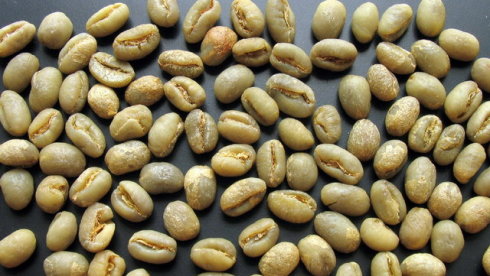
Tanzania Coffee Green Bean Kilimanjaro AA Black Plum Flavor Balanced Acidity Soft Mild
Political instability and pest infestation have disrupted Tanzania's coffee industry, leading to a decline in overall coffee levels and instability in quality, which in turn has led to lower prices, which usually result in further declines in the coffee industry. More notably, it is estimated that from 1969 to 1985 more than 12 per cent of the Arabica coffee grown in northern Tanzania was lost.

What is organic coffee? Is there any advantage in drinking organic coffee? Flavor characteristics of Organic Coffee
Professional coffee knowledge exchange more coffee bean information please pay attention to the coffee workshop (Wechat official account cafe_style) Organic coffee in the cultivation does not use any insecticides and other chemicals to treat pests or cultivation problems, but the use of natural methods, such as the use of natural composting, hedgerow, pruning and other methods to maintain the growth of coffee trees, in terms of pest control

The planting system of Ethiopian coffee is roughly divided into four types.
The planting system of Ethiopian coffee is roughly divided into four categories: 1) primeval forest coffee (Forest Coffee:8-10%) 2) semi-virgin forest coffee (Semi-forest Coffee: 30-35%) 3) Manor coffee (Garden/Cottage: 50% mae 55%) 4) Enterprise coffee cultivation (Plantation Coffee: 5-6%) specifically: primeval forest coffee belongs to the category

Flavor description of Arabica Coffee beans introduction to the taste of varieties produced by grinding scale
Arabica coffee bean flavor description grinding scale production area variety taste introduction to planting, Robasta coffee tree can withstand high temperature, cold resistance, drought resistance, moisture resistance, pest resistance and strong adaptability, and can grow very well on flat ground. unfortunately, the coffee beans produced are lack of aroma, strong bitterness (because of caffeine) and lack of acidity, so they are mostly used for instant coffee.

Yunnan Dehong small Coffee planting Base
Dehong small grain coffee is native to Africa and Ethiopia and is the main cultivated variety in the world. In 1951, coffee seed was first introduced to Dehong Luxi Cotton cropping Experimental Station for productive cultivation. The seedlings were planted in 6 mu and grew well. In 1956, the Dehong Prefecture Committee decided to vigorously develop coffee in the whole state, and held a training course on coffee planting techniques throughout the state, so that small-grain coffee was widely developed in the whole state. 1958 de

Rwanda wants to export 24500 tons of coffee in 2018. How much is the coffee from Rwanda?
For more information on coffee beans, please follow the coffee workshop (Wechat official account cafe_style) Rwanda's National Agricultural Export Development Agency (NAEB) said recently that the country is working to improve the total quantity and quality of coffee exports, with a target of 24500 tons in 2018. Cyrus Ding Getaraya, manager of NAEB Coffee Department, said Rwanda Coffee in 2016
Chinese Academy of Tropical Agricultural Sciences sets up Coffee Innovation Center in Yunnan
On March 6, the Coffee Innovation Center of the spice and Beverage Research Institute of the Chinese Academy of Tropical Agricultural Sciences was established in Pu'er City, Yunnan Province. The establishment of the center is an important measure for the institute to promote the joint and cooperation of tropical agricultural research and promotion based on the development needs of Yunnan coffee industry.
Research shows that shade planting can help coffee farmers maximize their interests.
For more information on coffee beans, follow Coffee Workshop (official Wechat account cafe_style) Coffee growers can maximize profits by converting 1/3 to 2/3 of their farmland into shade cultivation, according to a groundbreaking new study that attempts to quantify economic associations by moving away from traditional direct exposure farming practices. In May this year, in ecology
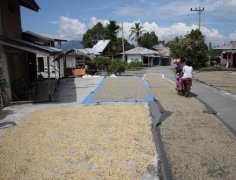
Development of Coffee Industry in Pu'er City, Yunnan Province
In recent years, our city closely revolves around the strategy of ecological establishment and green development, with the goal of developing agriculture with plateau characteristics and building a coffee capital of China, to establish and improve the guarantee mechanism and service mechanism to promote the healthy development of the coffee industry in the whole city. it has effectively promoted the large-scale, intensive and industrial development of the coffee industry in the whole city, and demonstrated the experiment of building the coffee industry into a national green economy in Pu'er.

Cockroaches come out of Starbucks coffee?! Starbucks officials have responded!
On March 10, netizens revealed that a cockroach was found in Starbucks' cold ice drink in Tahiti, and it was still alive. Two days after the post, a blogger with millions of fans also posted the photo with the caption "help!" Cockroaches come out of Starbucks! " So less than two hours.

Common sense of coffee beans in Yunnan Dehong small grain coffee planting base
Dehong small grain coffee is native to Africa and Ethiopia and is the main cultivated variety in the world. In 1951, coffee seed was first introduced to Dehong Luxi Cotton cropping Experimental Station for productive cultivation. The seedlings were planted in 6 mu and grew well. In 1956, the Dehong Prefecture Committee decided to vigorously develop coffee in the whole state, and held a training course on coffee planting techniques throughout the state, so that small-grain coffee was widely developed in the whole state. 1958 de

Introduction to the method of flavor description and taste treatment of coffee raw bean grade G1 growing environment
Coffee raw bean grade G1 growing environment flavor description taste treatment method introduces the representative countries: Brazil, Indonesia, Ethiopia, Cuba, Peru and so on. The method is to randomly take 300 grams of samples and put them on black paper, and different defects correspond to different points, such as 1 point for 1 pebble, 5 points for 1 big pebble, 1 point for 5 broken beans, and 1 point for 5 pest beans.

Honduran coffee growing and improvement programme? Honduras coffee beans export status?
Professional coffee knowledge exchange More coffee bean information Please pay attention to coffee workshop (Weixin Official Accounts cafe_style) Honduras coffee planting and improvement plan? Honduras coffee beans export status? According to the Honduras Las Cafes Bureau (IHCAFE), producers have increased their acreage because of the rise in international bean prices. There are two main factors: (1) coinciding with each
Factors affecting the price increase of coffee futures
Coffee futures trade coffee beans, and futures are both an investment and an increase in coffee. The increase in coffee lies not only in the origin, good or bad, but also for many piecemeal reasons. In the coffee futures market, the main factors affecting the price of coffee beans can be summarized as follows:

What are defective beans? how to calculate defective beans?
High-quality coffee beans are refined by water treatment. The coffee beans with less impurities can be obtained by the water washing method, but if the water quality and time are not properly controlled during the fermentation process, the coffee beans will easily be infected with the sour taste of excessive fermentation. and dry beans also need to pay attention to timely re-inspection to prevent coffee beans from being contaminated by wet ground and sundries. Processed

Description of Manor name and Flavor in boutique Coffee producing area in Kenya introduction to planting environment of taste varieties
This is the earliest classification of Kenyan coffee beans and is still in use in many parts of Brazil. The method of identification is to randomly take 300 grams of samples and put them on black paper, because black paper can best avoid reflection. Then, examined carefully by the professional appraiser, find out the defective beans in the sample, and accumulate different scores according to the types of defects. For example, one black bean counts as one point and one stone counts as one.