
"Review"
3290 article(s) found

Introduction of Ethiopia Sidamo Phoenix Butterfly Coffee Bean Flavor Anoretha Aroresa washing Plant
Professional coffee knowledge exchange more coffee bean information please follow Coffee Workshop (Wechat official account cafe_style) Formosa Farm Ethiopia West Damo Phoenix Butterfly (Sidamo Papilio) good boutique coffee beans / Coffee Review cup tested 92 minutes washed / medium shallow roasted 0.5lb ★ 100% Arabica Ethiopian Sidamo butterfly native species (Heirloom)

Introduction to the steps of brewing coffee by blocking the wind
Following Cafe Review (official Wechat account vdailycom) found that Cafe Beautiful Cafe opened a small shop of its own, using soaking to make water come into contact with coffee powder for a long time, and also using filter cloth to filter coffee powder, so that most of the oils can be kept intact, so it can extract a very strong coffee flavor. The main ingredient P.r.o. Coffee 20g extraction quantity 18

Shakiso coffee beans, Ethiopian Shakiso, Sidamo, Shakiso.
Professional coffee knowledge exchange more coffee bean information please follow the coffee workshop (Wechat official account cafe_style) Shaquiso is the micro-producing area that attracts our most attention in the Sidamo producing area. Shaqiso is located in the Guji producing area of Xida Morri. Open Coffee Review's keyword search with Guji, and there are more than a dozen articles with a score of more than 92.

Six steps to identify coffee
1. Fragrance: the first step in cup evaluation is to evaluate the aroma of coffee beans. Grind 10 grams of coffee, put it in 3-5 sample cups, and then breathe hard at the gas released by the freshly crushed coffee cells. The characteristics of the aroma indicate the essence of the taste of coffee beans: the sweet smell indicates that its taste is sour; the pungent smell indicates that its taste is irritating. The power of aroma

SCAA coffee cup testing process
1. Fragrance: the first step in cup evaluation is to evaluate the aroma of coffee beans. Grind 10 grams of coffee, put it in 3-5 sample cups, and then breathe hard at the gas released by the freshly crushed coffee cells. The characteristics of the aroma indicate the essence of the taste of coffee beans: the sweet smell indicates that its taste is sour; the pungent smell indicates that its taste is irritating. The power of aroma

Introduction to the Flavor characteristics of Kenyan Coffee from AB TOP, Guma processing Plant of Palagwe Cooperative, Kenya
Professional coffee knowledge exchange more coffee bean information please follow the coffee workshop (Wechat official account cafe_style) Kenya Kirinyaga Baragwi FCS Guama AB TOP September 2017 Coffee Review 95 the same batch of Kilinyaga District, Kenya Barag Weizuo Guma processing Plant AB TOP flavor description: bright, deep sweetness, red currant,
Six steps to taste coffee
There are six steps in coffee cup evaluation, describing the aroma, aroma, taste, smell, aftertaste and mellowness of coffee. 1. Fragrance: the first step in cup evaluation is to evaluate the aroma of coffee beans. Grind 10 grams of coffee, put it in 3-5 sample cups, and then breathe hard at the gas released by the freshly crushed coffee cells. The characteristics of the aroma indicate the essence of the taste of coffee beans:

Want to put the roaster in your own cafe? These 30 review methods are worthy of your discussion.
Professional baristas exchange please pay attention to the coffee workshop (Wechat official account cafe_style) Shanghai Food and Drug Administration on soliciting the "Shanghai roasted Coffee Open production license examination rules (draft)" (June 9, 2017) Comprehensive Coffee experience House is a new type of industry that integrates coffee roasting production display and coffee catering service. For
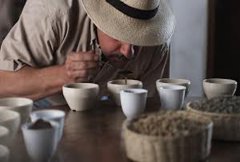
Coffee common sense SCAA coffee cup testing process
1. Fragrance: the first step in cup evaluation is to evaluate the aroma of coffee beans. Grind 10 grams of coffee, put it in 3-5 sample cups, and then breathe hard at the gas released by the freshly crushed coffee cells. The characteristics of the aroma indicate the essence of the taste of coffee beans: the sweet smell indicates that its taste is sour; the pungent smell indicates that its taste is irritating. The power of aroma

Six steps of coffee cup evaluation
There are six steps in coffee cup evaluation, describing the aroma, aroma, taste, smell, aftertaste and mellowness of coffee. 1. Fragrance: the first step in cup evaluation is to evaluate the aroma of coffee beans. Grind 10 grams of coffee, put it in 3-5 sample cups, and then breathe hard at the gas released by the freshly crushed coffee cells. The characteristics of the aroma indicate the essence of the taste of coffee beans:
Six Steps to Coffee Cup Evaluation
Coffee cup evaluation has six steps, describing coffee aroma, aroma, taste, smell, aftertaste and alcohol. Image: ab3a6c70gw1e5uo4ma2xzj20gj0a9gnf.jpg 1. Fragrance: The first step in cup evaluation is to evaluate the aroma of coffee beans. Grind 10 grams of coffee, place in 3 to 5 sample cups, and sniff vigorously the coffee released by the freshly ground coffee cells

Coffee tasting, coffee cup evaluation, six steps
There are six steps in coffee cup evaluation, describing the aroma, aroma, taste, smell, aftertaste and mellowness of coffee. 1. Fragrance: the first step in cup evaluation is to evaluate the aroma of coffee beans. Grind 10 grams of coffee, put it in 3-5 sample cups, and then breathe hard at the gas released by the freshly crushed coffee cells. The characteristics of the aroma indicate the essence of the taste of coffee beans:
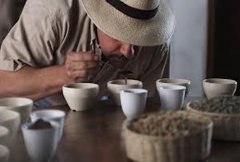
SCAA Coffee Cup testing process introduction to Fine Coffee
1. Fragrance: the first step in cup evaluation is to evaluate the aroma of coffee beans. Grind 10 grams of coffee, put it in 3-5 sample cups, and then breathe hard at the gas released by the freshly crushed coffee cells. The characteristics of the aroma indicate the essence of the taste of coffee beans: the sweet smell indicates that its taste is sour; the pungent smell indicates that its taste is irritating. The power of aroma

Coffee professional cup testing, learning and tasting high-quality coffee
1. Fragrance: the first step in cup evaluation is to evaluate the aroma of coffee beans. Grind 10 grams of coffee, put it in 3-5 sample cups, and then breathe hard at the gas released by the freshly crushed coffee cells. The characteristics of the aroma indicate the essence of the taste of coffee beans: the sweet smell indicates that its taste is sour; the pungent smell indicates that its taste is irritating. The power of aroma

Introduction to the legendary background of 90 + Coffee
Following Cafe Review (Wechat official account vdailycom) found that Beautiful Cafe opened a small shop of its own. Ninety + Coffee comes from American boutique coffee creator and supplier: NinetyPlusCoffee. Only a few years after the company was founded in 2006, 90 has made coffee industry around the world aware of their names. The first coffee has been in the coffee industry since 2007.

Indian "Coffee Royal" Grade Introduction to Robusta
Pay close attention to the coffee review (Weixin Official Accounts vdailycom ) and find that the beautiful coffee shop has opened its own small shop. At present, the output of Indian coffee royal grade Robusta is still very small, but it has gradually attracted the attention of the elite coffee industry all over the world. Italian coffee expert David Schumann David C. Schomer's Espresso Vivace store in Seattle, USA, opened ten years ago

SCAA coffee cup testing process Coffee Flavor Coffee aroma, aroma, taste and aftertaste introduction
1. Fragrance: the first step in cup evaluation is to evaluate the aroma of coffee beans. Grind 10 grams of coffee, put it in 3-5 sample cups, and then breathe hard at the gas released by the freshly crushed coffee cells. The characteristics of the aroma indicate the essence of the taste of coffee beans: the sweet smell indicates that its taste is sour; the pungent smell indicates that its taste is irritating. The power of aroma
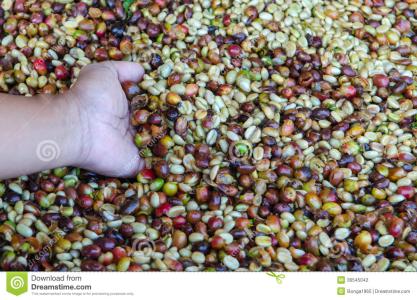
Variety characteristics of Kaddura Coffee beans in Tianyi Manor, Nicaragua
Nicaragua has a unique ecological environment for growing coffee, covered with fertile volcanic soil and shaded planting, which makes the coffee fruit grow slowly and indirectly absorb the moisture brought by thick fog, establishing the good growth essence of coffee. The manor uses hand-cooked fully ripe coffee beans, washed and processed, with rich mellow, multi-layered taste and dry aroma.

Sidamo Lion King Coffee Bean Grinding scale taste Manor treatment Variety introduction
Sidamo Lion King Coffee Bean Grinding scale Manor treatment Variety introduction won 92 and 94 points from the authoritative coffee review website Coffee Review in 2010 and 2012. The producing area belongs to volcanic soil with rich nutrients and good drainage. These fertile nutrients are maintained by the degradation of natural organic matter. This batch is located in the city of Dill

What a good barista must have: how to taste a cup of coffee
There are six steps in coffee cup evaluation, describing the aroma, aroma, taste, smell, aftertaste and mellowness of coffee. 1. Fragrance: the first step in cup evaluation is to evaluate the aroma of coffee beans. Grind 10 grams of coffee, put it in 3-5 sample cups, and then breathe hard at the gas released by the freshly crushed coffee cells. The characteristics of the aroma indicate the essence of the taste of coffee beans: