
"central"
31540 article(s) found

Fine Vietnamese coffee beans price Vietnamese coffee beans how much is a jin of Vietnamese coffee brands
Vietnamese coffee is produced in Vietnam, just as tea is important to Chinese people, it is a kind of penetration into the bone marrow. Robusta coffee beans, which are often used in the world to make instant coffee and high-end coffee blends, are almost all exported from Vietnam. Vietnam is the world's second largest exporter of coffee, surpassing Colombia and second only to Brazil. The aroma is strong, the sour taste is light, and the taste is smooth.
What are the coffee producing countries and geographical location of coffee in the Americas? Colombia and Costa Rica.
Which coffee producers in the Americas are Belize, Costa Rica, Colombia, El Salvador, Guatemala, Honduras, Nicaragua and Panama Belize:

The Coffee Story of the Top Coffee producing areas in the World the characteristics of fine coffee beans in the coffee producing areas of Central and South America
Boutique coffee (specialty coffee) is also called specialty coffee selection coffee. It refers to coffee made from a small number of raw beans with excellent taste grown in an ideal geographical environment. Depending on the special soil and climatic conditions in which they grow, they have outstanding flavor. After strict selection and classification, this kind of coffee is hard in texture, rich in taste and stylish.

Boutique coffee beans Central America Nicaraguan coffee beans
Nicaragua is located in central Central America, bordered by the Pacific Ocean to the west and the Caribbean Sea to the east. The highlands in the north and the coastal plains in the east are part of the Central American volcanic belt. The eastern plain is high-temperature and rainy, with a tropical maritime climate. The suitable climate provides an excellent growth environment for the cultivation of coffee. (Pakamara, Nicaragua on the left, Guatemala on the right) High-quality Niagara

Nicaragua Coffee, Central America's Poorest Coffee Producer
Nicaragua is now one of the poorest countries in Central America. Because of its poor economic base, the coffee industry is still in a relatively backward state, while coffee farmers are in an extremely poor state. Fortunately, Nicaragua's coffee has received some foreign aid funds to improve the quality of its coffee. Nicaragua's Madagerba, Chinodega, Segovia region of coffee
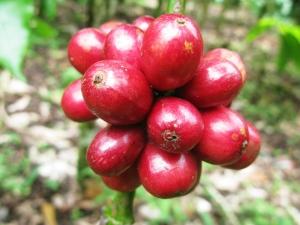
Coffee bean production decreases Central America is badly hit by coffee rust
Currently, 13 of El Salvador's 14 provinces are affected by coffee rust. A similar situation has occurred in Nicaragua, where small farmers have been hit hard by coffee rust. In Central America, especially Costa Rica, Honduras and Guatemala, coffee rust was successfully controlled within two years through innovative coffee cultivation, pruning and proper fertilization.

Boutique single coffee beans Central American Nicaraguan coffee beans
Nicaragua is located in central Central America, bordered by the Pacific Ocean to the west and the Caribbean Sea to the east. The highlands in the north and the coastal plains in the east are part of the Central American volcanic belt. The eastern plain is high-temperature and rainy, with a tropical maritime climate. The suitable climate provides an excellent growth environment for the cultivation of coffee. (Pakamara, Nicaragua on the left, Guatemala on the right) High-quality Niagara

A brief introduction to the treatment method of Grinding degree and Baking degree of Fine Coffee beans in Los Congo Manor in Central America
Beautiful sour taste, moderate mellow Nicaraguan coffee belongs to the Central and South American style coffee, although the acidity is not very high, but it feels refreshing. The mellow degree is also not high, but the overall feeling is just right, neither thin nor too strong. To make it easier to accept. The taste of red wine can be vaguely felt in the shallow sour taste, which is also a major feature of Nicaraguan coffee.

A brief introduction to the History and Culture of the Origin and Development of Fine Coffee beans in Los Congo Manor in Central America
Beautiful sour taste, moderate mellow Nicaraguan coffee belongs to the Central and South American style coffee, although the acidity is not very high, but it feels refreshing. The mellow degree is also not high, but the overall feeling is just right, neither thin nor too strong. To make it easier to accept. The taste of red wine can be vaguely felt in the shallow sour taste, which is also a major feature of Nicaraguan coffee.

The first Central Plains Coffee pull Flower Competition "Erimeng Cup" came to a successful conclusion.
A coffee industry event immersed coffee culture in the hearts of the people, and the eyes of the national coffee industry focused on the Central Plains for the first time. On March 19, the first Central Plains Coffee pull Competition, hosted by Dahe Xinshi Shang, opened in Zhengzhou and ended perfectly at 7 pm that day. 32 contestants from all over the country compete with creativity and wonderful drawing with milk as pen and coffee as cloth. Let the suspense contest appear again and again.

Nicaragua, one of the poorest countries in Central America, has a fine coffee bean flavor and taste
Nicaragua is one of the main coffee producing countries, producing coffee of high quality. Even the coffee in Guatemala's Antigua Mountains, which is famous in Asia, imports green beans from Nicaragua. Although Nicaragua coffee is not yet famous in Asia, in fact, Nicaragua coffee is famous all over the world (Starbucks has many cooperative coffee farmers in Nicaragua), while several coffee producing countries in Central America,
Coffee beans treated with Red Honey in Fire Phoenix Manor in the Valley of Central Costa Rica
Located in the fertile hills of the Poas volcano in the central valley of Costa Rica, Fenghuang Manor is the first producer in Central and South America to produce honey-treated and sun-cured coffee. It is a completely 100% organically grown coffee manor. The owner believes that organic farming is a better choice for environmental maintenance and family health, even in the face of many technical and organizational

Types of coffee beans in Latin America what are the characteristics of coffee producing areas in Central and South America
Professional Coffee knowledge Exchange more information on coffee beans Please follow the coffee workshop (Wechat official account cafe_style) Central America and Mexico (Northern) 13N-25N Central America (North America) Coffee fields are still dominated by descendants of varieties first bred in the 19th century. The long history of coffee production and the mature coffee planting tradition that can be traced back to several generations are still very obvious here.

Coffee in Central America introduces the name and cultivation of coffee producing areas in seven countries.
For professional baristas, please follow the Coffee Workshop (official Wechat account cafe_style) 200Coffee School the land bridge between Central America and North and South America, there are seven countries: Belize, Costa Rica, El Salvador, Guatemala, Honduras, Nicaragua and Panama. Coffee is produced in seven Central American countries, including Guatemala, Costa Rica and Honduras.
The History of Coffee Culture in Central and Northern Europe
Office Coffee Culture in Japan Coffee Culture in San Francisco Coffee Culture in Northern Europe: mild reason the European style is not as enthusiastic as the Italians, nor is it as romantic as the French. People in central and northern Europe drink coffee rationally and gently, just like their organized nationality.

Boutique coffee from Central America the first Nicaraguan coffee estate opened by Taiwanese in Central America
Professional barista communication Please follow the coffee workshop (Wechat official account cafe_style) because he likes drinking coffee and is interested in agriculture, so he bought a coffee farm; because he grows good coffee in Nicaragua, he introduces good coffee to Taiwan. The story of Anjing Manor Coffee Farm sounds incredible. Dr. Chen Ruoyu and Dr. Yang Ziqing used Taiwan's agricultural biotechnology.

Introduction to the handling of coffee beans at Aprocetu Estate Farm in the Central Valley of Costa Rica
For the exchange of professional baristas, please follow the coffee workshop (Wechat official account cafe_style) Costa Rica Aprocetu Estate Farm (honey processed beans) Costa Rica is the most stable and best quality coffee in Central America, and its production has a very long history. It was exported to Britain as early as the 1800s of the 19th century. Latitude, altitude, soil, rainfall and temperature are caused by the narrow terrain.

La Jas Manor in the Central Valley of Costa Rica
Lajas is also the first manor in Central America to start honey treatment and natural sun treatment. Tanning is a very traditional practice, which uses the least resources, but because there are too many uncontrollable factors, it is very difficult to do well. Francesca added many innovations, such as using the sugar meter (Brix meter), which is often equipped in the wine industry, to measure the sugar content of fruits and roots.

History and Flavor Characteristics of Central American and Ethiopian Summer Coffee Beans
Rose summer is a variety familiar to many coffee lovers. Both Central America and Ethiopia are planted, but do you know the difference between the summer flowers in these two regions? As a type of Arabica coffee bean, unlike the widely cultivated coffee varieties such as iron pickup and bourbon, Rosa is a native variety, that is, a descendant of wild coffee. Sometimes it is written gesha, because

Hand brewing method--detailed explanation of the whole process of central water injection, introduction of how to hand brew a cup of fine coffee
I have been using the center injection method for brewing since I came into contact with hand brewing, that is, only injecting water in the center without spreading out, and a small hole will be formed after extraction. The opposite of the central injection method is the infusion method, which injects water over the entire coffee surface. Many friends feel that the central injection method may not be able to extract completely, but my feeling is that the central injection method can extract completely, but it is the immersion method.