
"forests"
15782 article(s) found
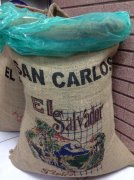
El Salvador Warrior Manor SAN (Tropical Rain Forest Certified Manor) Coffee Flavor and Taste description
For the exchange of professional baristas, please follow the coffee workshop (Wechat official account cafe_style) 510,Salvadoran Warrior Manor-Hot Spring washed Coffee San Carlos Warrior Manor is located in Canton Potrero Grande Arriba, where El Salvador's famous coffee estate is located. The farm is close to the summit of Mount Santa Ana in Santa Ana. The Warrior Manor has amazing scenery and miniature style.
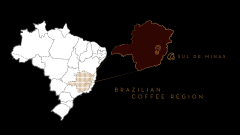
Flavor and introduction of Coffee producing area in Minas and Minas Southeast Mountain Forest region of Southern Brazil
Sul De Minas, south of Minas, is the main coffee growing place for Bulgarian sommeliers. Historically, it is the birthplace of large quantities of coffee production in Brazil, which is an ideal place to produce high-quality coffee. There are many generations of small farmers here. Perhaps for this reason, there are more cooperatives in the region. Most of them are small farms, but it is still a good place for industrialization.

The History of Chinese Coffee Coffee in Zhukula Village, Yunnan Province
When it comes to the history of Chinese coffee, we have to mention Yunnan Dali Zhukula Coffee, which plays a vital role in the history of Chinese coffee. The ancient coffee forest in Zhukula Village is a unique variety of small-grain coffee in Yunnan. It is very rare and of excellent quality. It can be called a living fossil of Chinese coffee. We went to explore the century-old coffee legend of Zhukula village. Zhu Kula, located in Yunnan Province

A brief introduction to the description of Coffee Flavor and aroma characteristics of Coffee Manor in Ethiopia (Moka)
Due to different planting methods, coffee can be divided into three types: forest-semi-forest coffee (Forest or semi-forest coffee), courtyard coffee (Garden coffee) and plantation coffee (Plantation coffee). 60% of the coffee belongs to forest-semi-forest coffee. In such a wild coffee forest, pesticides are not used at all, but biological methods are used to control pests. 35% of the coffee

Ethiopian coffee Yejia snow coffee beans boutique coffee raw beans
Ethiopia is one of the major producers of Arabica coffee in Africa, producing the best Arabian coffee in the world. It is said that coffee was first discovered by shepherds in Essekafa, and the name of coffee evolved from Kafa, so Essex is still the hometown of coffee. Ethiopia's geographical environment is very suitable for coffee growth. Coffee is mainly grown at 1100 meters to 2300 meters above sea level.

Flavor characteristics and treatment of Coffee in Ethiopia
Ethiopia is one of the major producers of Arabica coffee in Africa, producing the best Arabian coffee in the world. It is said that coffee was first discovered by shepherds in Essekafa, and the name of coffee evolved from Kafa, so Essex is still the hometown of coffee. The natural characteristics of coffee beans include large coffee beans.

Kafa Forest, Ethiopia | Wind of native species of Agaro Agaro G1 Bitugudina
Professional coffee knowledge exchange more coffee bean information please follow the coffee workshop (Wechat official account cafe_style) Ethiopia Kafa Forest | washed Agaro Agaro G1 than Tugudina native species flavor? Ethiopia's coffee flavor is very diverse, different soil types, microclimate and countless native coffee species, resulting in the coffee produced by each town

Guatemalan Coffee beans | Guatemala Coffee Aurora Manor washing Kaddura
Professional Coffee knowledge Exchange more coffee bean information Please follow the coffee workshop (official Wechat account cafe_style) Front Street-Guatemala Aurora Manor Coffee brief introduction Koban Rain Forest (Rainforest Coban) is located in the central region of Guatemala, it is one of the eight major coffee producing areas in Guatemala, and the coffee from the Koban area is significantly different from other producing areas in Guatemala. The area

Introduction of High-quality Coffee in producing areas of Ethiopian Coffee
In Ethiopia, the grading and quality control system of coffee is divided into three levels: producer, regional and national. All coffee is inspected by local inspection agencies before leaving the country of origin, and then re-tested at the coffee inspection and grading centers in Addis and Diredawa to determine its quality grade. Coffee is graded before auction and sale, for all involved in production, acquisition,

What are the characteristics of the Harald coffee producing area in Ethiopia? Sub-Hara producing area of Kafa Forest, Ethiopia
Professional coffee knowledge exchange more coffee bean information please follow the coffee workshop (Wechat official account cafe_style) the characteristics of Harald coffee producing area in Ethiopia? Where is the sub-Hara producing area of the Kafa forest in Ethiopia? Geographically located south of the Tropic of Cancer (latitude 5 to 15), close to the equator, belongs to tropical and subtropical climate patterns, most areas are located in
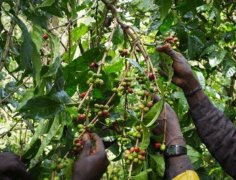
In 1931, in a mountain forest called Geisha in Ethiopia.
The exchange of professional baristas please follow the rise of Geisha coffee in the coffee workshop (Wechat official account cafe_style) in 1931, in a mountain forest called Geisha on the border between Ethiopia and Kenya, local coffee farmers accidentally found that the coffee beans produced here have extremely full, clean and clear sweetness; rich aroma, from fresh berries to hair
Yega Xuefei Sun treatment Bancimaji how to buy good coffee beans online to buy coffee beans need
1. When buying beans online, you should pay attention to the production date, shelf life, packaging and sealing, the roasting degree of coffee beans, the types of coffee beans, and your utensils to determine what kind of beans you want. If you use blue mountain beans to make ESP, it is indeed a maverick way, but it is also too unprofessional and expensive, and the taste is not very good. The production date must be at least

Ethiopian coffee climate
Following Cafe (Wechat official account vdailycom) found that Beautiful Cafe opened its own shop for Ethiopian Coffee Climate if you like coffee, there is one more reason to pay attention to climate change. Ethiopia, an important coffee producer, will be greatly affected if global warming is not contained, and at worst nearly 60% of the country's coffee-producing areas will be affected, according to a new study.
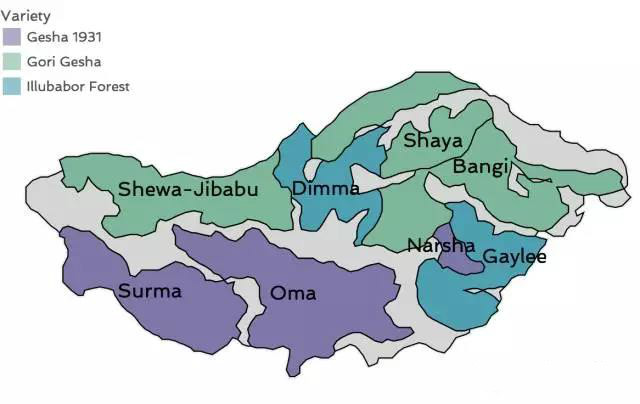
What is the difference between Rose Summer Village and ordinary Ethiopian Manor Rose Summer?
For the exchange of professional baristas, please pay attention to the difference between the coffee workshop (Wechat official account cafe_style) to Diroxia Village and the average Ethiopian manor. What do OMA and SURMA refer to in the batch number? What does the series of numbers 51, 72 and 59 mean? What's the difference between Gesha1931 and Gori Gesha? Next, the editor will give you answers one by one. Manor background

What are the suggestions for Ethiopian single bean baking in Ethiopia's single bean farm?
Professional baristas Please pay attention to the coffee workshop (Wechat official account cafe_style) because of the different planting methods, coffee can be divided into three types: forest-semi-forest coffee (Forest or semi-forest coffee), courtyard coffee (Garden coffee) and plantation coffee (Plantation coffee). 60% of the coffee belongs to forest-semi-forest coffee. In such a wild place

Ethiopian (mocha) coffee
The geographical environment of Ethiopia is very suitable for coffee growth. Mocha coffee is mainly grown in the southern highlands between 1100 and 2300 meters above sea level. The main coffee producing areas are Harar, Limu, Djimma, Sidamo, Kaffa, Yergacheffe and Wellega.

Introduction of Pacamara hand-made coffee in Guatemalan forest manor
Professional coffee knowledge exchange more coffee bean information please follow the coffee workshop (Wechat official account cafe_style) the coffee beans produced in Guatemala with seven major coffee producing areas are all Arabica, all located in the highland topography of the subtropical climate, rich and stable rainfall, fertile volcanic ash soil, so that all parts of the dangerous country have a natural environment that is very suitable for coffee cultivation.

Introduction to the taste grinding degree of Ethiopian coffee flavor description method
At present, about 25% of the Ethiopian population directly or indirectly depends on coffee production for a living. The majority of farmers use traditional planting methods. Artificial care of coffee trees, the use of organic fertilizers, do not use harmful pesticides and herbicides, etc. Therefore, most of the coffee produced by Ethiopia is organic coffee. Due to different planting methods, coffee can be divided into forest-semi-forest coffee (Forest or semi-f).
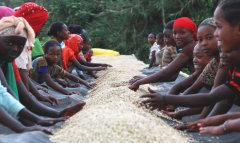
The six modes of growing coffee in Ethiopia introduce in detail the flavor of Arsi sun-dried coffee beans.
At present, about 25% of the Ethiopian population directly or indirectly depends on coffee production for a living. The majority of farmers use traditional planting methods. Artificial care of coffee trees, the use of organic fertilizers, do not use harmful pesticides and herbicides, etc. Therefore, most of the coffee produced by Ethiopia is organic coffee. The planting pattern in Ethiopia is complex, ranging from wild coffee in the original forest to a strong contrast to it.

What is Ethiopian Rose Summer Manor Coffee? Where is the origin of Rosa coffee?
For more information on coffee beans, please follow Mr. Adam Overton, the owner of Gesha Village, the coffee workshop (Wechat official account cafe_style), who came to Ethiopia in 2007 to shoot a coffee documentary. After further contact with coffee, Mr. Adam was so attracted by it that he decided to stay in its birthplace.