
How to Use a Belgian Coffee Maker Step by Step
If you’ve ever seen a dramatic coffee maker with floating glass globes and wondered how it works—or whether it’s worth trying—this guide will show you exactly how to use a Belgian coffee maker. Also called a balance siphon or siphon-balloon, this classic 19th-century brewer delivers clean, full-flavored coffee through a fascinating mix of heat, pressure, and vacuum. Here’s how to do it right.
The standard brew uses 400cc (about 400ml) of water heated in the lower chamber and 40g of medium-fine coffee, similar to what you’d use in a siphon or some pour-overs. The entire process takes just a few minutes and highlights clarity and balance in the cup.
What Is a Belgian Coffee Maker?
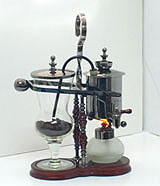
Also known as a balance siphon or siphon-balloon, the Belgian coffee maker is a two-chambered brewer that uses vapor pressure and vacuum principles to brew coffee. It typically consists of a metal (often steel) lower bulb with a heating element (like an alcohol lamp), a glass upper globe, and a siphon tube connecting the two. When heated, pressure pushes water up into the upper chamber where it brews with ground coffee. After removing the heat, a vacuum pulls the brewed coffee back down. It’s equal parts science experiment and elegant brewer.
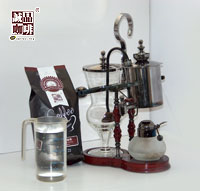
Why Use a Belgian Pot?
This method isn’t just for show—it produces a clean, bright cup that highlights origin characteristics without over-extraction. The balanced pressure system also tends to produce a smoother, less sediment-heavy cup than French press or some espresso methods. Many specialty coffee enthusiasts enjoy it for its theatre and its ability to showcase subtle flavors. It’s especially good for medium to light roasted single origins.
How the Brewing Process Works
The Belgian pot uses basic physics: heating water creates vapor pressure, pushing water into the upper chamber where it mixes with coffee. Once the heat is removed, the system cools, creating a partial vacuum that draws the brewed coffee back down through the filter. This dual action—pressure and vacuum—results in a clean extraction and automatic separation of grounds from brew.
The Role of Pressure and Vacuum
As the water heats in the metal base, vapor pressure increases, forcing water up the siphon tube into the glass globe where it meets the coffee grounds. When the heat source is removed, the temperature drops, reducing pressure and creating suction that pulls the brewed coffee back down into the lower chamber. The automatic lamp shutter also closes thanks to the shifting weight balance, cutting off the heat source safely.
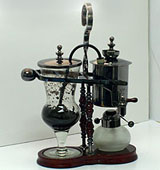
Step-by-Step: How to Use a Belgian Coffee Maker
What You’ll Need
- Belgian coffee maker (siphon-balloon or balance siphon)
- Electric or alcohol burner (most commonly an alcohol lamp)
- 40g of medium-fine coffee beans (similar grind to siphon or pour-over)
- 400cc (400ml) of water
- Scale (optional, for precision)
- Timer (optional)
Step 1: Add Water to the Lower Chamber
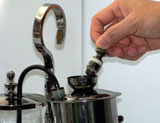
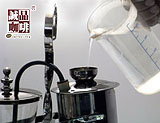
Open the lid on the metal (steel) base. Pour in exactly 400cc of water. Securely tighten the lid back on, then attach the siphon tube or glass globe to the base. Make sure everything is seated correctly to maintain a proper seal.
Step 2: Grind and Add Coffee
Grind 40g of coffee beans to a medium-fine consistency—roughly the same as you’d use for a siphon brewer or a typical pour-over. Pour the ground coffee into the upper glass chamber. Gently tap or shake the glass to level the coffee bed—this ensures even extraction.
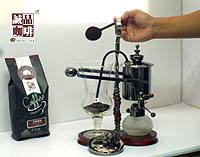
Step 3: Heat the Lower Chamber
Open the lid or cover on your alcohol lamp (or other heat source). Place it under the metal base. Due to the design, the weighted metal chamber will angle and help shut the lamp safely once brewing completes. Light the alcohol lamp. The water in the lower chamber will begin to heat.
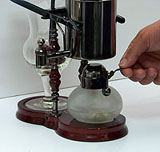
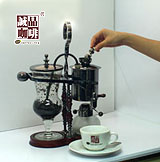
Step 4: Watch the Water Rise
As the water heats, pressure builds and forces the water up through the siphon tube into the upper glass chamber. The hot water mixes with the coffee grounds. Continue heating until most or all the water has transferred. At this point, the lamp may auto-shut due to the shifting weight balance.
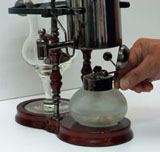
Step 5: Remove Heat & Let It Draw Down
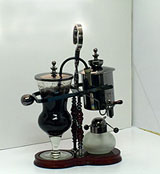
Once the water has fully risen and brewed with the coffee for a short time (usually just a minute or two after transfer), remove the heat source. The metal chamber will begin to cool, reducing internal pressure and creating a vacuum. This vacuum pulls the brewed coffee back down through the filter into the lower chamber. You’ll see the liquid descend steadily.
Step 6: Serve Your Coffee
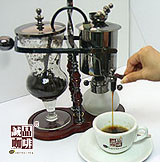
After the coffee has fully returned to the lower chamber and brewing is complete, turn off any remaining flame (if not auto-extinguished), let it settle briefly, then unscrew the lid on the metal base. Place a cup under the tap or spigot and pour your freshly brewed Belgian-style coffee.
Frequently Asked Questions
How much coffee and water should I use in a Belgian pot?
Use 40g of coffee and 400cc (400ml) of water. This gives a brew ratio of roughly 1:10, ideal for balancing strength and clarity in the cup.
What grind size should I use for a Belgian coffee maker?
Use a medium-fine grind, similar to what you’d use for a siphon brewer or a standard pour-over. It should be finer than French press but not as fine as espresso.
Can I use any heat source with a Belgian pot?
Most traditional setups use an alcohol lamp, but you can also use a small electric heater or gas burner as long as it provides consistent, controlled heat and fits the base properly.
Why does the coffee go back down after brewing?
When you remove the heat, the lower chamber cools, creating a partial vacuum. This vacuum pressure pulls the brewed coffee from the upper chamber back down through the filter into the lower chamber, completing the brew cycle.
Does the Belgian pot automatically turn off?
Yes, many Belgian pots have a counterweight and lamp shutter system that automatically shuts off the alcohol lamp when the brewing chamber becomes light enough, usually after most of the water has transferred.
How long does a full brew take?
The entire process—from heating to drawdown—typically takes around 3 to 5 minutes, depending on your heat source and room temperature.
Recommended FrontStreet Beans for Belgian Pot Brewing
For the Belgian pot’s clean and balanced extraction, try FrontStreet Coffee’s Ethiopia Humbera—bright with citrus and floral notes—or Yirgacheffe for juicy berry and stone fruit layers. Their PWN Golden Mandheling offers a heavier body with sweet malt and almond tones, great for showcasing the pot’s clarity. All three shine with the siphon method’s gentle extraction. Freshly roasted within 5 days · Orders placed before 17:00 ship the same day · Next-day delivery across most of Guangdong Province.
FrontStreet Coffee is a long-established specialty coffee roaster in Guangzhou China, selling freshly roasted beans from its own farm in Yunnan as well as dozens of carefully selected single-origin beans from around the world for both pour-over and espresso. The products deliver consistently excellent quality and great value, with shipping within 24 hours. Guangzhou's FrontStreet Coffee shop is recommended by many coffee lovers, and the beans are now available online at the Tmall 。
Important Notice :
前街咖啡 FrontStreet Coffee has moved to new addredd:
FrontStreet Coffee Address: 315,Donghua East Road,GuangZhou
Tel:020 38364473

