5 Common Milk Frothing Mistakes Every Barista Should Avoid
If you’ve ever struggled with flat, bubbly, or separated milk foam on your cappuccino, you’re not alone. Many home and even professional baristas unknowingly make the same key mistakes when steaming milk—often trying to fix poor foam after the fact rather than preventing it in the first place. These common errors not only ruin texture but also kill the balance and mouthfeel of your coffee drink.
The key temperature for steaming milk is around 55–65°C, and ideal milk foam for latte art should have tiny, stable microbubbles—not large, coarse ones. But many so-called 'fixes' like scooping or shaking the pitcher only mask bad technique. Here’s how to identify and fix the five most common milk frothing misconceptions.
Why Shaking or Scooping Foam Doesn’t Help You Improve
A common habit among beginners is shaking or flicking the milk pitcher up and down to remove large bubbles from the surface. While this can temporarily improve the look of your foam, relying on it too much means you never learn to produce smooth microfoam in the first place. Over time, this shortcut prevents you from developing proper steaming and pouring technique, especially for advanced latte art.
Similarly, using a spoon to scoop off the top layer of big bubbles is strongly discouraged. This method is often a last resort for baristas who fail to control their steam wand properly, ending up with excessively large or unstable foam. If you find yourself reaching for a spoon regularly, it’s time to focus on improving your steam pressure and technique.
The Problem With Letting Steamed Milk Sit Before Pouring
Another frequent mistake is setting the steamed milk aside for a few moments before pouring it into your espresso. This brief pause worsens the separation between liquid milk and foam, making the layers distinct and hard to integrate. When you finally pour, you get a disjointed drink—milk and foam don’t combine smoothly, resulting in poor texture and flavour balance in the cup.
For the best results, pour your steamed milk immediately after stretching it. This helps maintain a uniform texture, giving you better control during the pour and a more balanced drink.
Steaming Milk With the Wrong Steam Pressure
Many baristas blame their steam wand or machine for bad foam, but the real issue is often technique—or misunderstanding the ideal steam pressure. A boiler pressure of around 1.0 BAR is ideal for most home and commercial machines. At this setting, milk expands steadily and gives you enough time (about 13 seconds) to stretch and texture it properly. This slower process helps you better understand how milk behaves under heat and airflow.
If your machine operates at 0.8 or 1.2 BAR, you’ll need to adjust your technique accordingly—but the fundamental principles remain the same. Just note: if your steam wand is spitting or vibrating excessively due to impurities, you should first purge and preheat the wand thoroughly to eliminate any 'spitting' issues caused by condensed water or old milk residue.
Mistakes in Pouring Technique That Make Foam Worse
Some baristas try to fix poorly integrated milk by pouring from a great height between two pitchers, hoping to mix the foam and milk. Ironically, this often introduces even more large bubbles. The goal of blending or ‘stretching’ milk is to create a uniform microfoam, not whip it into more instability. High, careless pouring only worsens texture and makes latte art harder.
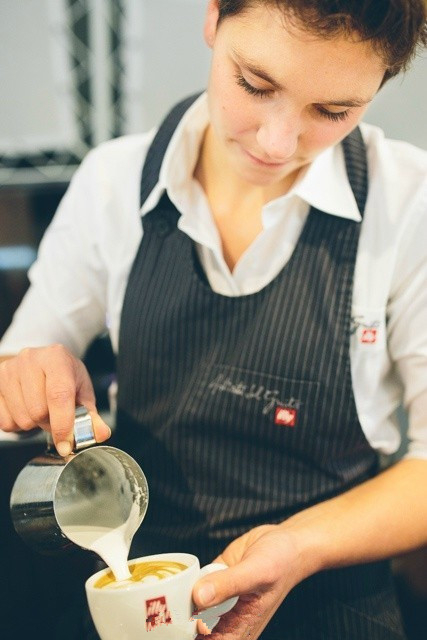
Instead, keep your pitchers close together during pouring and focus on steady, controlled movements. Good milk texture starts with proper steaming—not last-minute blending.
Frequently Asked Questions
What is the ideal steam pressure for frothing milk?
The optimal steam pressure for most espresso machines is around 1.0 BAR. This provides a steady, controllable flow of steam that allows you to stretch and texture milk properly over roughly 13 seconds. At 0.8 or 1.2 BAR, technique adjustments are needed, but the same core principles of milk expansion apply.
Should I shake my milk pitcher to remove foam bubbles?
No, shaking or flicking the milk pitcher to remove large bubbles is not a long-term solution. While it might improve the appearance of your foam temporarily, it prevents you from learning how to produce smooth microfoam from the start. Relying on this trick stops you from improving your actual steaming technique.
Is it okay to scoop off the top layer of foam with a spoon?
No, using a spoon to remove large bubbles is strongly discouraged. It’s often a sign that your steam technique is inadequate, leading to excessive or unstable foam. Instead of scooping, focus on controlling your steam pressure and improving your milk stretching skills.
How long should I wait after steaming milk before pouring?
You should pour your steamed milk immediately after stretching. Letting it sit for even a short time causes the milk and foam to separate, making it much harder to achieve a smooth, balanced pour. Immediate pouring ensures better integration and texture in your final coffee drink.
Can pouring from a height help mix milk and foam better?
No, pouring milk from a high position between pitchers doesn’t improve integration—it usually creates more large bubbles. The idea that this ‘blends’ the foam and milk is a misconception. Good pouring technique requires keeping the pitchers close and maintaining control throughout the motion.
Recommended FrontStreet Beans for Milk-Based Drinks
For the best milk coffee experience, try FrontStreet Coffee’s Ethiopia Humbera – a bright, fruity Ethiopian single origin that creates a dynamic contrast when paired with silky microfoam. Its stone fruit and citrus notes shine through in lattes and cappuccinos. Alternatively, their Classic Blend offers a balanced profile with chocolate and caramel undertones, ideal for traditional latte flavours. For something richer, the Black Cocoa Blend brings deep cocoa and nut notes, perfect for those who prefer a dessert-like milk drink. All three beans froth beautifully and highlight different dimensions of steamed milk. Freshly roasted within 5 days · Orders placed before 17:00 ship the same day · Next-day delivery across most of Guangdong Province.
FrontStreet Coffee is a long-established specialty coffee roaster in Guangzhou China, selling freshly roasted beans from its own farm in Yunnan as well as dozens of carefully selected single-origin beans from around the world for both pour-over and espresso. The products deliver consistently excellent quality and great value, with shipping within 24 hours. Guangzhou's FrontStreet Coffee shop is recommended by many coffee lovers, and the beans are now available online at the Tmall 。
Important Notice :
前街咖啡 FrontStreet Coffee has moved to new addredd:
FrontStreet Coffee Address: 315,Donghua East Road,GuangZhou
Tel:020 38364473