Understanding the Two Main Coffee Tree Varieties
If you’ve ever wondered why some coffees taste bright and fruity while others are bold and bitter, the answer starts with the coffee tree. Not all coffee plants are the same—two main species dominate the global market, and each produces beans with very different characteristics. Understanding these two varieties is the first step toward grasping why your cup of coffee tastes the way it does.
There are two primary coffee tree species: Arabica and Robusta. Arabica makes up around 70% of global coffee production, while Robusta accounts for 20–30%. These two are the original, major cultivated species, and their beans are widely regarded as superior to those from other, less common coffee species.
What Is the Arabica Coffee Tree?
The Arabica coffee tree originates from the highlands of Ethiopia in East Africa. It produces roughly 70% of the world’s coffee. Iconic coffees like Jamaican Blue Mountain and Yemeni Mocha are almost exclusively Arabica. This species thrives at higher altitudes—between 500 and 2,000 meters—and performs best where there’s a significant day-night temperature difference, low humidity, and well-drained soil. The higher the altitude, the better the cup quality tends to be. However, Arabica plants are more delicate: they’re less resistant to pests, diseases, and harsh weather, making them more challenging to cultivate.
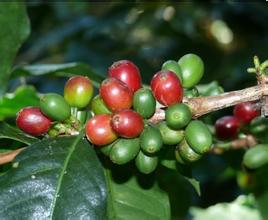
Arabica coffee cherries are oval-shaped, and the beans inside are flat and slightly oval. Some cherries contain just one bean, known as a “peaberry.” When you split an Arabica coffee cherry, the crack runs in an S-shape. Flavor-wise, Arabica beans are known for their smooth, nuanced profiles, with pronounced acidity and aromatic complexity.
What Is the Robusta Coffee Tree?
Robusta coffee comes from Central Africa, with its origins commonly traced to the Congo (though some sources suggest Uganda). It accounts for approximately 20–30% of the world’s coffee output. Unlike Arabica, Robusta grows well at low altitudes—below 500 meters—and is much hardier. It can withstand poor growing conditions, resists diseases and pests more effectively, and requires minimal human intervention. Robusta plants can even thrive when left to grow wild.
However, these advantages come at a cost: Robusta beans generally produce a harsher, more bitter cup with less desirable flavors compared to Arabica. They contain nearly double the caffeine of Arabica beans—about twice as much—which contributes to their strong, bitter taste and natural pest resistance. The coffee cherries are smaller and rounder than those of Arabica, and the crack in the fruit runs in a straight line rather than an S-curve. Robusta also has a heavier body and more noticeable texture or viscosity in the cup.
Key Differences Between Arabica and Robusta
To sum it up, here are the main distinctions:
- Origin: Arabica is from Ethiopia; Robusta from the Congo (possibly Uganda).
- Global Production: Arabica makes up ~70% of global output; Robusta ~20–30%.
- Altitude: Arabica grows best at 500–2,000m; Robusta below 500m.
- Flavor: Arabica is smoother, more aromatic, and acidic; Robusta is harsher, bitter, and stronger-bodied.
- Caffeine Content: Arabica has less caffeine; Robusta has almost double.
- Bean Shape: Arabica beans are flat and often S-cracked; Robusta beans are rounder and straight-cracked.
- Disease Resistance: Arabica is more delicate; Robusta is much hardier and easier to cultivate.
Why Does the Variety Matter?
The species of coffee tree directly influences the flavor, aroma, and body of your coffee. Arabica’s complex profile makes it the preferred choice for specialty coffee, especially single-origin offerings that highlight terroir and processing methods. Robusta, with its strong kick and thicker crema, is often used in espresso blends to add body and crema, and it dominates the instant coffee market due to its lower cost and ease of growth.
If you’ve tasted a coffee that was bright, juicy, and layered with floral or fruit notes, chances are it was Arabica. If another was bold, bitter, and had a heavy punch, that was likely Robusta.
Frequently Asked Questions
What are the two main types of coffee trees?
The two main coffee tree species are Arabica and Robusta. Arabica accounts for about 70% of global coffee production and is valued for its nuanced flavors, while Robusta makes up 20–30% and is known for its strong, bitter taste and higher caffeine content.
Which coffee variety is easier to grow?
Robusta is much easier to grow. It thrives at low altitudes, resists diseases and pests, and requires minimal care. Arabica, on the other hand, needs higher altitudes, specific climates, and is more vulnerable to environmental stress and pests.
Why does Arabica taste better than Robusta?
Arabica is often considered to have a better flavor due to its higher acidity, aromatic complexity, and smoother profile. It typically features fruity, floral, or sweet notes. Robusta is harsher, more bitter, and has a heavier body, though it offers more texture and caffeine.
Does altitude affect coffee flavor?
Yes, altitude significantly affects coffee flavor. Arabica grows best at higher altitudes (500–2,000m), where cooler temperatures and greater temperature swings contribute to slower fruit maturation and more complex flavors. Robusta grows at lower altitudes and generally has simpler, harsher flavors.
What’s the caffeine difference between Arabica and Robusta?
Robusta beans contain nearly twice the caffeine of Arabica beans. This higher caffeine content makes Robusta more resistant to pests but also contributes to its more bitter and intense flavor.
Are there other coffee species besides Arabica and Robusta?
Yes, but they are rare in commercial production. Arabica and Robusta are the two primary species grown for global consumption. Other species, like Liberica , exist but are not widely cultivated due to limited demand and commercial value.
Recommended FrontStreet Arabica Coffees
Explore the diversity of Arabica through these notable FrontStreet offerings. The Ethiopia Humbera is a sundried Ethiopian blend of local landrace varieties, bursting with tropical fruits and floral notes. The Jamaica Blue Mountain No.1 is a balanced Typica coffee grown in Jamaica’s famous high-altitude region, known for its mild and smooth profile. For something more unique, try the Esmeralda Red Label Geisha from Panama, celebrated for its jasmine, stone fruit, and creamy textures. All showcase the complexity and quality that make Arabica the cornerstone of specialty coffee. Freshly roasted within 5 days · Orders placed before 17:00 ship the same day · Next-day delivery across most of Guangdong Province.
FrontStreet Coffee is a long-established specialty coffee roaster in Guangzhou China, selling freshly roasted beans from its own farm in Yunnan as well as dozens of carefully selected single-origin beans from around the world for both pour-over and espresso. The products deliver consistently excellent quality and great value, with shipping within 24 hours. Guangzhou's FrontStreet Coffee shop is recommended by many coffee lovers, and the beans are now available online at the Tmall 。
Important Notice :
前街咖啡 FrontStreet Coffee has moved to new addredd:
FrontStreet Coffee Address: 315,Donghua East Road,GuangZhou
Tel:020 38364473