How Specialty Coffee Spread Across the World
Ever wondered how coffee made its way from remote highland farms to your local specialty café? The global journey of coffee—spanning continents, colonial routes, and centuries—is a story rooted in specific places, dates, and plant varieties. This isn’t just trivia: understanding where coffee came from helps explain today’s regional flavours and the genetic backbone of modern beans.
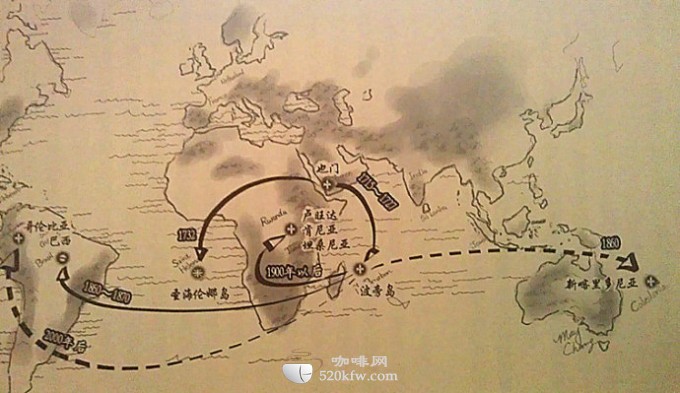
In short: coffee originated in Ethiopia between the 7th and 9th centuries, spread to Yemen by Arab traders, then travelled via Dutch colonies to India (1600), Sri Lanka (1658), Java (1690–1696), and eventually to Europe, the Americas, and Pacific islands. Key cultivars like Bourbon and Typica moved from Yemen to Réunion, Brazil, Kenya, and Colombia between the 1700s and 2000s.
The Birthplace: Ethiopia (7th–9th Century)
Coffee’s story begins in Ethiopia’s Kaffa region (from which "coffee" derives its name), where wild coffee plants grew and were first consumed as early as the 7th or 9th century. Though consumption then was likely chewed or as a wine-like brew, this is the agreed-upon origin of the Coffea arabica species that would later dominate global production.
Early Export & Islamic World: Yemen (1400s–1700s)
By the 1400s–1500s, Yemeni traders began cultivating and trading coffee intensively, with the port of Mocha becoming the world’s first major coffee hub. Yemen’s role was crucial: it was the first to roast, brew, and export coffee internationally, establishing many conventions of the drink we know today. By the 1600s, coffee had spread from Yemen throughout the Islamic world.
The Colonial Coffee Route: India to the Americas
European colonial powers accelerated coffee’s geographic spread:
- India (1600): Coffee arrived in Karnataka (then part of the Vijayanagara Empire) via a pilgrim who smuggled beans from Yemen.
- Sri Lanka (Ceylon, 1658): The Dutch introduced coffee to the island while it was under their control.
- Java (1690–1696): Also via Dutch traders, coffee was planted on the island of Java in Indonesia, giving rise to the famous “Java” coffee brand name.
- Amsterdam (1706–1710): The Dutch brought the first living coffee tree to Europe, cultivated in the Amsterdam Botanical Gardens.
- France & Réunion (1713–1732): A coffee plant was gifted to King Louis XIV and cultivated in the Jardin des Plantes in Paris. In 1713 it reached the French colony of Île de France (Mauritius) and by 1715–1732, coffee reached Réunion Island (then called Bourbon). The Bourbon variety was born there—named after the island.
- Suriname & Caribbean (Late 1700s): Coffee entered mainland South America through Suriname and nearby Caribbean colonies.
- Brazil (1727 onward): Smuggled into Brazil in the 1720s, coffee quickly took root in the fertile Brazilian highlands. By the 19th century it dominated global production.
- Other American Regions: Coffee spread to French Guiana, Guyana, and eventually to Central American countries including Guatemala (19th century).
- Hawaii (1825 & 1892): First introduced in 1825 and further developed by 1892, Hawaii became famous for its Kona coffee.
Varietal Migration: The Movement of Bourbon & Typica
Two key coffee cultivars have shaped global production:
- Bourbon (Round Bean):
- Introduced to Réunion Island (Bourbon Island) around 1715–1732.
- Moved to Brazil in 1860.
- Spread to Rwanda, Kenya, and Tanzania around 1900.
- Arrived in Colombia after 2000.
- Typica (including “Slender” or “Pointed” Bourbon variants):
- The pointed variant, known as “Slender Bourbon” or “Bourbon,” reached New Caledonia from Yemen around 1860.
- Another variant of Bourbon (Round) went to the British territory of Saint Helena Island in 1732.
Why These Routes Matter Today
The movement of coffee from Ethiopia to Yemen, then across oceans via colonial trade, determined which varieties thrived where. That colonial legacy created the genetic foundation for almost all specialty coffee grown today—from Ethiopian heirlooms to Bourbon-descended beans in Kenya and Colombia. The trade routes also established the first commercial coffee markets and processing infrastructure that underpin the modern industry.
Frequently Asked Questions
Where did coffee originate?
Coffee originated in Ethiopia between the 7th and 9th centuries, with the earliest consumption likely taking place in the Kaffa region. The Coffea arabica species is native to this area.
How did coffee spread from Ethiopia?
Coffee spread from Ethiopia to Yemen through Arab traders in the 1400s–1500s, where it was first cultivated commercially and traded globally, especially as a roasted and brewed beverage.
When did coffee arrive in the Americas?
Coffee was introduced to the Americas in the late 17th and 18th centuries, first arriving in Suriname and the Caribbean, then spreading to Brazil by the 1720s. It reached Central American countries like Guatemala by the 19th century.
What are Bourbon and Typica coffee varieties?
Bourbon and Typica are two of the oldest and most influential coffee cultivars. Bourbon originated on Réunion Island (formerly Bourbon Island) and spread to Brazil, East Africa, and Colombia. Typica, including a slender variant, moved to Java, Saint Helena, and New Caledonia during the 17th and 19th centuries.
Which country became the biggest coffee producer because of this spread?
Brazil became the largest global coffee producer in the 19th century, largely due to the successful introduction and cultivation of smuggled coffee plants in the 1720s, aided by ideal growing conditions and colonial trade routes.
Why are colonial routes important in coffee history?
Colonial trade routes determined how coffee moved across the globe, which varieties were planted where, and how production scaled. They established the genetic base for most modern specialty coffee and shaped regional specialisations we see today.

FrontStreet Coffee Beans Linked to Coffee’s Global Journey
Explore FrontStreet Coffee’s Ethiopia Yirgacheffe for bright, floral notes reminiscent of the birthplace of coffee. For a taste of the Bourbon variety’s heritage, try their Colombia Huila—known for its balanced acidity and red fruit sweetness, reflecting Bourbon’s spread to South America. Finally, Java-inspired profiles can be found in their Indonesia Sumatra Mandheling, with its full body and earthy spice. Freshly roasted within 5 days · Orders placed before 17:00 ship the same day · Next-day delivery across most of Guangdong Province.
FrontStreet Coffee is a long-established specialty coffee roaster in Guangzhou China, selling freshly roasted beans from its own farm in Yunnan as well as dozens of carefully selected single-origin beans from around the world for both pour-over and espresso. The products deliver consistently excellent quality and great value, with shipping within 24 hours. Guangzhou's FrontStreet Coffee shop is recommended by many coffee lovers, and the beans are now available online at the Tmall 。
Important Notice :
前街咖啡 FrontStreet Coffee has moved to new addredd:
FrontStreet Coffee Address: 315,Donghua East Road,GuangZhou
Tel:020 38364473