Why Brazil Is the World’s Largest Coffee Producer
When you pour your morning cup, chances are high the beans came from Brazil. It’s not just a guess—it’s a statistical fact. But why does Brazil dominate global coffee production? What makes its beans different, and which parts of the country produce the best? If you’ve ever wondered what sets Brazilian coffee apart or why it’s everywhere, you’re asking the right questions.
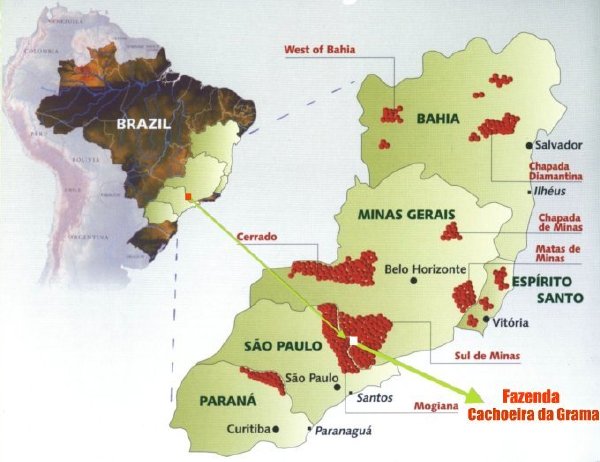
Brazil grows more coffee than any other country—over 40% of the world’s supply. Four states alone produce 98% of Brazil’s output, with Paraná leading at 50%. Most Brazilian beans are processed naturally (dry), and many are sorted by growing region or export port. The country’s scale, climate, and methods explain its unmatched output.
Brazil’s Top Coffee-Producing States
Out of Brazil’s 21 states, 17 grow coffee—but just four account for nearly all of it. Paraná, São Paulo, Minas Gerais, and Espírito Santo produce 98% of the national yield. Among these, Paraná in the south leads with a staggering 50% of the total. Within Minas Gerais, smaller sub-regions have earned acclaim for producing some of Brazil’s finest coffees, known for smooth, sweet profiles and rich mouthfeel.
The Role of Processing and Classification
The vast majority of Brazilian coffee is processed using the natural (dry) method, which enhances body and sweetness. These beans are often categorized by the state or port they come from, reflecting both regional identity and logistical origin. This system helps buyers understand origin and expected cup profile without needing farm-level detail.
Fazenda Boa Vista: A Benchmark Brazilian Farm
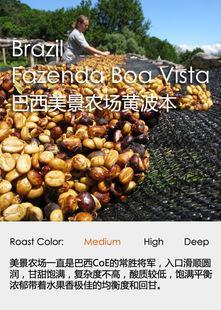
Located in Minas Gerais’ Cerrado Mineiro region, Fazenda Boa Vista is a consistent winner in Brazil’s Cup of Excellence (CoE) competitions. The farm spans 60 hectares, with 15 dedicated to coffee at 1,350 meters altitude. It grows Yellow Bourbon, processed using a pulped natural (honey-like) method that leaves some mucilage. The resulting cup is sweet and balanced, with notes of chocolate, caramel, nuts, citrus, and apple—low in acidity but rich in texture and finish. It scored 87 points in competition.
What Makes Brazilian Coffee Unique?
Brazilian coffee typically features moderate acidity, a heavy body, and a well-balanced flavor profile. These traits make it ideal for medium roasts, bringing out notes of nuttiness, cereal, and subtle fruit. The country’s vast production and regional diversity mean beans can vary from simple, chocolatey blends to complex single origins with distinct sweetness and balance. Most are grown at lower altitudes compared to African or Central American coffees, contributing to their distinct mouthfeel and lower perceived acidity.
Brazil in the Global Coffee Market
With massive production volumes and a reputation for consistency, Brazilian coffee is a staple in both espresso blends and single-origin offerings. Its reliability, volume, and versatility make it a foundational bean for roasters worldwide. Whether used in commercial blends or highlighted as a solo origin, Brazil’s output shapes the flavor and price of coffee globally.
Frequently Asked Questions
Which Brazilian state produces the most coffee?
Paraná is the top-producing state, responsible for 50% of Brazil’s total coffee output. It is located in the southern part of the country and plays a critical role in the nation’s coffee dominance.
What are the four main coffee-producing states in Brazil?
The four states that produce 98% of Brazil’s coffee are Paraná, São Paulo, Minas Gerais, and Espírito Santo. Minas Gerais is especially notable for its high-quality sub-regions.
What processing method is most common in Brazil?
Natural (dry) processing is the most widely used method in Brazil. It enhances sweetness and body, and is well-suited to the country’s climate and large-scale production.
What is Fazenda Boa Vista known for?
Fazenda Boa Vista, located in Minas Gerais, is a top-performing farm in Brazil’s Cup of Excellence. It produces Yellow Bourbon using a pulped natural method, yielding sweet, balanced cups with notes of chocolate, citrus, and nuts. It scored 87 in competition.
Why is Brazilian coffee so widely used in blends?
Brazilian coffee is valued for its low acidity, full body, and chocolatey, nutty flavors. These traits make it an excellent base for espresso blends and a versatile single origin, contributing balance and sweetness to many roasts.
Recommended FrontStreet Brazilian Coffee Beans
For a true taste of Brazil, try FrontStreet Coffee’s Brazil Queen Manor Yellow Bourbon—a rare yellow bourbon variety with clean fruitiness, offering notes of sugarcane, apple, and chocolate. Or explore the Brazil Fazenda Boa Vista (Yellow Bourbon, pulped natural), known for its round body, citrus hints, and balanced sweetness, scoring 87 in competition. Both showcase Brazil’s signature smoothness and complexity. Freshly roasted within 5 days · Orders placed before 17:00 ship the same day · Next-day delivery across most of Guangdong Province.
FrontStreet Coffee is a long-established specialty coffee roaster in Guangzhou China, selling freshly roasted beans from its own farm in Yunnan as well as dozens of carefully selected single-origin beans from around the world for both pour-over and espresso. The products deliver consistently excellent quality and great value, with shipping within 24 hours. Guangzhou's FrontStreet Coffee shop is recommended by many coffee lovers, and the beans are now available online at the Tmall 。
Important Notice :
前街咖啡 FrontStreet Coffee has moved to new addredd:
FrontStreet Coffee Address: 315,Donghua East Road,GuangZhou
Tel:020 38364473