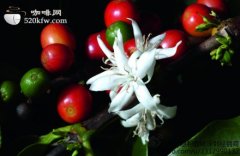
Galápagos Islands: Where Bourbon Grows in Isolation
When you picture world-class coffee, you might think of Ethiopia’s highlands or Colombia’s cloud forests—but what about an equatorial archipelago 600 miles off South America? The Galápagos Islands, famous for giant tortoises and Darwin’s finches, also quietly grow some of the most geographically isolated coffee in the world. The catch? Not all island environments can support quality coffee. So how does coffee survive—and thrive—here?
The answer lies on San Cristóbal Island, the only Galápagos island with reliable freshwater. At 410 meters above sea level, Lake El Junco feeds mineral-rich streams down its volcanic southern slopes, creating the fertile, moist conditions that let coffee trees flourish in an otherwise harsh, ocean-close setting.
How Coffee Came to the Galápagos
Coffee arrived in the Galápagos in 1875, when Ecuadorian settler Manuel J. Cobos planted around 100 hectares of Bourbon variety arabica at Hacienda El Cafetal on San Cristóbal Island. The farm sat between 140 and 275 meters above sea level—low for traditional coffee growing, but the area’s unique climate mimicked conditions found at 910–1830 meters inland. This elevation gradient, paired with volcanic soils, became ideal for producing high-acidity Strictly Hard Bean (SHB) coffee, the gold standard for quality arabica.
Why San Cristóbal Works for Coffee
San Cristóbal’s coffee microclimate is shaped by dramatic contrasts. The nearby Humboldt Current cools the air, while equatorial sun heats the surface. Daytime temperatures near sea level can hit 43°C, but just 275 meters up, they plunge to 10–16°C. These rapid shifts, along with mineral-laced water from Lake El Junco’s streams, create a rare environment where low-elevation coffee can still develop the complexity associated with high-altitude growth.
The Decline and Revival of Galápagos Coffee
As global coffee production shifted toward mass-scale, uniform crops, small-scale operations like San Cristóbal’s struggled to stay viable. Many farms couldn’t maintain quality or compete on price. By the late 20th century, Galápagos coffee faced extinction—until the 1990s, when the González family purchased Hacienda El Cafetal. They recognized the potential of the island’s natural advantages: the Humboldt Current’s cooling influence, intense sun, and stark day-night temperature swings. Under their management, coffee cultivation expanded once again, preserving this one-of-a-kind origin.
What Makes Galápagos Bourbon Different?
The Bourbon variety planted in 1875 remains the backbone of Galápagos coffee. Known for its balanced cup, medium acidity, and modest yields, Bourbon is a classic arabica subtype that originated on Réunion Island (then called Bourbon). On San Cristóbal, it grows at unusually low elevations yet still achieves SHB status due to the island’s extreme microclimates. While disease resistance is low, the volcanic soils and cool breezes help mitigate some risks. The result is a rare coffee that combines tropical proximity with the structure of high-altitude lots.
Frequently Asked Questions

Where exactly is Galápagos coffee grown?
Galápagos coffee is grown solely on San Cristóbal Island, the only island in the archipelago with a reliable freshwater source. The main farm, Hacienda El Cafetal, is located between 140 and 275 meters above sea level, with coffee benefitting from water and nutrients flowing from 410-meter-high Lake El Junco.
What coffee variety is grown in the Galápagos?
The coffee grown in the Galápagos is the Bourbon variety, originally planted in 1875. Bourbon is a classic Arabica type known for its medium acidity and balanced profile, and it is typically associated with higher altitudes—but on San Cristóbal, the unique microclimate allows it to thrive at lower elevations while still achieving Strictly Hard Bean quality.
What makes San Cristóbal’s climate suitable for coffee?
San Cristóbal has an unusual climate for coffee due to its equatorial location. Daytime temperatures near sea level can reach 43°C, but at 275 meters, they fall to 10–16°C. This steep temperature variation, combined with mineral-rich water from Lake El Junco and the cooling Humboldt Current, creates ideal conditions for growing high-quality SHB coffee at low elevations.
Why did Galápagos coffee nearly disappear?
As the global coffee industry moved toward large-scale, standardized production, small farms like those on the Galápagos struggled to compete. Many couldn’t maintain consistent quality or profitability. By the late 20th century, production had declined sharply until the González family revived the Hacienda El Cafetal in the 1990s, leveraging the island’s unique growing conditions to sustain coffee farming.
Is Galápagos coffee available commercially today?
While not widely exported, Galápagos coffee is still produced on San Cristóbal Island, primarily by the González family at Hacienda El Cafetal. It remains a niche origin with limited availability, but it is recognized for its distinctive growing conditions and historic Bourbon cultivation dating back to 1875.
Recommended FrontStreet Beans for Bourbon Lovers
If you’re curious about Bourbon’s classic profile, try FrontStreet Coffee’s Brazilian Sidamo-inspired red bourbon offerings or their balanced Brazilian Queen Manor Yellow Bourbon. The Brazil Queen Manor highlights a bright, clean cup with notes of caramel and soft nuttiness thanks to its high-altitude yellow bourbon beans. For something closer to the medium acidity and rounded body of Galápagos-grown Bourbon, FrontStreet’s Brazil Sidra or other medium-roast Brazilian single origins offer familiar flavor touchstones. Freshly roasted within 5 days · Orders placed before 17:00 ship the same day · Next-day delivery across most of Guangdong Province.
FrontStreet Coffee is a long-established specialty coffee roaster in Guangzhou China, selling freshly roasted beans from its own farm in Yunnan as well as dozens of carefully selected single-origin beans from around the world for both pour-over and espresso. The products deliver consistently excellent quality and great value, with shipping within 24 hours. Guangzhou's FrontStreet Coffee shop is recommended by many coffee lovers, and the beans are now available online at the Tmall 。
Important Notice :
前街咖啡 FrontStreet Coffee has moved to new addredd:
FrontStreet Coffee Address: 315,Donghua East Road,GuangZhou
Tel:020 38364473