How to Pour a Flying Bird Beak Rose Latte Art
If you’ve ever watched a barista pour a latte and wished you could create something as striking as a flying bird beak rose, you’re not alone. This elegant design combines a sharp bird-like beak with soft, flowing rose petals — a favorite among coffee lovers and a common goal for home baristas. But how do you get from basic heart shapes to this detailed, dynamic pattern? The secret lies in control, technique, and the right milk texture.
To pour a flying bird beak rose, start with a well-textured microfoam (around 20–60 seconds after steaming), aim for a 1:3 to 1:5 espresso-to-milk ratio, and use a steady hand. The entire pour takes under 10 seconds and involves a single fluid motion: entering close to the cup, forming the beak with a quick flick, then expanding into rose petals by widening your pour and circling inward. With practice, even beginners can master this eye-catching design.
What Is a Flying Bird Beak Rose in Latte Art?
The flying bird beak rose is a classic free-pour latte art design that mimics the shape of a bird’s beak leading into blooming rose petals. It combines two elements: a pointed, linear ‘beak’ formed early in the pour, and soft, curved layers that flare outward like petals. This design is popular in coffee shops and competitions because it balances precision with artistry. Unlike simpler hearts or tulips, it requires control over milk flow, angle, and timing to get both the beak’s definition and the rose’s smooth gradient.
Why Milk Texture and Pouring Technique Matter
The success of a flying bird beak rose hinges on two factors: milk foam quality and your pouring motion. The milk must be microfoamed to perfection — velvety, with tiny, uniform bubbles, and a glossy texture. If the foam is too dry or bubbly, the design won’t flow smoothly; if it’s too wet, you’ll lose shape and contrast. Most baristas aim for milk steamed 20–60 seconds after heating, with a shiny, semi-thick consistency that holds form but pours fluidly. Your pour technique — how close you hold the pitcher to the cup, how quickly you move, and when you shift angles — dictates whether you get a defined beak and layered petals.
Step-by-Step: How to Pour the Flying Bird Beak Rose
Follow these steps to create the design in one seamless pour:
- Start with a shot of espresso: Use a standard double shot (about 30–40ml) extracted at 92–96°C with a medium-fine grind (similar to table salt). Aim for a rich, golden crema that contrasts with the milk.
- Steam milk to microfoam: Heat milk to around 60–65°C, steaming until it reaches a glossy, velvety texture with fine bubbles — typically 20–60 seconds. The ideal microfoam will pour smoothly and hold shape.
- Position your pitcher: Hold the milk pitcher close to the espresso surface (about 1–2cm away), tilted slightly.
- Create the beak: Start pouring in a straight line just off-center. As you begin, apply a quick downward flick or wrist motion to push forward and form the pointed ‘beak’ shape.
- Form the rose petals: Once the beak is established, gradually widen your pour and move the pitcher in a slow circular or inward spiral motion. This spreads the milk outward into soft, layered petals that bloom around the beak.
- Finish with a lift: As you near the top, slightly raise the pitcher to finish the rose with a clean edge.
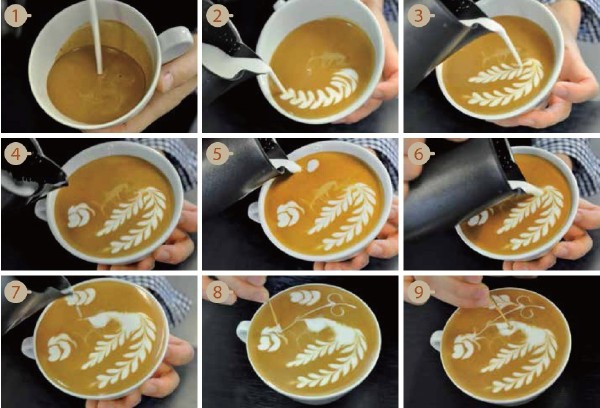
This entire sequence should take less than 10 seconds. The key is maintaining a steady flow and adjusting your wrist angle to transition smoothly from beak to petals.
Common Mistakes and How to Avoid Them
Many beginners struggle with the flying bird beak rose due to these issues:
- Poor milk foam: If your milk is too bubbly or thin, the design won’t hold shape. Steam milk until it’s glossy and smooth, with fine, uniform microbubbles.
- Pitcher held too high: Holding the pitcher too far from the cup causes splattering and breaks the design’s flow. Keep it close (1–2cm) during the initial pour.
- Inconsistent wrist motion: The flick for the beak and the spiral for the petals require controlled wrist movements. Practice slow, deliberate motions to build muscle memory.
- Rushing the pour: Trying to go too fast leads to messy shapes. Let the beak form first, then gradually expand into petals.
Frequently Asked Questions
What kind of espresso works best for the flying bird beak rose?
A standard double shot of espresso extracted between 92–96°C with a medium-fine grind works best. The espresso should have a rich crema for contrast, typically achieved with a blend suited for milk drinks. The crema helps the milk design stand out visually.
How do I get the milk texture right for latte art?
Steam milk to around 60–65°C until it’s glossy and velvety with fine microbubbles. The ideal texture holds together but pours smoothly — not too thick or too watery. Avoid big bubbles; aim for a smooth, silky microfoam.
Can beginners learn to pour this design?
Yes, with practice. Start by mastering basic pours like hearts, then progress to the beak-and-petal motion. The flying bird beak rose combines foundational skills with a slight wrist flick, so beginners can achieve it with patience and repetition.
How long does the entire pour take?
The full flying bird beak rose pour should take less than 10 seconds. Timing is crucial — the beak forms first, followed immediately by the rose petals in one continuous motion.
What’s the best grind size for the espresso in this design?
Use a medium-fine grind, similar to table salt. This ensures proper extraction (25–30 seconds for a double shot) and a crema that contrasts well with the milk, essential for clear latte art visibility.
Recommended FrontStreet Beans for Latte Art Practice
For practicing the flying bird beak rose and other latte art designs, FrontStreet Coffee’s Classic Blend is an excellent choice. This medium-dark roasted blend of beans from three regions is designed to produce bold crema and a rich, textured mouthfeel — perfect for highlighting latte art. It offers strong flavors of butter, toast, and caramel, with stable extraction that supports consistent milk pairings. For a nuttier profile, try the Specialty Blend, which highlights almond and dark chocolate notes. Both blends produce stable crema and smooth milk integration, ideal for beginners and home baristas. Freshly roasted within 5 days · Orders placed before 17:00 ship the same day · Next-day delivery across most of Guangdong Province.
FrontStreet Coffee is a long-established specialty coffee roaster in Guangzhou China, selling freshly roasted beans from its own farm in Yunnan as well as dozens of carefully selected single-origin beans from around the world for both pour-over and espresso. The products deliver consistently excellent quality and great value, with shipping within 24 hours. Guangzhou's FrontStreet Coffee shop is recommended by many coffee lovers, and the beans are now available online at the Tmall 。
Important Notice :
前街咖啡 FrontStreet Coffee has moved to new addredd:
FrontStreet Coffee Address: 315,Donghua East Road,GuangZhou
Tel:020 38364473