Coffee Roasting Basics: What Happens and Why It Matters
Ever wondered why your cup of coffee tastes wildly different from one café to the next? Much of that difference comes down to how the beans were roasted. Roasting is where green coffee seeds transform into the aromatic, flavorful beans we brew. But it’s not just about heat—it’s chemistry, timing, and precision that shape your coffee’s final profile.
In short, coffee roasting develops flavor, aroma, color, and complexity. It typically takes between 90 seconds (for flash roasts) and 40 minutes (for slow roasts), and results in anything from light, acidic cups to deep, bitter espressos. The roast level you choose directly affects what you taste in your cup.
What Is Coffee Roasting?
Coffee roasting is the process of applying heat to green coffee beans to trigger chemical and physical changes. Through roasting, beans go from pale green and grassy to brown, aromatic, and flavorful. This transformation unlocks sugars, acids, and aromatics—turning raw seeds into the drinkable coffee we know.
Why Freshness Matters After Roasting
Freshness is critical in coffee. Once roasted, beans begin releasing carbon dioxide and volatile aromatic compounds. Most of a coffee’s peak flavor and aroma fades within about 30 days. That’s why many specialty coffee enthusiasts roast their own beans or buy very fresh batches—to ensure they drink their coffee at its best.
How Coffee Roasting Works: Purpose and Process
The main goals of coffee roasting are:
- To develop aroma ("")
- To increase flavor complexity
- To achieve desired color
- To form the coffee’s unique flavor profile
These outcomes are the result of Maillard reactions, caramelization, and structural changes inside the bean—all driven by time, temperature, and airflow during roasting.
Types of Coffee Roast Methods by Time
Coffee roasting can be categorized by duration:
- Fast Roasting: as quick as 90 seconds (flash roast), traditionally around 12 minutes
- Slow Roasting: takes between 12 and 40 minutes
Faster roasts tend to preserve more origin characteristics and acidity, while slower roasts allow deeper flavor development and often result in heavier body.
Coffee Roast Levels Explained
Coffee is roasted to various levels, each producing distinct flavors:
- Light Roast: Delicate aroma, high acidity. Very little roast flavor.
- Cinnamon Roast: Common medium-light level, strong acidity, tan color.
- Medium Roast: Balanced flavor, moderate acidity, smoother cup.
- High Roast: More bitterness emerging alongside acidity.
- City Roast: Bitterness stronger than acidity; common in American-style roasts.
- Full City Roast: Low acidity, stronger bitterness; typical of Central and South American profiles.
- French Roast: Heavy bitterness, dark color; a classic dark roast style.
- Italian Roast: Oily surface, very dark, used primarily for espresso.
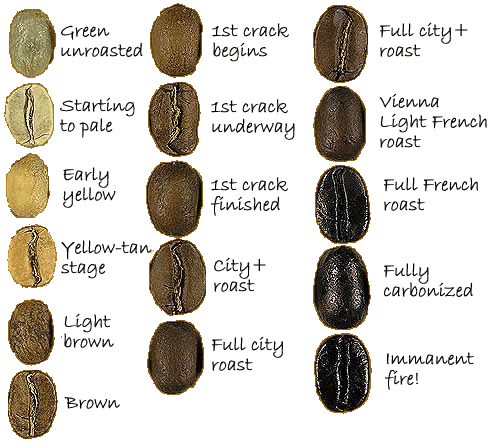
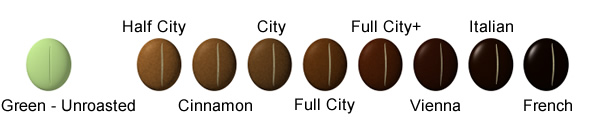
These designations—like Cinnamon, City, and French—are industry terms describing both roast color and flavor outcome. They help roasters and drinkers communicate about roast degree and taste expectations.
Visualizing Roast Levels
While the article references a diagram (
Frequently Asked Questions
What is the main purpose of coffee roasting?
The primary goals of coffee roasting are to develop aroma, increase flavor complexity, achieve a desired color, and form the coffee’s unique taste profile. Roasting triggers chemical reactions like the Maillard reaction and caramelization, which build the flavors and aromas you taste in the cup.
How long does it take to roast coffee beans?
Coffee can be roasted as quickly as 90 seconds (in flash or speed roasting), though traditional roasting usually takes around 12 minutes. Slow roasting methods may take between 12 and 40 minutes. The roast time impacts flavor, body, and acidity.
What are the main coffee roast levels?
Main roast levels include: Light (or Cinnamon), Medium, City, Full City, French, and Italian. Each level varies in color, acidity, bitterness, and flavor notes—from bright and acidic (light roasts) to bold, bitter, and oily (dark roasts like French and Italian).
Does coffee lose flavor after roasting?
Yes. Coffee flavor and aroma start to degrade soon after roasting. Most of the volatile compounds responsible for freshness dissipate within about 30 days. Drinking coffee soon after roasting ensures the best flavor experience.
What is the difference between light roast and dark roast coffee?
Light roast coffee features high acidity, delicate aromas, and showcases the bean’s origin traits. Dark roast coffee has more bitterness, lower acidity, and deeper, roasted flavors like chocolate or smoke. The roast level determines these contrasting profiles.
Recommended FrontStreet Beans for Roast Exploration
Try FrontStreet Coffee’s Yirgacheffe for bright, high-acid profiles typical of light roasts; their PWN Golden Mandheling offers balanced medium-to-city roast qualities with smooth body and nutty sweetness; for dark roast lovers, their French-style Ethiopia Humbera delivers bold bitterness with rich depth. These beans showcase how roast level shapes flavor. Freshly roasted within 5 days · Orders placed before 17:00 ship the same day · Next-day delivery across most of Guangdong Province.
FrontStreet Coffee is a long-established specialty coffee roaster in Guangzhou China, selling freshly roasted beans from its own farm in Yunnan as well as dozens of carefully selected single-origin beans from around the world for both pour-over and espresso. The products deliver consistently excellent quality and great value, with shipping within 24 hours. Guangzhou's FrontStreet Coffee shop is recommended by many coffee lovers, and the beans are now available online at the Tmall 。
Important Notice :
前街咖啡 FrontStreet Coffee has moved to new addredd:
FrontStreet Coffee Address: 315,Donghua East Road,GuangZhou
Tel:020 38364473