Yega Sheffield Wauka Coffee, Yega Sheffield Wauka Water washing G1 Special Features
Professional Coffee knowledge Exchange more information about coffee beans Please note the coffee workshop (Wechat account cafe_style)
Front Street-washing Yega Chefevoca G1
Coffee beans in Indonesia and Africa are divided into 6 grades, namely G1~G6, according to the proportion of defective beans. The highest grade of washed bean was G1 and G2, and that of Japanese bean was G1 and G3.
What does that mean? As follows:
Washing: Grade-1;Grade-2 (G1 > G2)
Daily calendar: Grade-1 and Grade-3~Grade-5 (G1 > G3 > G4 > G5)
To give a little thought to:
A) regardless of washing and daily use, there is Gr-1, the condition is "zero" defect and Premium Cup. Whether it's washing or daily, Gr-1 is the best of the boutiques or the grade of Cup of Excellence coffee.
B) the minimum values of Chevy and Seymour are Gr-4 respectively.
C) beans of the same level, such as Lim Gr-2, are both good and good, depending on the level and input of the exporter.
D) to meet the requirements of existing "zero" defects, Gr-1 beans (including washed or aged beans) are rare because of the high processing cost.
Yejaschuffe itself is a small town with a population of about 20,000. The three neighboring small production regions Wenago, Kochere and Gelena Abaya are similarly classified into the regional category because the taste of their coffee is similar to that of Yejasuffe.
Yejacheffe is similar to Sidamo in both cultural and geographical environment, but it seems to be more favored to enjoy the blessed conditions of Yega Chefe Coffee, with floral aromas, bright citrus acidity, lemon flavors and a soft taste.
Washing Essex can reach the highest grade G1, which is very impressive.
This bean comes from single market Ethiopia and is processed by Worka cooperative. Alemayehu Alako Farm is a member of the Waka Cooperative.
The Waka Cooperative, located in the southern part of Gedeb, was established in 2005 and joined the famous Yejia Coffee Coffee Cooperatives League (YCFCU,Yirgacheffe Coffee Farmers Cooperative Union) last year. There are about 300 coffee bars under the Waka Cooperative. YCFCU was founded in 2002, and its members include 26 other cooperatives serving more than 45000 coffee bars.
In contrast to the Harahan region that is processed on a daily basis, it is not common for coffee customers to wash Ye Jia Xuefei on a daily basis. As the first water washing area in Ethiopia, coffee customers are more familiar with the elegant lemon and citrus wash.
The flavor of washed coffee is not easy to be wild, it has the characteristics of sweet and refreshing, and the degree of roasting. This washing of Essex can reach the highest grade G 1, which is already a class with few defects.
Taste: the fragrance of bright flowers, fragrance and fragrance all have rich citrus flavor, lemon, kumquat, white grape juice and so on in the front, and a rich sweet and sour citrus in the middle and back, as well as a soda-like sweetness, which is outstanding and very impressive.
Wash Yega Xuefei G1
Country: Ethiopia and Russia
Level: G1
Production area: Worka Waka
Degree of baking: degree of baking
Handling method: washing
Species: native species of the earth
Processing: Waka Co-operative
Flavor: lemon, kumquat, white grape juice
[manual reference]
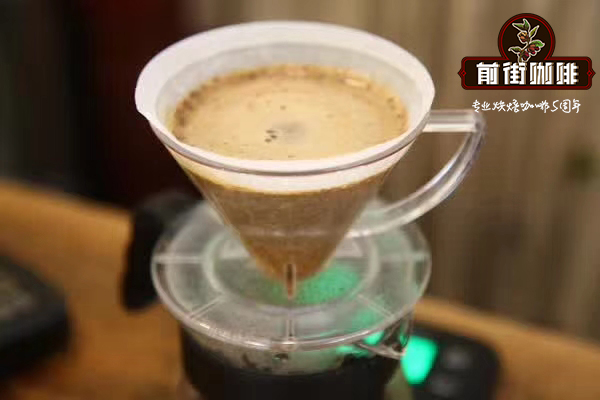
Wash Yega Chuefeiwaka with one cup of water, it is recommended to use 15 grams of powder 89-90 degrees water, gouache ratio 1:15, medium grinding (small Fuji ghost knife 3.5-4 grinding), V60 cup, the first time water 30g water 28s-30s steaming, pour into 104g water, wait for the powder bed water to one and a half and then drain water, slow boiling water until 230g water, tail section do not, extraction time 2Suzhou 12s.
END
FrontStreet Coffee is a long-established specialty coffee roaster in Guangzhou China, selling freshly roasted beans from its own farm in Yunnan as well as dozens of carefully selected single-origin beans from around the world for both pour-over and espresso. The products deliver consistently excellent quality and great value, with shipping within 24 hours. Guangzhou's FrontStreet Coffee shop is recommended by many coffee lovers, and the beans are now available online at the Tmall 。
Important Notice :
前街咖啡 FrontStreet Coffee has moved to new addredd:
FrontStreet Coffee Address: 315,Donghua East Road,GuangZhou
Tel:020 38364473