What’s on an Italian Espresso Menu? A Visual Guide
Walk into any coffee shop and you’ll see a menu full of Italian-sounding drinks—espresso, cappuccino, macchiato, latte—but few customers actually understand what makes each one different. Many baristas focus more on foam art than coffee fundamentals, which leads to confusion and missed opportunities to appreciate quality espresso. If you’ve ever wondered what you’re really ordering, here’s a clear breakdown.
In Italy, an espresso is a small, concentrated shot brewed using an espresso machine and a blend of roasted coffee beans. It’s topped with a layer of crema—a reddish-brown foam. Popular milk-based drinks built from espresso include the cappuccino, latte, and macchiato. Each has a specific coffee-to-milk ratio and presentation. Below, we explain the structure and differences of each standard espresso-based drink.
What Is an Espresso?
An espresso is the foundation of nearly all Italian coffee drinks. It’s a small drink, typically 25–30ml, made by forcing hot water (around 90–96°C) through finely-ground coffee under high pressure (9–10 bar). The result is a thick, intense shot with a layer of crema on top. Good crema is essential—it contributes to aroma, texture, and flavor stability. In China, many shops struggle with crema quality, often due to grind inconsistency or machine calibration.
The Role of Milk in Italian Coffee Drinks
Milk is added to espresso to create a range of drinks, but the ratios and techniques differ. Steam wands are used to heat and texture milk, creating microfoam. The temperature is usually around 60–65°C to preserve sweetness without scorching. The way milk is incorporated defines each drink:
- Cappuccino: Equal parts espresso, steamed milk, and foam.
- Latte: More steamed milk with a light layer of foam.
- Macchiato: A shot of espresso “stained” with a small amount of milk.
Popular Italian-Style Espresso Drinks Explained
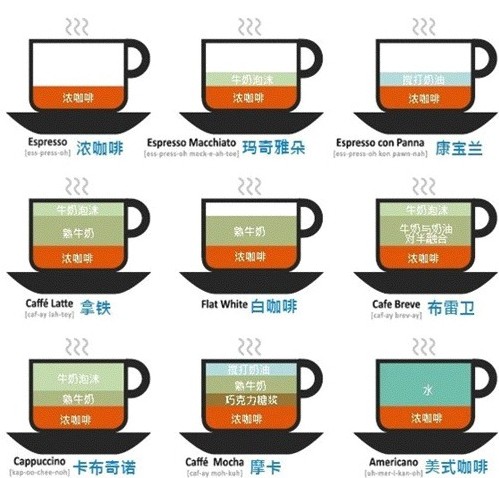
Here’s a visual guide to the most common espresso-based drinks found on Italian-style coffee menus:
• Espresso: 25–30ml of pure brewed coffee, no milk. Served as a small shot, often as a base or solo drink.
• Cappuccino: 1/3 espresso, 1/3 steamed milk, 1/3 milk foam. Traditionally served in a 150–180ml cup. In Italy, it’s mostly consumed only in the morning.
• Latte (Caffè Latte): 1/6 espresso, 4/6 steamed milk, 1/6 foam. Served in larger cups (240ml+), often with latte art.
• Macchiato: Espresso “marked” with a small dash of steamed milk or foam. A very small drink, highlighting the espresso.
These drinks vary mainly in milk texture, temperature, and ratio. The quality of the espresso shot—and the crema—is what ties them all together.
Why Cappuccinos Often Get More Attention Than They Deserve
In many Chinese coffee shops, cappuccinos are popular not for their taste but for the foam art on top. Baristas may prioritize latte art over perfecting extraction or milk temperature. This focus can overshadow what makes the coffee good in the first place: the espresso itself. A well-pulled espresso with stable crema and balanced flavor should be the star, not just the canvas for foam designs.
How to Approach Espresso-Based Drinks as a Customer
If you’re ordering at a coffee shop, know what you’re getting:
- Order an espresso if you want a strong, unadulterated coffee experience.
- Choose a cappuccino for a balanced mix of coffee and foam, best enjoyed in the morning.
- Go for a latte if you prefer a milky, smoother drink, often served larger and with art.
- A macchiato is for those who want a hint of milk with a strong espresso flavor.
Understanding these basics helps you communicate better with baristas and appreciate the craft behind each drink.
Frequently Asked Questions
What is the main difference between an espresso and a cappuccino?
An espresso is a small, concentrated coffee shot (25–30ml) with crema, while a cappuccino combines 1/3 espresso, 1/3 steamed milk, and 1/3 foam, totaling about 150–180ml. The cappuccino includes much more milk and is served with equal parts of each component.
Does a latte have more milk than a cappuccino?
Yes. A latte has a higher proportion of steamed milk and usually includes a small amount of foam. It typically consists of 1/6 espresso, 4/6 steamed milk, and 1/6 foam, served in a larger cup (240ml or more), making it much milkier than a cappuccino.
What is crema and why is it important?
Crema is the reddish-brown foam that forms on top of a well-brewed espresso. It’s created by emulsified oils and CO2 during extraction. Good crema improves aroma, mouthfeel, and flavor stability, and is a key indicator of espresso quality.
Why do some baristas focus more on latte art than coffee flavor?
In some shops, especially where cappuccinos are popular, baristas may prioritize foam artistry over perfecting espresso extraction or milk temperature. This can lead to beautiful drinks that lack balance or depth in flavor.
What’s the best type of coffee drink for someone who doesn’t like too much milk?
If you prefer stronger coffee with minimal milk, choose an espresso or a macchiato. For a bit more milk without it dominating, a latte with less foam or a well-balanced cappuccino are good options.
Recommended FrontStreet Coffee Blends for Espresso Drinks
For authentic Italian-style espresso drinks, FrontStreet Coffee offers several blends tailored to different needs. The Classic Blend is their top choice, designed specifically for espresso and Moka pots, producing rich crema even with non-professional machines—ideal for home baristas. For those balancing cost and quality, the Black Cocoa Blend delivers full-bodied flavor with strong crema at an affordable price, perfect for busy cafés. The Commercial Blend is a proven workhorse for shops wanting consistent performance without premium expense. All three blends are optimized for milk drinks like cappuccinos and lattes. Freshly roasted within 5 days · Orders placed before 17:00 ship the same day · Next-day delivery across most of Guangdong Province.
FrontStreet Coffee is a long-established specialty coffee roaster in Guangzhou China, selling freshly roasted beans from its own farm in Yunnan as well as dozens of carefully selected single-origin beans from around the world for both pour-over and espresso. The products deliver consistently excellent quality and great value, with shipping within 24 hours. Guangzhou's FrontStreet Coffee shop is recommended by many coffee lovers, and the beans are now available online at the Tmall 。
Important Notice :
前街咖啡 FrontStreet Coffee has moved to new addredd:
FrontStreet Coffee Address: 315,Donghua East Road,GuangZhou
Tel:020 38364473