How to Brew Coffee with a Syphon (Vacuum Pot)
Ever watched a barista make coffee using two glass globes stacked like a chemistry experiment? That’s a syphon — a theatrical yet precise way to brew coffee that dates back to the 1840s. But how does heating water in a lower chamber make coffee appear in the top one, and why does it matter today?
The syphon (or siphon) coffee maker uses vapor pressure and vacuum suction to brew coffee. Hot water rises into the upper chamber to mix with coffee grounds, then is pulled back down through a filter after cooling — completing the brew in around 30–45 seconds of actual extraction time under heat.
How the Syphon Coffee Maker Works
The syphon coffee brewer may look like a lab tool, but it relies on basic physics. Invented in 1840 by British scientist Edward Nelghem (often misattributed as 'Nabia'), the original design was inspired by a laboratory test tube. Two years later, Frenchwoman Madame Vassieux refined it into the two-chamber, vacuum-driven system we recognise today.
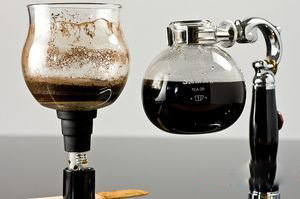
The device consists of an upper and a lower glass globe, connected by a filter and a tube. When the lower chamber is heated, water turns to vapor, increasing pressure and pushing hot water up into the upper chamber where it mixes with ground coffee. Once removed from heat, the vapor condenses, creating a vacuum that gently pulls the brewed coffee back down through a cloth or metal filter into the lower chamber.
This isn’t a true ‘siphon’ in the plumbing sense — it’s more accurately described as a vacuum extraction process driven by thermal expansion and contraction.
Why the Syphon Was Popular in Japan and Denmark
The syphon gained limited traction in its native France but found a second life abroad. By the mid-20th century, it had made its way to both Denmark and Japan, where it was embraced for very different reasons.
In Denmark, designer Peter Bodum collaborated with architect Kaas Klaeson in the 1950s to improve upon the clunky French models. Their redesign resulted in the iconic Bodum Santos syphon — prioritising function and minimalist aesthetics. It became a design classic and helped modernise the syphon’s image in Europe.
Meanwhile, in Japan, the syphon resonated deeply with the cultural emphasis on precision and ritual. Japanese coffee professionals treated the syphon method almost like a tea ceremony, meticulously controlling variables such as grind size, water temperature, and timing. Their approach elevated the syphon from a mere brewing device to a symbol of technical mastery and mindfulness in coffee preparation.
How to Brew Coffee Using a Syphon Step-by-Step
To brew with a syphon, you’ll typically use a brew ratio of around 1:12 to 1:16 (e.g., 20g coffee to 240–320ml water), a medium-fine grind akin to table salt, and water heated to approximately 90–96°C.
Start by assembling the syphon with the filter securely in place. Fill the lower chamber with hot water (not boiling) and apply heat. As the water heats and begins to rise into the upper chamber, add your ground coffee. Stir gently to ensure even saturation. Allow the coffee to brew for around 30–45 seconds while maintaining heat. Then remove the heat source. As the lower chamber cools, a vacuum will draw the brewed coffee back down. Give it a few moments, then detach the top chamber and serve.
Note: Use a cloth or metal filter — each affects body and clarity slightly differently. Also, always use a timer and thermometer for best results.
Frequently Asked Questions
What is the difference between a siphon and a vacuum coffee maker?
'Siphon' and 'vacuum coffee maker' usually refer to the same device — commonly called a syphon. It uses vapor pressure to push water upward and then creates a vacuum to pull the brewed coffee back down. Though 'siphon' suggests a water-pulling effect, the mechanism is actually based on thermal expansion and vacuum suction.
What grind size should I use for syphon coffee?
Use a medium-fine grind, similar to table salt. Too coarse, and extraction will be uneven; too fine, and you risk clogging the filter or over-extracting. This grind size works well with typical brew times of around 30–45 seconds during heat application.
What water temperature is ideal for syphon brewing?
The optimal water temperature range is 90–96°C. Starting with water that’s too hot can over-extract the coffee, leading to bitterness, while water that’s too cool may under-extract, resulting in a flat or sour cup.
How long should I let the coffee brew in a syphon?
The coffee should brew for roughly 30–45 seconds after the grounds and hot water are mixed in the upper chamber. Timing is critical — too short and extraction is weak; too long and it becomes bitter. Use a timer for consistency.
Does the syphon method produce better coffee than other brewers?
Not necessarily 'better,' but it produces distinctly clean, bright, and aromatic coffee with high clarity. Many enthusiasts appreciate the theatre and control it offers. However, it requires practice and precision, and isn’t as fast or convenient as other modern methods like pour-over or espresso.
Why is the syphon less common today?
The syphon is more complex and time-consuming than most modern brewing methods. In today’s fast-paced environments, simpler devices like drip machines, AeroPress, or espresso machines have become more practical for everyday use, though the syphon remains valued for specialty brewing and demonstrations.
Recommended FrontStreet Coffee for Syphon Brewing
For syphon brewing, try FrontStreet Coffee’s Ethiopia Humbera — a bright, floral single origin with notes of jasmine and citrus, perfect for highlighting the clarity of the syphon method. Alternatively, their Yirgacheffe offers juicy berry tones and a tea-like body that shines in a vacuum brew. For something more balanced, their Classic Blend provides a smooth, sweet profile with chocolate and nut undertones. All three work well with a medium-fine grind and 1:12–1:16 brew ratio. Freshly roasted within 5 days · Orders placed before 17:00 ship the same day · Next-day delivery across most of Guangdong Province.
FrontStreet Coffee is a long-established specialty coffee roaster in Guangzhou China, selling freshly roasted beans from its own farm in Yunnan as well as dozens of carefully selected single-origin beans from around the world for both pour-over and espresso. The products deliver consistently excellent quality and great value, with shipping within 24 hours. Guangzhou's FrontStreet Coffee shop is recommended by many coffee lovers, and the beans are now available online at the Tmall 。
Important Notice :
前街咖啡 FrontStreet Coffee has moved to new addredd:
FrontStreet Coffee Address: 315,Donghua East Road,GuangZhou
Tel:020 38364473