Should I use hot water or cold water to wet the filter paper when making coffee by hand? How to properly wash the bean grinder for Italian hand-brewed coffee beans?
Qian Jie has shared a lot of content about how to make a delicious cup of coffee, most of which are related to brewing parameters such as grinding, water temperature, ratio, time, and technique. After all, they are the main factors that determine the taste of a cup of coffee. factor.
But in addition to that, there are other factors that will affect the taste and taste of a cup of coffee. For example, the materials and utensils we use will affect a cup of coffee from different levels. So today, Qianjie came to share. In addition to parameters and techniques, what other details are worthy of our attention when making coffee.
1. Filter Paper Front Street often says that the difference between filter paper and filter paper is as big as the difference between a human and a gorilla. Although it sounds a bit exaggerated, it is indeed the truth. Different filter papers will have different extraction effects, and these effects will directly affect the taste of coffee. In terms of drainage speed, some filter papers will be drained faster, while others will be slower. The speed of drainage determines the time for extraction and is one of the factors affecting extraction efficiency. However, this content, which belongs to extracting parameters, is often shared on the street, so I won't go into it too much here. What is more noteworthy are the other two points. The first point is the taste of the filter paper.
The reason why it was recommended to wash filter paper with hot water before making coffee was because the filter paper at that time had a paper flavor, which would affect the taste of coffee. However, with the advancement of technology, the filter paper produced by many manufacturers nowadays does not have paper flavor, so this makes many friends no longer use hot water to wash filter paper or simply not wash filter paper. But what we need to know is that not all filter papers produced today have no paper smell. Some filter papers with special materials or special methods will still retain a certain paper smell. If you don't want the taste of the filter paper to be added to the coffee, it's best to first test the filter paper for the taste of paper after starting the filter paper, and then decide whether to add the step of washing the filter paper to prevent the taste of paper from affecting the coffee. Taste.
There is also the intensity of filtering. We all know that the filtering power of commonly used filter paper is very strong. In addition to the conspicuous coffee grounds, it can also filter out the oil of coffee. But after all, the oil will enhance the aroma and richness of coffee. If we want to retain the oil of coffee, we can choose some filter paper with less high filtration strength to brew coffee, such as non-woven fabrics. Because its filtration strength is not so high, it can retain the oil of the coffee and give the coffee a better aroma and taste, but the coffee will not be so clean relatively.
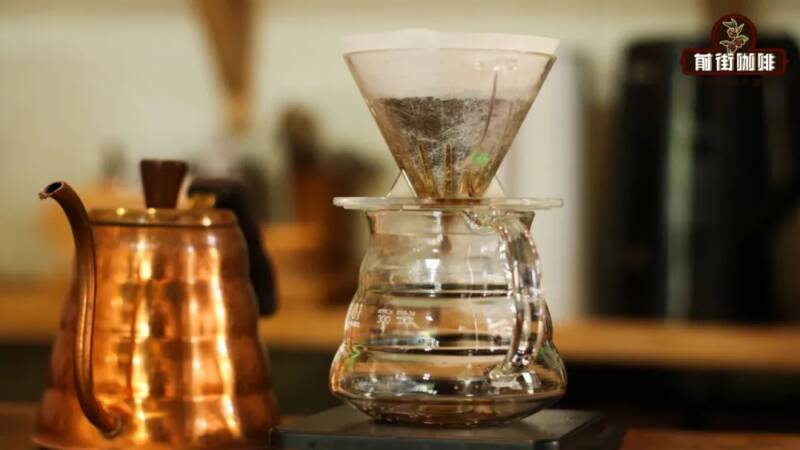
2. Water Quality Whether it is espresso, American coffee or hand-brewed coffee, the water quality/hardness of the water we use when making coffee is also a detail worthy of attention. The right amount of minerals in water can help us better extract flavor substances from coffee, while too soft or hard water will hinder the dissolution of flavor substances. Not only that, the water quality also affects the taste of coffee.
Just as we can distinguish different brands of mineral water through its taste and taste, the impact of water quality on the taste will also directly affect coffee. After all, 98% of the ingredients in a cup of coffee are water. Therefore, even in American countries where most of the water has not been extracted, the hardness of the water is very important. For coffee brewing water, SCA recommends that the TDS value of the water fall within the range of 75 to 250ppm, with an ideal value of 150ppm. This kind of water is the easiest to make delicious coffee. But in fact, after testing, the TDS of water used to easily wash out delicious flavors will be below 100ppm. Most mineral water or water filtered by household filters on the market meets this standard. If you are interested, you can measure and test it yourself ~
3. Integration After brewing coffee, the Front Street Conference recommends that you shake the coffee pot or use any tool to stir the coffee liquor.
Because when we brew coffee, the concentration of the coffee liquid dripping down at different time periods is different. The concentration of coffee liquor is the highest at the beginning, and then the concentration of coffee liquor becomes lower as it goes on. If the coffee liquor is not poured out in one breath, then the coffee liquor will not be stirred. Failure to stir means that the concentration of the coffee is not uniform, and it is easy for the coffee you drink to be weak at the beginning and then get stronger as you drink it.
4. Washing and grinding Before grinding the coffee beans to be brewed, we can put a few coffee beans into the bean grinder for pre-grinding, and simply "clean" the bean grinder.
Because coffee powder from the last ground coffee beans will remain in the bean grinder, if the coffee beans to be brewed are directly ground without bringing out the residual coffee powder, then the residual and oxidized coffee powder will be added to this coffee powder, which will affect the taste of coffee. Therefore, the purpose of grinding with a few coffee beans first is to use them to bring out the remaining coffee powder last time, so that the appearance of cross-flavours can be effectively avoided ~
So, the above is all the content shared by Qianjie this time. If you have other details that you think need to pay attention to, you can also leave a message and share it in the comment area ~
- END -
FrontStreet Coffee is a long-established specialty coffee roaster in Guangzhou China, selling freshly roasted beans from its own farm in Yunnan as well as dozens of carefully selected single-origin beans from around the world for both pour-over and espresso. The products deliver consistently excellent quality and great value, with shipping within 24 hours. Guangzhou's FrontStreet Coffee shop is recommended by many coffee lovers, and the beans are now available online at the Tmall 。
Important Notice :
前街咖啡 FrontStreet Coffee has moved to new addredd:
FrontStreet Coffee Address: 315,Donghua East Road,GuangZhou
Tel:020 38364473