What is the difference between the anaerobic coffee treatment process and traditional sun washing? What are the characteristics of the flavor of anaerobically processed coffee beans?
To be reasonable, anaerobic treatment can be said to be a controversial treatment method. Its controversy mainly comes from two aspects. One is the taste. Most coffee processed through anaerobic treatment has a very special taste. Friends who like it will like it will like it very much, and friends who don't like it will dislike it very much;
On the other hand, it comes from the fact that it is not a traditional treatment method. Many friends are not very clear about the anaerobic treatment process. They only know that the impact of human intervention may be greater, so it is easy to resist such treatment because it is unfamiliar. psychology. But in fact, the anaerobic treatment is not as complicated as everyone thinks. Most anaerobic treatments just add an anaerobic fermentation process before the coffee beans undergo traditional sun exposure and washing treatment. So today, Qianjie will come to share what kind of process anaerobic treatment is and why it can allow coffee to develop unique flavor characteristics. The first thing we need to know first is-the purpose of the treatment is often mentioned in the front street when sharing processing-related content. Whether it is sun exposure, water washing, honey treatment, or wet planing, there is no exception. Their purpose is to adapt the treatment methods according to local conditions in order to dry the coffee beans and facilitate transportation and storage. But later, people discovered that different processing methods would cause coffee beans to develop different flavor characteristics, so from then on, the processing of coffee was no longer just for drying coffee beans, but also for giving coffee different flavor performance.
During the processing process, the key step that causes coffee to develop different flavors is the degree of fermentation of the coffee beans. No matter what treatment method is used, coffee beans will ferment during the treatment process. The depth or shallow degree of fermentation is the key factor affecting the flavor direction of coffee. After realizing this, some people thought that by singling out the fermentation process and manually controlling it, could coffee develop a more unique or desirable flavor? As a result, anaerobic treatment emerged.
Anaerobic Treatment The opportunity for many friends to know about anaerobic coffee was in 2015. Sasa used a coffee impregnated with carbon dioxide at the World Barista Competition and won the championship, so everyone paid attention to such a treatment method. Since then, various anaerobic treatments have emerged one after another, which has led many friends to believe that anaerobic treatment began to appear in 2015. But in fact, anaerobic treatment existed long before that.
So what is anaerobic treatment? In fact, as Qianjie mentioned earlier, there is a link in the processing process where coffee beans are fermented in an oxygen-free or low-oxygen environment. The purpose of this is to control the content of fermentation, using anaerobic bacteria to decompose the carbohydrates in coffee into various organic acids in an oxygen-deficient environment to produce special aromatic substances.
Two days ago, a blogger found on Qianjie gave a good example. If you can't understand what anaerobic fermentation is, you can imagine pickled cabbage. The curing process of sauerkraut is very simple. By putting Chinese cabbage into sealed bags or cans, and then waiting for the sugar in the vegetables to be converted into lactic acid, giving the food a unique sourness and aroma. The anaerobic treatment of coffee beans is a similar practice, but on this basis, people have discovered more ways to play. For example, injecting carbon dioxide into a barrel to further isolate oxygen (carbon dioxide impregnation), or soaking coffee beans in hot/cold water before anaerobic (thermal shock), or having coffee beans undergo multiple anaerobic steps (double anaerobic). Without exception, the purpose of these steps is to control the fermentation of coffee beans so that the coffee can eventually develop the ideal flavor.
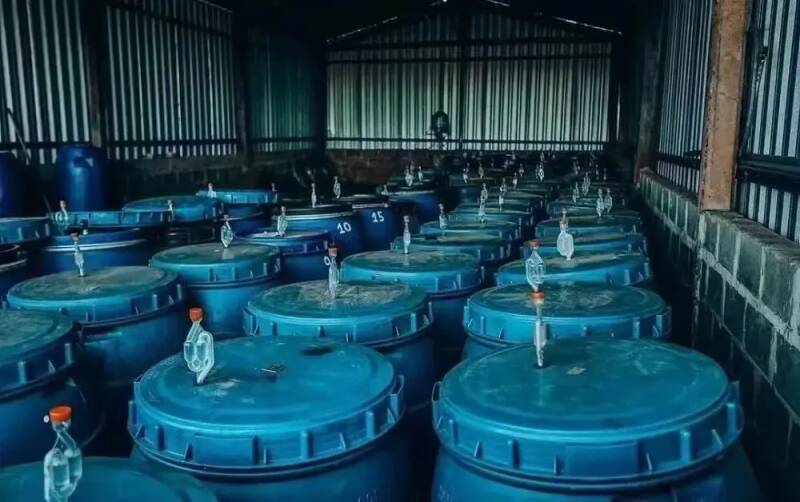
Since anaerobic fermentation is only one step, the coffee beans/fruits must be dried after the anaerobic fermentation is over. The drying process is actually traditional sun exposure and washing treatment. Simply put, the anaerobically fermented coffee cherries/beans are dried through the sun/water washing process. After the coffee beans are dried to a specified extent, the treatment can be declared complete.
In order to allow consumers to have a clearer understanding of the treatment process, manufacturers generally condense the treatment process into their names, so they have various strange names such as anaerobic tanning/washing, double anaerobic tanning, etc. Although that is said, many anaerobic treatments are still relatively complicated to operate, because various details such as the fermentation time of coffee beans and the temperature of the fermentation environment need to be strictly controlled. The purpose is to prevent excessive fermentation and negative taste. But because of this, anaerobic treatment can allow coffee beans to develop flavor characteristics completely different from traditional treatment, and this is also a treatment method that allows people to experience the new flavor of coffee.
Differences in flavor between different anaerobic treatments Here, Qianjie needs to remind everyone first that anaerobically treated coffee is not necessarily the same as coffee with a high degree of fermentation, because the anaerobic treatment used by different producers is an "exclusive formula", they will adjust and control the fermentation according to their own needs, so even if the coffee beans are treated anaerobically, their fermentation degree may be lighter than that of the traditionally processed coffee beans. There are many anaerobically treated coffees in Qianjie bean lists. If you want to experience different anaerobic treatment flavors, Qianjie will recommend you to try the following three coffee: Qianjie Panama Arida Manor·Anaerobic Carduai, Colombia Boundary Estate·Xizhao, and Panama 90+ Estate·Eleta geisha.
The Panamanian Alida Manor Anaerobic Kaduai in the Front Street Bean List can be said to be a relatively traditional anaerobic treatment. The fermentation degree of this bean is not too deep compared to the other two beans, so it is not very heavy. The flavor is expressed as sweet orange, berry, chocolate, and caramel, with a faint fermentation aroma.
Everyone should be familiar with the Colombia Boundary Estate·Xizhao. Qianjie often shares this bean because its flavor is really very pleasing. It is a double anaerobic sun-treated coffee bean, and the fermentation degree will be heavier than the former, so the fermentation feeling will be relatively obvious. The coffee will have a flavor similar to wine. In addition, we can also taste it from it, which is very special!
Panama's 90+ Estate·Eleta geisha is the most special existence among the three beans, but in fact, looking at the coffee industry, 90+ beans are also very special. This special refers to both processing and taste. Among the three beans, 90+Eleta has the heaviest fermentation degree, so its fermentation feeling is very obvious, but the flavor is also just as Qian Jie said, the taste is very special, it is the flavor of longan, pineapple, and preserved fruit. Due to the deep fermentation degree, the expression of various flavors will be relatively heavy. If you can't drink too strong coffee, you can choose to inject more water to dilute the concentration of the coffee, so that the coffee will be easier to eat ~
- END -
Front street coffee
No. 315 Donghua East Road, Dadong Street, Yuexiu District, Guangzhou City, Guangdong Province
FrontStreet Coffee is a long-established specialty coffee roaster in Guangzhou China, selling freshly roasted beans from its own farm in Yunnan as well as dozens of carefully selected single-origin beans from around the world for both pour-over and espresso. The products deliver consistently excellent quality and great value, with shipping within 24 hours. Guangzhou's FrontStreet Coffee shop is recommended by many coffee lovers, and the beans are now available online at the Tmall 。
Important Notice :
前街咖啡 FrontStreet Coffee has moved to new addredd:
FrontStreet Coffee Address: 315,Donghua East Road,GuangZhou
Tel:020 38364473