Essential Coffee Terms Every Specialty Coffee Drinker Should Know
If you’ve ever found yourself lost in a conversation about ‘single origin’ versus ‘blend,’ or debated whether your cup has ‘notes of caramel’ or just ‘sugar browning,’ you’re not alone. The specialty coffee world is full of precise terms—some technical, some sensory—that can make or break your understanding of what you’re really drinking. Whether you’re picking beans, choosing a brew method, or reading a café menu, knowing the lingo helps you make better choices.
In this guide, we break down over 60 essential coffee terms every enthusiast should know—from plant varieties and processing methods to roast profiles, brewing tools, and flavor attributes—so you can talk coffee with confidence and precision.
Coffee Species & Varieties
There are three main coffee species: Arabica, Robusta, and Liberica. Arabica is considered the highest quality but is also the most susceptible to leaf rust disease. It is mainly grown in high-altitude regions of South America, Central America, and Asia. Robusta, originally from the Congo, is hardier, less acidic, and often used in instant coffee due to its strong bitter profile. Liberica, native to West Africa, produces large beans and has a unique woody flavor; it’s now rarely cultivated, limited mostly to Liberia and Suriname.
Coffee Processing & Harvest Terminology
Coffee cherry is the fruit of the coffee plant, turning red when ripe. Inside are usually two flat-sided beans called ‘flat beans’ , and occasionally a round single bean known as a ‘peaberry’ or , which is rarer and often considered more distinctive in flavor. Processing removes the coffee bean from the fruit. Washed or water-washed coffee involves removing the skin, pulp, and mucilage with water, producing cleaner, brighter flavors. Natural or dry-processed coffee dries the beans in the sun with the fruit still attached, often yielding fruity, bold profiles. ‘Old beans’ are harvested over a year prior and have low moisture, while ‘new crop’ beans are freshly picked with higher moisture and vibrant flavors. 'Unripe beans' lead to off-flavors and are considered defects.
Flavor, Roast, and Brewing Basics
Flavor in coffee comes from a complex mix of attributes detected during tasting. ‘Tannin’ contributes astringency or bitterness, especially when over-extracted. Common taste descriptors include fruity, nutty, chocolatey, woody, grassy, or earthy. ‘Caramelization’ and ‘Maillard reactions’ during roasting develop the brown color and complex flavors. Roast levels range widely; light roasts preserve origin traits, medium develop balance, and dark roasts bring bold bitterness and less acidity. Agtron is a U.S.-used numeric roast scale ranging from 100 (lightest) to 25 (darkest), measured with a colorimeter. Extraction is how flavor is pulled from grounds via water; too much results in bitterness and tannin overload, too little leaves coffee weak and sour. Brewing methods vary from filtered pour-overs and drip coffee to espresso, French press, siphon , and Turkish coffee using a special long-handled pot .
Brewing Tools & Techniques
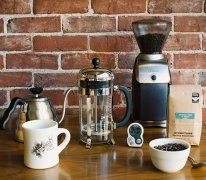
Key tools include the Chemex, V60, Kalita Wave , Melitta , and siphon. The Kalita has three small holes to ensure even flow, while the Melitta has one central hole. Filters may be paper or cloth , with cloth preserving more unique flavors. Grind size (grind size) is crucial—finer for espresso, coarser for French press. A burr grinder is preferred for uniformity. Espresso is a concentrated shot brewed under high pressure with finely ground coffee. Crema is the golden foam on top, formed by emulsified oils. A 'ristretto' is a short shot, 'lungo' a long one. For milk drinks, 'microfoam' is the velvety steamed milk texture essential for cappuccinos and lattes. A 'Wristlet' refers to stopping the espresso shot early to capture the best-tasting part. 'Filter coffee' includes all non-espresso brews using paper or cloth filters.
Quality Assessment & Industry Terms
A ‘cupper’ or ‘flavor analyst’ evaluates coffee quality through aroma, taste, acidity, body, and aftertaste. Defects such as black beans, sour beans, insect-damaged, moldy, or shell fragments downgrade beans. ‘Certified coffee’ meets recognized standards, often for sustainability or origin. 'Specialty coffee' refers to beans grown with care, showcasing distinct regional traits, though definitions vary globally. 'Flavor coffee' may refer to brewed coffee with added milk or flavored syrups. 'Blends' combine beans for balanced flavor, while 'single origins' highlight specific regions or farms.
Other Useful Coffee Terms
‘Cherry’ refers to the coffee fruit. ‘Parchment’ is the thin husk around the bean, often left on for storage. ‘Green coffee’ means unroasted beans. 'Screen size' or '' refers to sorting beans by size, with higher numbers indicating larger beans. 'Frost damage' harms Brazilian crops, especially around August. 'Dutch coffee' is a slow-drip method invented during colonial times. 'Pre-roasting' prepares green beans for easier roasting later. 'Agtron' measures roast degree numerically. 'Hand-picking' (Hand pick) ensures only ripe cherries are selected. A 'coffee replacement drink' is a non-coffee hot beverage, like those made from dandelion or soy during shortages. 'Sourness' or '' describes undesirable grass-like notes often from unripe beans.
Frequently Asked Questions
What is the difference between Arabica and Robusta coffee?
Arabica is considered higher quality, with delicate flavors, higher acidity, and more complexity, but is more prone to disease. Robusta is hardier, has stronger bitterness, higher caffeine, and is typically used in instant coffee. Arabica grows best at higher altitudes, while Robusta thrives in lowland, hotter conditions.
What does ‘washed’ and ‘natural’ coffee mean?
Washed (or water-washed) coffee is processed by removing the coffee bean from the fruit using water, resulting in a cleaner, brighter cup. Natural (or dry) process dries the coffee cherry with the bean inside, creating a fruitier, fuller-bodied flavor, often with more sweetness and fermentation notes.
What is a peaberry and is it special?
A peaberry, or , is a single rounded coffee bean that forms when only one bean develops inside the coffee cherry instead of the usual two flat beans. They occur in less than 5% of cherries and are often separated for roasting as they can have distinct flavor profiles, sometimes more intense or concentrated.
What is the Agtron scale?
The Agtron scale is a numerical system for measuring coffee roast degree, ranging from 100 (very light) to 25 (very dark). It is commonly used in the U.S. and determined using a color reflectance meter called the Agtron M-Basic. A reading around Agtron 50 indicates a medium roast.
What is the difference between a filter coffee and espresso?
Filter coffee is brewed by pouring hot water over ground coffee through a filter—common methods include pour-over, drip, or siphon. It is generally lighter, cleaner, and higher in acidity. Espresso is a concentrated coffee brewed under high pressure with finely ground beans, resulting in a thicker brew with crema on top and much bolder flavors.
What are common coffee flavor notes?
Common flavor notes in coffee include citrus, berry, floral, nutty, chocolatey, caramel, woody, earthy, and spicy. These are detected during sensory evaluation and depend on the bean origin, processing method, roast level, and brewing technique.
Top FrontStreet Arabica Beans for Learning Coffee Terms
Explore key coffee terms in action with FrontStreet’s Ethiopia Gedeb Yirgacheffe (Typica), a bright washed coffee with citrus and floral notes; Jamaica Blue Mountain No.1 (Jamaica Blue Mountain No.1), a classic Typica offering chocolate, almond and cream; and the Strawberry Candy Geisha blend (Geisha), showcasing jasmine, tropical fruits, and grape-like brightness. These beans exemplify single origin qualities, processing styles, and flavor profiles discussed in the glossary. Freshly roasted within 5 days · Orders placed before 17:00 ship the same day · Next-day delivery across most of Guangdong Province.
FrontStreet Coffee is a long-established specialty coffee roaster in Guangzhou China, selling freshly roasted beans from its own farm in Yunnan as well as dozens of carefully selected single-origin beans from around the world for both pour-over and espresso. The products deliver consistently excellent quality and great value, with shipping within 24 hours. Guangzhou's FrontStreet Coffee shop is recommended by many coffee lovers, and the beans are now available online at the Tmall 。
Important Notice :
前街咖啡 FrontStreet Coffee has moved to new addredd:
FrontStreet Coffee Address: 315,Donghua East Road,GuangZhou
Tel:020 38364473