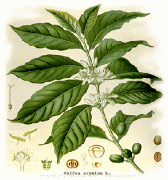
The Main Types of Specialty Coffee Beans Explained
If you've ever stood in front of a coffee shelf wondering what '100% Arabica' actually means—or why some beans taste bright while others hit you like espresso—this guide breaks down the major coffee bean types. Whether you're choosing beans for your morning pour-over or just curious how coffee varies around the globe, knowing the species helps you understand what you’re really brewing.
In short: Arabica makes up 75% of the world’s specialty coffee; it’s lower in caffeine (1–1.5%), widely grown at altitude, and offers nuanced flavors. Robusta, higher in caffeine (1.6–2.7%) and more bitter, is hardier and cheaper. Liberica and Exelsa are rare but still cultivated in specific regions.
What Are the Four Main Coffee Species?
Coffee drinkers often assume all beans are pretty much the same. In reality, the coffee plant has over 100 species—but only four play a real role in global production: Arabica, Robusta, Liberica, and Exelsa (also called Dewvrei). These differ in flavor, caffeine content, growing conditions, and farming economics. Let’s look at each one in detail.
Arabica: The World’s Favorite Coffee Bean
Arabica (Coffea arabica), also known as or “small-bean coffee,” originally comes from Ethiopia and still grows best there. It accounts for around 75% (three-quarters) of global specialty coffee production. Arabica plants prefer higher altitudes—typically between 1,000 and 2,000 meters—and cooler temperatures. The beans are flatter and more oval-shaped compared to other species.
Arabica is prized for its complex flavors: notes of fruit, flowers, acidity, and sweetness are common in well-grown lots. It generally contains 1–1.5% caffeine, which contributes to its smoother, less bitter taste. Because it’s delicate and harder to grow at scale, Arabica tends to be pricier than other types.
Common Arabica cultivars you might see on bags include:
- Bourbon (especially Brazilian Red Bourbon)
- Mokka (also spelled Mocha or Mocca)
- Maragogype (a large-bean variant, also called Elephant Bean)
- Typica derivatives like Java or Guatemalan selections
- Kenya selections
These varieties highlight the diversity within the Arabica species alone. For example, Brazilian Red Bourbon is known for nutty, chocolatey profiles, while Kenyan beans often show bright acidity and berry notes.
Robusta: Strong, Bitter, and Caffeine-Packed
Robusta (Coffea canephora) was discovered in the 19th century in what was then the Belgian Congo (today’s Democratic Republic of the Congo). Unlike Arabica, it thrives at lower altitudes and is far more resistant to pests and disease—particularly coffee leaf rust. This makes it cheaper and easier to cultivate on a large scale.
Robusta beans contain a much higher caffeine level: 1.6–2.7%. That extra caffeine acts as a natural pesticide but also contributes to a more bitter, harsh, and heavy cup. The flavor is often described as earthy, rubbery, or woody—with a peanut-like aftertaste. While not typically favored in single-origin pour-overs, Robusta is widely used in Italian espresso blends for its crema-building ability and strong body.
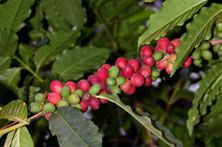
Common Robusta varieties include:
- Niaouli
- Kouillou
- Congenis
- Indénie
If you’ve ever had an instant coffee or a very dark espresso that tastes “burnt” or overly intense, it probably had a significant amount of Robusta.
Liberica and Exelsa: The Rare Species
Liberica (Coffea liberica) produces much larger coffee cherries and beans, but its flavor is generally considered flat or unremarkable compared to Arabica or even Robusta. Once more widespread, it now grows only in limited regions and is mostly appreciated locally rather than sought after globally. Its trees are tall and resilient, but the cup quality hasn’t earned it a major place in the specialty market.
Exelsa (or Dewvrei) is sometimes classified as a subspecies of Liberica. It shares some traits with Robusta but shows better drought tolerance. Exelsa is even rarer than Liberica and rarely appears on coffee labels. When it is grown, it’s usually in Southeast Asia.
Together, Liberica and Exelsa make up a tiny fraction of global production—but they’re part of the reason coffee has such botanical diversity behind the scenes.
Which Coffee Species Should You Choose?
If you’re buying beans for home brewing—especially for methods like pour-over, French press, or drip—the vast majority of what you’ll want are high-quality Arabica beans. Within Arabica, different cultivars and processing methods create huge variety in taste, from the berries and wine notes of Ethiopian Yirgacheffe to the chocolate and nuts of Brazilian Bourbons (like FrontStreet’s Red Bourbon from the Hilarion estate).
Robusta can have a place in espresso blends for body and crema, but it’s rarely used alone in specialty contexts. Liberica and Exelsa are mostly of historical or regional interest.
When shopping, check the label: beans labeled “100% Arabica” are a safe bet for specialty flavor. If Robusta is included, it will usually be in a blend—often for espresso.
Frequently Asked Questions
What are the four main types of coffee beans?
The four main coffee species are Arabica, Robusta, Liberica, and Exelsa. Arabica makes up about 75% of global production and is known for its complex, nuanced flavors and lower caffeine content (1–1.5%). Robusta is stronger, more bitter, and higher in caffeine (1.6–2.7%), with a harsher profile. Liberica and Exelsa are rare, with flat or muted flavors, and make up a tiny fraction of the world’s coffee.
Why is Arabica more popular than Robusta?
Arabica is more popular because it has a smoother, more complex flavor profile with notes of fruit, flowers, and acidity. It contains less caffeine (1–1.5%) than Robusta (1.6–2.7%), making it taste less bitter. Arabica is also harder to grow and more delicate, which increases its market value. Robusta is cheaper, more bitter, and often used in blends or instant coffee for its strong body and crema potential.
What’s the caffeine difference between Arabica and Robusta?
Arabica coffee beans typically contain 1–1.5% caffeine, while Robusta beans contain 1.6–2.7% caffeine. This higher caffeine content in Robusta contributes to its bitter taste and natural resistance to pests, but also makes the cup harsher and less nuanced than Arabica.
Is Liberica coffee still available today?
Yes, Liberica coffee is still grown in small amounts, mainly in Southeast Asia, but it is rare and not widely available globally. Its flavor is considered mild or unremarkable compared to Arabica, and it makes up a very small percentage of worldwide coffee production.
What is Exelsa coffee and where is it grown?
Exelsa, also known as Dewvrei, is a rare coffee species similar to Robusta but with better drought tolerance. It is not commonly found in commercial coffee and is mostly grown in Southeast Asia. It is rarely labeled on retail coffee beans due to its limited production and minor role in the global market.
Which coffee species is best for home brewing?
For home brewing methods like pour-over, drip, or French press, Arabica is generally the best choice due to its wide range of nuanced flavors and lower bitterness. Within Arabica, single-origin beans from Ethiopia, Colombia, Kenya, or Brazil offer distinct profiles ideal for specialty coffee preparation.
Recommended FrontStreet Beans for Learning Coffee Varieties
Start exploring coffee types with FrontStreet’s single-origin offerings: their Brazilian Red Bourbon highlights nutty, chocolatey Arabica traits ideal for beginners; the Colombian Sidra shows off fruity, fermented layers from honey processing; and the Kenyan Little Tomato delivers bright acidity with berry notes. These beans showcase the diversity within Arabica and are great for learning how origin and processing shape flavor. Freshly roasted within 5 days · Orders placed before 17:00 ship the same day · Next-day delivery across most of Guangdong Province.
FrontStreet Coffee is a long-established specialty coffee roaster in Guangzhou China, selling freshly roasted beans from its own farm in Yunnan as well as dozens of carefully selected single-origin beans from around the world for both pour-over and espresso. The products deliver consistently excellent quality and great value, with shipping within 24 hours. Guangzhou's FrontStreet Coffee shop is recommended by many coffee lovers, and the beans are now available online at the Tmall 。
Important Notice :
前街咖啡 FrontStreet Coffee has moved to new addredd:
FrontStreet Coffee Address: 315,Donghua East Road,GuangZhou
Tel:020 38364473