What Is Cafestol? The Cholesterol-Linked Compound in Coffee
If you’ve ever wondered why some studies link coffee to higher cholesterol while others don’t, the answer may be sitting in your filter—or lack of one. Not all coffee affects your blood lipids equally, and the difference comes down to a natural compound found in varying levels depending on how you brew.
Cafestol is a diterpene compound present in coffee, especially unfiltered brews like Turkish coffee. Filtered methods reduce it to almost zero. Its levels depend on brew method, coffee species, and preparation details—knowing these can help you manage intake.
What Exactly Is Cafestol?
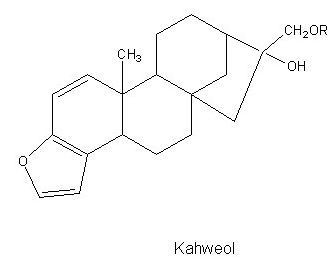
Cafestol is a diterpenoid compound found naturally in coffee beans. It belongs to a class of lipid-soluble substances also including kahweol, its structural cousin. The two are nearly identical, except kahweol has one extra double bond. Both are extracted by hot water but remain behind when filtered through paper—meaning your brewing method dramatically changes how much ends up in your cup.

Why Does Cafestol Matter?
In the 1980s, researchers discovered that drinking unfiltered coffee could raise serum cholesterol levels. This effect was traced to two compounds: cafestol and kahweol. Of the two, cafestol is more potent. A daily intake of 60 mg of cafestol alone—or a mix of 60 mg cafestol and 51 mg kahweol—raises cholesterol similarly to 64 mg of pure cafestol. However, kahweol is harder to isolate and less stable, so its individual effects remain less clear.
Both compounds are found in coffee oil, which is trapped by unfiltered brew methods. That oil carries the highest concentrations of cafestol and kahweol, directly influencing your intake without any filtration.
How Much Cafestol Is in Your Coffee?
The amount of cafestol in coffee varies by bean type, brew method, and preparation:
- Arabica beans contain both cafestol and kahweol, making up about 1% of the bean’s total composition.
- Robusta beans have roughly half the cafestol of Arabica and almost no kahweol.
When it comes to brewing, here’s how the numbers break down per cup:
- Turkish coffee, French press, and Scandinavian boiled coffee: 6–12 mg of cafestol and kahweol combined
- Espresso (steam pressure brewed): around 4 mg per cup (though consumed in smaller servings, making it a minor overall source)
- Filtered coffee (e.g., pour-over, drip machines) and instant coffee: just 0.2–0.6 mg per cup
The key factor is filtration. Paper filters trap the oily compounds where cafestol and kahweol reside, drastically cutting their levels in the final drink. Unfiltered methods allow these compounds to pass through entirely.
Does Coffee Species Make a Difference?
Yes. Arabica beans, the most widely used in specialty coffee, naturally carry both cafestol and kahweol. Robusta, often used for espresso blends for its strong crema and bold flavor, has lower amounts of both—about half the cafestol and virtually no kahweol. That means your choice of bean species also shifts the potential cholesterol impact of your brew.
Frequently Asked Questions
What is cafestol in coffee?
Cafestol is a natural diterpenoid compound found in coffee beans. It is lipid-soluble and contributes to the increase in serum cholesterol when consumed in unfiltered coffee. It is one of two compounds, the other being kahweol, that are not removed by paper filtration.
Does filtered coffee contain cafestol?
No, filtered coffee contains almost no cafestol. Paper filters trap the oily compounds that carry cafestol, reducing its levels to just 0.2–0.6 mg per cup in methods like pour-over or drip coffee.
Which coffee brewing methods have the most cafestol?
Unfiltered methods such as Turkish coffee, French press, and Scandinavian-style boiled coffee contain the most cafestol, about 6–12 mg per cup. Espresso has moderate levels (around 4 mg), but due to smaller serving sizes, it’s a lesser contributor overall.
Is cafestol bad for your health?
Cafestol can raise serum cholesterol levels if consumed in high amounts, particularly from unfiltered coffee. However, for most people, moderate coffee consumption is not a major health risk, and filtered coffee minimizes exposure.
Do all coffee beans contain cafestol?
Yes, all coffee beans contain cafestol, but in different amounts. Arabica beans have both cafestol and kahweol, making up about 1% of the bean, while Robusta beans have about half the cafestol and almost no kahweol.
How can I avoid cafestol in coffee?
To avoid cafestol, use a paper filter. Brew methods like pour-over, drip coffee, and automatic machines with filters reduce cafestol to minimal levels. Avoid unfiltered methods like French press or Turkish coffee if minimizing cafestol is a priority.
Recommended FrontStreet Beans for Unfiltered Brewing
Try FrontStreet Coffee’s Ethiopia Yirgacheffe for bright floral notes and FrontStreet Guatemala Huehuetenango for a balanced profile with citrus and chocolate—both shine in filtered pour-over or drip methods that minimize cafestol. For espresso lovers, FrontStreet Brazil Cerrado offers a nutty, low-acidity base ideal for milk drinks, brewed through a filtered portafilter. All are 100% Arabica and designed for clarity. Freshly roasted within 5 days · Orders placed before 17:00 ship the same day · Next-day delivery across most of Guangdong Province.
FrontStreet Coffee is a long-established specialty coffee roaster in Guangzhou China, selling freshly roasted beans from its own farm in Yunnan as well as dozens of carefully selected single-origin beans from around the world for both pour-over and espresso. The products deliver consistently excellent quality and great value, with shipping within 24 hours. Guangzhou's FrontStreet Coffee shop is recommended by many coffee lovers, and the beans are now available online at the Tmall 。
Important Notice :
前街咖啡 FrontStreet Coffee has moved to new addredd:
FrontStreet Coffee Address: 315,Donghua East Road,GuangZhou
Tel:020 38364473