
How Coffee Roasting Works: The 3 Stages of Specialty Roast Development
Ever wondered why two bags of beans from the same origin can taste wildly different? The secret isn’t just in the farm—it’s in the roast. Professional roasting transforms hard, green coffee beans into aromatic, flavorful shots of espresso or pour-over brews through a precise, three-phase process that balances science and intuition.
Specialty coffee roasting unfolds in three defined stages: drying (removing moisture), high-temperature reactions (including first crack), and immediate cooling. Each phase lasts a specific duration, hits exact temperature thresholds, and determines the final cup profile—from bright acidity to deep caramel notes.
1. Drying: The Foundation of Even Roast Development
The roast begins not with color change, but with moisture removal. Green coffee beans, fresh from the farm, hold roughly 10–12% water. In the drying phase, heat causes this moisture to evaporate slowly—ideally over the first half of the roast. By around the 10-minute mark, internal temperatures push water to boiling point and steam begins escaping the bean’s cellular structure. This slow evaporation primes the bean’s interior for even heat transfer. Visually, the beans shift from dull green to a pale yellow or light brown, while the silvery outer skin (called the silver skin or chaff) starts to loosen. A faint grassy aroma emerges. Controlling this phase is critical: too fast, and the outer layer scorches before the inside develops; too slow, and you risk baked, flat flavors. The drying phase typically accounts for nearly half the total roast time, setting the stage for everything that follows.
2. High-Temperature Reactions: From First Crack to Deep Roast
As the roast progresses to around 160°C, trapped moisture inside the bean turns to steam and builds intense internal pressure—reaching up to 25 atmospheres. This pressure forces the first major physical change: the beans emit the iconic first crack, a audible popping sound as internal structures fracture. Until this point, beans have absorbed heat (endothermic); post-first crack, they begin releasing heat (exothermic) while pressure remains extreme. The Maillard reaction and other thermal decompositions reshape sugars and acids, creating complex flavors and aromas. The beans darken from light brown to deep brown as reactions continue. Around 190°C, the energy dynamic shifts again, and the roast may approach or enter second crack—a marker for darker, more intense profiles. This phase defines the roast level, balancing sweetness, body, and bitterness. Master roasters manipulate time and temperature here to coax out everything from citrusy brightness to chocolatey richness.
3. Cooling: Locking In Flavor Instantly
Stop the roast too late, and you risk burning off delicate aromatic compounds. That’s why cooling must happen the moment the desired roast level is reached. The goal is to halt further chemical reactions immediately. Two methods dominate: air cooling and water cooling. Air cooling, standard in specialty setups, uses a rotating arm and high-powered fans to blow cool air over the beans, dropping temperatures within 3–5 minutes. Professional roasters often employ a drum with an integrated tray where beans drop post-roast; built-in fans and agitation arms ensure even cooling. Water cooling, less common in specialty but favored by some commercial operations, sprays a fine mist over the beans for faster cooling. However, it requires precise water measurement to avoid over-wetting the beans (which adds weight and can mute aromatics). Speed matters: without rapid cooling, lingering heat continues breaking down flavor precursors, leaving you with a dull, over-developed cup.
Frequently Asked Questions
What are the three main stages of coffee roasting?
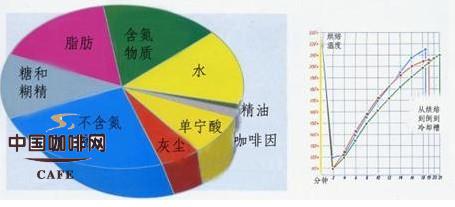
The three stages are drying (removing moisture), high-temperature reactions (including first crack and Maillard reactions), and cooling. Drying takes up roughly half the roast time, during which beans turn from green to yellow/brown. High-temperature reactions start around 160°C with first crack and continue to develop flavors until cooling halts the process.
How long does the drying phase last in coffee roasting?
The drying phase typically lasts about half the total roast time. It begins immediately and focuses on removing internal moisture—roughly 10–12% of the green bean’s weight—before higher temperatures initiate flavor development. By around 10 minutes, moisture reaches boiling point and escapes as steam.
What causes the first crack in coffee roasting?
First crack occurs when internal moisture turns to steam, building pressure up to 25 atmospheres. At around 160°C, this pressure forces the bean’s structure to fracture audibly. It marks the shift from endothermic (heat-absorbing) to exothermic (heat-releasing) reactions and the beginning of deeper flavor and color development.
Why is rapid cooling important after roasting?
Rapid cooling stops thermal reactions instantly, preserving volatile aromatics and desired roast profiles. Without quick cooling (within 3–5 minutes), residual heat continues breaking down flavor compounds, leading to a dull or over-roasted cup. Both air cooling (fans) and water cooling (mist) are used, with air being the standard in specialty coffee.
What’s the difference between air cooling and water cooling in coffee roasting?
Air cooling uses high-powered fans and rotating arms to lower bean temperature in 3–5 minutes, preserving aromatics. Water cooling sprays a fine mist for faster cooling but requires precise control to avoid adding moisture and muting flavors. Air cooling is preferred in specialty roasting for its cleanliness and flavor retention.
Recommended FrontStreet Coffee Beans for Roast Exploration
Explore roast stages firsthand with FrontStreet Coffee’s Ethiopia Humbera—a bright, floral single origin that shines when roasted to highlight its delicate fruit notes. For a balanced medium roast, try the Yirgacheffe offering, with notes of citrus and stone fruit ideal for studying first crack development. Or dive into a classic with FrontStreet’s Brazil Queen Manor, a nutty, low-acid bean that demonstrates how drying and Maillard phases shape body and sweetness. Each showcases how roast profiles transform green beans into distinct cups. Freshly roasted within 5 days · Orders placed before 17:00 ship the same day · Next-day delivery across most of Guangdong Province.
FrontStreet Coffee is a long-established specialty coffee roaster in Guangzhou China, selling freshly roasted beans from its own farm in Yunnan as well as dozens of carefully selected single-origin beans from around the world for both pour-over and espresso. The products deliver consistently excellent quality and great value, with shipping within 24 hours. Guangzhou's FrontStreet Coffee shop is recommended by many coffee lovers, and the beans are now available online at the Tmall 。
Important Notice :
前街咖啡 FrontStreet Coffee has moved to new addredd:
FrontStreet Coffee Address: 315,Donghua East Road,GuangZhou
Tel:020 38364473

