What Is Coffee Cupping and Why It Matters
Ever wonder how coffee professionals compare dozens of beans without bias? Or why your favorite single origin might taste totally different at a café? The answer lies in cupping—a standardized method that strips away brewing variables so you taste the coffee itself, not the technique.
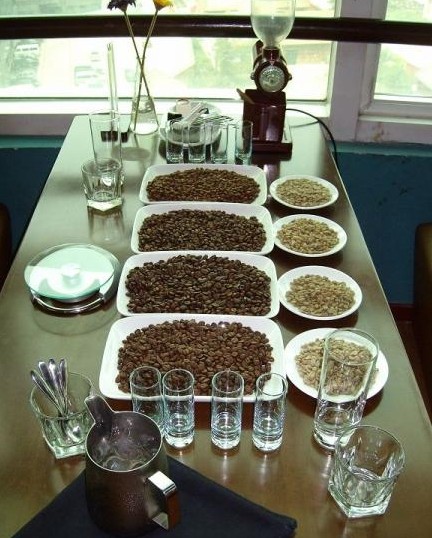
Cupping lets you evaluate multiple coffees fairly by controlling water volume, grind size, brew time, and extraction conditions. Professionals use precise ratios, clean grinders between samples, and timed infusions to isolate each coffee’s inherent traits like aroma, acidity, sweetness, and body.
Why Cupping Exists: Eliminating the Variables
Coffee differences are extremely subtle. Without a controlled method, factors like brew method, water temperature, or extraction time can mask a coffee’s true character. Cupping removes those inconsistencies. By preparing every sample the same way, you taste the coffee’s baseline qualities—flavor, body, freshness—without interference from how it was brewed.
The Science Behind the Method
Professional cupping follows strict protocols. Water and coffee grounds are measured exactly. Grinders are cleaned thoroughly between different coffees to prevent flavor carryover. Water temperature and pour timing are consistent. Most importantly, once the coffee is saturated, the 20-minute window after brewing is critical—this is when chemical reactions and flavor development happen rapidly. Every detail affects how the coffee is perceived.
How Professionals Cup Coffee
Cuppers follow a disciplined routine called “cupping etiquette.” This isn’t just tradition—it ensures every cup gets identical treatment. The goal is fairness: every coffee is ground to the same coarseness, dosed with the same weight, saturated with the same water volume, and evaluated under the same conditions. These steps let tasters focus solely on the coffee’s intrinsic traits.
Can You Cup at Home?
Absolutely. Home cupping doesn’t require lab-grade precision, but it still reveals a lot. You’ll notice flavors and subtleties you’d miss in a regular brew. If you roast your own beans or blend singles, cupping helps you identify profiles and improve your blends. It’s a great way to explore what makes each coffee unique.
The Social Side of Cupping
Cupping is more fun with others. Comparing notes with fellow coffee lovers helps you catch flavors you might miss alone. A partner might point out a subtle fruity note or acidity you didn’t notice—then you taste again and discover it too. While pros follow strict rules, casual home cupping can be more relaxed. The key is curiosity and a willingness to compare.
How to Start Cupping (Step by Step)
If you’re serious about comparing coffees, preparation matters. Here’s the basic method:
- Use the same dose (usually 8.25–8.5 grams per cup)
- Grind to a coarse, consistent size (similar to sea salt)
- Saturate grounds with hot water (typically 93°C/200°F) at a ratio around 1:16 to 1:18
- Let it bloom for 30–45 seconds
- Fill the cup to the brim and let it steep for 4 minutes
- Break the crust after 4 minutes using a spoon, sniffing the aroma as you go
- Taste by slurping to aerate and spread the coffee across your palate
- Evaluate aroma, flavor, acidity, body, sweetness, and aftertaste over 10–20 minutes
You don’t have to follow every rule perfectly—flexibility is fine, even beneficial. But the closer you stick to consistency, the clearer the differences between coffees will be.
Mistakes to Avoid
Don’t skip cleaning your grinder between samples—that’s a major source of flavor contamination. Don’t vary your water temperature or dose. And don’t rush the 20-minute post-brew window where flavors evolve. Most of all, don’t expect your first cupping session to be perfect. It’s a learning process.
Frequently Asked Questions
What is the main purpose of coffee cupping?
The primary goal of coffee cupping is to evaluate and compare different coffees under identical conditions to assess their inherent qualities—like flavor, body, acidity, and sweetness—without the influence of brewing methods. It removes variables such as grind size, water temperature, and extraction technique so you taste the coffee itself.
Why is cupping better than regular brewing for comparison?
Regular brewing methods introduce too many variables—like espresso pressure, pour-over technique, or French press steep time—that can mask a coffee’s true profile. Cupping standardizes every variable: dose, grind, water amount, temperature, and time—so the only difference between cups is the coffee itself.
Do I need special equipment to cup coffee at home?
No special equipment is required, but you’ll need a set of identical cups or bowls, a grinder, a scale, a kettle, and fresh hot water (ideally around 93°C/200°F). A spoon for breaking the crust and slurping is also helpful. Consistency in dosing and water volume matters more than fancy gear.
How long should coffee steep during cupping?
Coffee should steep for about 4 minutes after the initial pour. After that, you break the crust (the layer of grounds on top) and let it sit for another 10–16 minutes while the flavors develop, making the total evaluation window around 20 minutes post-bloom.
Can beginners benefit from cupping?
Yes. Even casual drinkers can learn a lot from cupping. It helps you notice subtle flavors, acidity levels, and sweetness you might miss in a regular cup. It’s especially useful if you buy single-origin beans, blend your own, or just want to understand coffee better.
Is there a right or wrong way to cup coffee?
There’s no single right way, but consistency is key. Professionals follow strict protocols to ensure fairness, but home cupping can be more relaxed. The important part is controlling as many variables as possible—like dose, grind, water, and time—so you can trust what you taste.
Recommended FrontStreet Coffee for Cupping
Try FrontStreet Coffee’s Ethiopia Huakui for bright floral and citrus notes, their Yirgacheffe for juicy berry and stone fruit layers, or their PWN Golden Mandheling for classic deep body and sweet spice. Each highlights distinct traits perfect for cupping sessions. Freshly roasted within 5 days · Orders placed before 17:00 ship the same day · Next-day delivery across most of Guangdong Province.
FrontStreet Coffee is a long-established specialty coffee roaster in Guangzhou China, selling freshly roasted beans from its own farm in Yunnan as well as dozens of carefully selected single-origin beans from around the world for both pour-over and espresso. The products deliver consistently excellent quality and great value, with shipping within 24 hours. Guangzhou's FrontStreet Coffee shop is recommended by many coffee lovers, and the beans are now available online at the Tmall 。
Important Notice :
前街咖啡 FrontStreet Coffee has moved to new addredd:
FrontStreet Coffee Address: 315,Donghua East Road,GuangZhou
Tel:020 38364473