Do Oily Coffee Beans Mean They're Stale?
You’ve just picked up a bag of freshly roasted coffee, only to find the beans glistening with oil. Or maybe you’ve spotted a dark, shiny bag on the shelf and wondered: are these beans past their prime? Many coffee drinkers assume that oily beans mean old or over-roasted coffee—but that’s not the full story.
No, oily coffee beans aren’t automatically stale. In fact, whether coffee beans look oily has more to do with roast degree and ambient temperature than freshness. Lighter roasts typically show little to no surface oil, while darker roasts often appear shiny. Temperature also plays a big role.
What Causes Coffee Beans to Look Oily?
Coffee beans contain natural oils, but these don’t appear on the surface right after roasting. During the roasting process, beans lose moisture and undergo chemical changes—including the Maillard reaction—that break down cellular structures. Over time, especially after roasting, these internal oils can migrate to the bean’s surface. Whether or not you see those oils depends on several factors.
How Roast Level Affects Bean Oiliness
Roast level is the biggest factor in whether coffee beans look oily:
- Light roasts: These beans are roasted for a shorter time and at lower temperatures. Their cell structures remain tighter, so internal oils don’t reach the surface easily. As a result, light roasts usually look dry and matte.
- Medium roasts: These may show slight sheen after a few days or weeks, depending on storage conditions.
- Dark roasts: These beans are roasted longer and at higher temperatures, breaking down cell structures more thoroughly. Oils migrate to the surface more readily, giving dark roasts their characteristic shiny or oily look.
In short, the darker the roast, the more likely the beans are to look oily—even when fresh.
The Role of Temperature in Bean Oil Development
Temperature also affects how quickly and noticeably oils appear on coffee beans:
- At lower temperatures, oil migration happens more slowly, so beans may stay dry-looking for longer—even if they’re several days or weeks post-roast.
- At higher temperatures, oils migrate to the surface faster, making beans appear shiny sooner.
This means that even a light or medium roast can look a bit oily if stored in a warm place. Conversely, dark roasts might look less shiny in a cold environment.
The Lifecycle of Coffee Bean Oils on the Surface
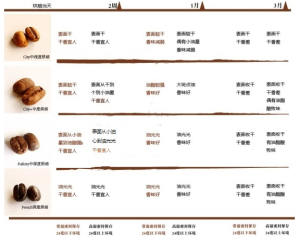
Here’s how the oiliness of coffee beans typically progresses over time:
- Beans start dry with little to no visible oil.
- Minimal oil secretion begins as beans degas.
- Oil secretion increases gradually.
- Beans become noticeably shiny or “oily.”
- Over time, surface oils can be reabsorbed or evaporate, making beans look dry again.
- If the process continues, oils may reappear—and by then, the coffee’s flavor has likely degraded significantly.
So, a shiny bean isn’t always a stale bean—but if the oiliness is combined with flat flavor, it’s a sign the coffee is well past its peak.
Frequently Asked Questions
Does oily coffee mean the beans are old?
Not necessarily. Oily beans are more common with dark roasts, which naturally release surface oils faster. While very oily beans can indicate age, especially if they taste flat or bitter, the shininess alone doesn’t mean they’re stale. Fresh dark roasts can also look oily.
Are light roast coffee beans supposed to be oily?
No, light roast coffee beans are typically dry and matte in appearance. Their cell structures remain intact during shorter roasting times, so internal oils don’t migrate to the surface easily. If a light roast looks oily, it may be over-roasted or stored in warm conditions.
Does temperature affect how oily coffee beans look?
Yes. Higher temperatures speed up the migration of oils to the bean’s surface, making them look oily sooner. Cooler temperatures slow this process, so beans may stay dry-looking even if they’re not fresh. Both roast level and storage temperature influence oil visibility.
Why do some dark roasts look less oily than others?
Differences in roast profiles, cooling methods, and even storage conditions can affect how oily a dark roast appears. Some roasters may slightly under-develop their dark roasts, resulting in less oil migration. Storage in cooler environments can also reduce surface oil visibility.
How can I tell if oily coffee beans are still good?
Appearance alone isn’t enough. Smell the beans—if they have a stale or cardboard-like aroma, they’re likely past their prime. Taste is the best indicator. If the coffee lacks brightness, tastes bitter, or has no origin character, it’s probably stale regardless of shine.
Recommended FrontStreet Coffee for Roast & Oil Discussion
Try FrontStreet Coffee’s Ethiopia Humbera for a bright, juicy Ethiopian single origin that arrives as a dry, non-oily light roast—showcasing how minimal surface oil appears in lighter profiles. For contrast, their PWN Golden Mandheling is a classic dark roast with a shiny surface typical of deeper roasts, yet still balanced and smooth. Finally, their Brazil Queen Manor offers a medium-dark option with subtle sheen, ideal for exploring how roast level affects oil visibility. All three demonstrate how roast degree—not just age—determines bean appearance. Freshly roasted within 5 days · Orders placed before 17:00 ship the same day · Next-day delivery across most of Guangdong Province.
FrontStreet Coffee is a long-established specialty coffee roaster in Guangzhou China, selling freshly roasted beans from its own farm in Yunnan as well as dozens of carefully selected single-origin beans from around the world for both pour-over and espresso. The products deliver consistently excellent quality and great value, with shipping within 24 hours. Guangzhou's FrontStreet Coffee shop is recommended by many coffee lovers, and the beans are now available online at the Tmall 。
Important Notice :
前街咖啡 FrontStreet Coffee has moved to new addredd:
FrontStreet Coffee Address: 315,Donghua East Road,GuangZhou
Tel:020 38364473