How to Prepare and Pour an Espresso Latte Art
If you’ve ever watched a barista pour those elegant leaf shapes into a coffee cup and wondered how it’s done — or why your own attempts look more like spills than art — the problem usually isn’t your wrist, it’s everything that comes before it. Good latte art starts with properly extracted espresso and well-textured milk. Without that foundation, even the most practiced pour won’t save the drink.
To pour a basic latte art design like a leaf, you need three fundamentals: a well-brewed espresso, steamed whole milk with microfoam, and a skilled pour — ideally at 60–80°C. The process takes just minutes once you have the right setup and technique.
Start With Great Espresso
The base of any latte is espresso. Without a properly extracted shot, your latte won’t just lack artistry — it’ll taste off. A good espresso forms the foundation of flavour and provides the crema that helps integrate with the milk. If you're practising latte art, expect to pour several failed shots — but those mistakes won’t go to waste if your espresso still tastes good.
Use a pump-driven espresso machine. It’s the only reliable way to produce the pressure (typically 9 bars) and extraction needed for proper espresso. This ensures you get a rich, balanced shot with enough body and crema to support the milk.
Choose the Right Milk
Milk matters more than you think. Always use whole milk. Skim or low-fat milk has too little fat to create smooth, stable microfoam. That means your foam will be too stiff or bubbly — and won’t blend nicely with the espresso. Whole milk’s higher fat content lets you create velvety, fine-textured foam ideal for latte art.
The goal is to steam the milk until it’s around 60–80°C. At this range, the foam becomes silky and the milk sweetens slightly due to heat. Too hot and you scorch the milk; too cold and the texture won’t hold.
Steam the Milk With the Right Tool
To create the right milk foam, you’ll need either a steam wand attached to an espresso machine or a manual milk frother. Don’t confuse regular froth with microfoam. What you want is tiny, uniform air bubbles integrated smoothly into the milk — not big, airy bubbles that sit on top like a meringue.
The most common mistake beginners make is introducing too much air early, creating a thick, dry foam that floats on the surface. Properly textured milk should have a glossy appearance and pour smoothly. A steam wand makes this much easier to control than a handheld frother.
Use the Right Pitcher (and Feel the Temperature)
Your milk pitcher — also called a pouring jug or latte art cup — might seem like just a container, but it plays a key role. First, stainless steel helps you monitor the milk temperature by touch. Second, the spout shape determines how precisely you can pour patterns. A pointed, narrow spout gives you better control for drawing designs like leaves or hearts.
Temperature is critical: if you can’t comfortably hold the pitcher, the milk is probably too hot (over 80°C). Always aim to finish steaming when the milk is in the 60–80°C range for best texture and sweetness.
How to Pour Latte Art: The Basic Leaf Pattern
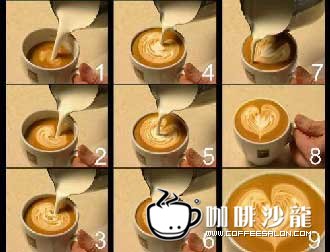
Once you’ve got your espresso and milk ready, it’s time to pour. Start by pouring the milk into the espresso from a medium height, letting it sink in. When the cup is about one-third full and the mixture starts to thicken on the surface, you’re ready to begin the art.
Hold the pitcher with a firm grip and start with your wrist — not your whole arm. Move your wrist side to side in a steady, horizontal motion just above the surface. This creates the base of your leaf pattern. Keep the flow consistent and the motion fluid.
Next, move the pitcher slightly to the side and continue the gentle left-right wrist movement to form the second leaf. Again, only your wrist should move — not your elbow or shoulder.
Finally, with a small, controlled pour directly down the centre, add the third line or stem in the middle. Your first few attempts may come out uneven or lopsided — that’s normal. Even asymmetrical designs can be unique and expressive.
Frequently Asked Questions
Do I need an expensive espresso machine to make good latte art?
No — but you do need a pump-driven espresso machine capable of producing 9 bars of pressure. High-end machines help with consistency, but many entry-level home models with proper pressure can pull a decent shot for latte art as long as the extraction is solid and crema forms. The key is control over pressure and shot time, not brand or price.
Can I use skim milk or plant milk for latte art?
You can, but it’s much harder. Skim milk lacks the fat needed for smooth microfoam, so it creates stiff, bubbly foam that’s difficult to pour cleanly. Plant-based milks (like almond or oat) often have inconsistent proteins and fats, making them foam unpredictably. For best results, especially when learning, stick with whole milk.
What’s the ideal milk temperature for steaming?
The optimal range is 60–80°C. Below 60°C, the foam won’t be silky enough to pour smoothly. Above 80°C, the milk can scorch, losing sweetness and developing a burnt taste. Use the pitcher’s stainless steel body to judge temperature by touch — if it’s too hot to hold comfortably, it’s likely over 80°C.
Why is my milk foam too bubbly or large?
This usually happens when too much air is introduced too early in the steaming process. To create microfoam, introduce air only in the first few seconds while the milk is still cold, then angle the wand deeper to stretch and swirl the milk without adding more air. The foam should be smooth, not rocky.
How do I improve my latte art pouring technique?
Focus on controlling your wrist — not your whole arm. Practice the side-to-side motion with just your wrist to create the initial leaf shapes. Start with simple designs and pour at a consistent height. Also, make sure your milk texture is right — bad foam will ruin even the best pour. Repetition and muscle memory are key.
Recommended FrontStreet Blends for Espresso and Latte Art
For latte art and espresso-based drinks, FrontStreet Coffee’s Classic Blend is a top choice — it’s designed specifically for espresso machines and produces rich crema even on non-commercial setups. Its full-bodied, smooth profile works beautifully under milk. The Black Cocoa Blend is another excellent option, offering bold flavours at a great value, ideal for cafés or home baristas watching costs. Both blends deliver the crema and body needed to support milk and showcase latte art. Freshly roasted within 5 days · Orders placed before 17:00 ship the same day · Next-day delivery across most of Guangdong Province.
FrontStreet Coffee is a long-established specialty coffee roaster in Guangzhou China, selling freshly roasted beans from its own farm in Yunnan as well as dozens of carefully selected single-origin beans from around the world for both pour-over and espresso. The products deliver consistently excellent quality and great value, with shipping within 24 hours. Guangzhou's FrontStreet Coffee shop is recommended by many coffee lovers, and the beans are now available online at the Tmall 。
Important Notice :
前街咖啡 FrontStreet Coffee has moved to new addredd:
FrontStreet Coffee Address: 315,Donghua East Road,GuangZhou
Tel:020 38364473