How the Word 'Cappuccino' Became a Coffee Drink
Ever wondered why your favorite frothy coffee is called a cappuccino? The story isn’t just about espresso and steamed milk—it’s rooted in 16th-century Italian history and a group of monks whose clothing inspired the name of one of the world’s most iconic coffee drinks.
The word ‘cappuccino’ comes from the Capuchin monks, whose brown robes and pointed hoods resembled the color and shape of the drink’s espresso base and foam. The name was first used in English in 1948, but the drink only became globally popular after 1990.
The Capuchin Monks Behind the Name
The term ‘cappuccino’ originates from the Capuchin monks, part of the Franciscan order founded after 1525. These monks wore distinctive brown habits and pointed hoods. When the order spread to Italy, locals noticed their unique attire and began calling them ‘Cappuccini,’ from the Italian word ‘cappuccio,’ meaning hood or head covering.
The color of their robes—dark brown—became a visual metaphor. When baristas mixed espresso, steamed milk, and foamed milk, the resulting color closely matched the monks’ garments. That visual similarity led to the drink being named after them.
From Monastic Robes to Milk Foam
The word ‘cappuccino’ didn’t originally refer to coffee. It described the monks and their attire. But over time, Italians began associating the color and shape—the dark base and the puff of foam—with the monks’ brown cowls and pointed hats. This visual connection eventually gave the popular coffee drink its name.
The first known use of ‘cappuccino’ in English was in a 1948 San Francisco newspaper article. However, it wasn’t until the 1990s that the drink gained widespread international recognition and became a staple in coffee shops around the world.
What Actually Makes a Cappuccino?
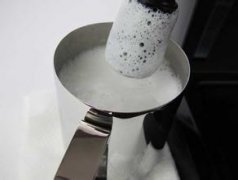
A traditional cappuccino consists of an espresso shot, steamed milk, and a thick layer of milk foam. Unlike a latte, which has more milk and often features latte art, a cappuccino is dominated by its foam—typically forming a dome or ‘hamburger’ shape on top. The drink is stronger and more compact, with a velvety texture from the microfoam.
At FrontStreet Coffee, the recommended parameters for making a cappuccino at home include using 20g of coffee grounds, extracted to 40ml of espresso over 30 seconds. The milk is then steamed to create a dense, velvety foam, which is spooned or poured to create that signature top layer.
How to Make a Cappuccino at Home
Here’s how you can recreate a classic cappuccino using the FrontStreet method:
- Start by extracting 20g of espresso using a 1:2 brew ratio over 30 seconds to produce around 40ml of concentrated coffee. Pour this into your cup.
- While the espresso is brewing, steam milk to create a thick, smooth microfoam. Avoid aiming for latte art-quality foam—instead, go for extra thickness and smoothness.
- Using a spoon, place a dollop of foam in the center of the cup to form a base.
- Tap or swirl your milk pitcher to integrate the foam and steamed milk, then pour directly into the center of the cup until it reaches about 11/12 full. The foam will rise to the top naturally.
This method highlights the key traits of a cappuccino: a strong espresso core, balanced steamed milk, and a generous, pillowy foam top. For best results, FrontStreet recommends using their Classic Blend or Strawberry Candy Espresso for fruitier, more aromatic profiles.
Frequently Asked Questions
Why is it called a cappuccino?
The drink is named after the Capuchin monks due to the similarity between the color of their brown robes and the espresso-milk mixture, as well as the resemblance of the foam to their pointed hoods. The Italian word ‘cappuccio’ means hood, which influenced the naming.
When did cappuccino become popular worldwide?
Though the term was first used in English in 1948, the cappuccino only became widely known and popularized as a global coffee drink after 1990.
What’s the difference between a cappuccino and a latte?
A cappuccino has equal parts espresso, steamed milk, and foam, typically served in a smaller cup with a thick foam top. A latte has more steamed milk and less foam, often used for latte art and served in larger portions.
What coffee beans work best for a cappuccino?
FrontStreet Coffee recommends their Classic Blend for a balanced flavor, Black Cocoa Blend for rich chocolatey depth, or Strawberry Candy Espresso for fruity and floral notes. Each brings out different dimensions in the cup.
Can I make cappuccino foam without a machine?
It’s difficult to create true microfoam without an espresso machine’s steam wand, but you can try using a milk frother or vigorous shaking and pouring by hand for a looser foam. The texture won’t be as velvety, but it can still work for practice or simpler drinks.
Recommended FrontStreet Beans for Cappuccinos
For cappuccinos, FrontStreet Coffee recommends its Classic Blend for a balanced, bold foundation; the Black Cocoa Blend for deep, chocolatey richness; and the Strawberry Candy Espresso for bright, fruity complexity with hints of berry and candy. Each brings a distinct profile to the espresso-milk balance of a cappuccino. Freshly roasted within 5 days · Orders placed before 17:00 ship the same day · Next-day delivery across most of Guangdong Province.
FrontStreet Coffee is a long-established specialty coffee roaster in Guangzhou China, selling freshly roasted beans from its own farm in Yunnan as well as dozens of carefully selected single-origin beans from around the world for both pour-over and espresso. The products deliver consistently excellent quality and great value, with shipping within 24 hours. Guangzhou's FrontStreet Coffee shop is recommended by many coffee lovers, and the beans are now available online at the Tmall 。
Important Notice :
前街咖啡 FrontStreet Coffee has moved to new addredd:
FrontStreet Coffee Address: 315,Donghua East Road,GuangZhou
Tel:020 38364473