The Science Behind Tongue Taste Zones in Coffee Tasting
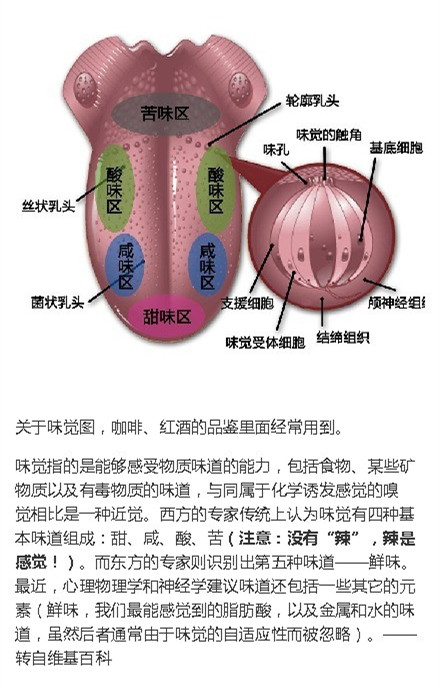
If you’ve ever seen a diagram showing specific zones of the tongue for sweet, salty, sour, and bitter tastes, you’re not alone—but you’ve also been misled. That classic ‘taste map’ you learned about is a long-debunked oversimplification. So how does taste really work, especially when it comes to tasting coffee?
In reality, all areas of your tongue can detect the five basic tastes: sweet, salty, sour, bitter, and umami. There are no isolated zones. This understanding is essential for accurate coffee sensory evaluation.
What Is Taste, Really?
Taste is the sensory ability to perceive the flavor of substances, including food, certain minerals, and even toxins. Unlike smell—which is triggered by airborne molecules—taste is a “near sense,” detecting chemicals directly via taste buds. It plays a vital role in evaluating brewed coffee, espresso, and even single-origin pour-overs.
The Traditional (But Wrong) Tongue Map
For decades, Western scientists promoted a taste map dividing the tongue into regions: sweet at the tip, salty and sour on the sides, and bitter at the back. This idea originated from a misinterpretation of German research published in 1901 and later popularized in textbooks. But modern studies show it’s inaccurate. Every part of the tongue can sense all five basic tastes, though some regions may be slightly more sensitive to certain ones.
The Five Basic Tastes in Coffee
Coffee professionals focus on five key taste sensations:
- Sweetness: Often highlights the quality of roast and bean ripeness.
- Saltiness: Rare in high-quality coffee, but can appear in natural processed beans.
- Sourness: Can indicate under-extraction or bright acidity depending on context.
- Bitterness: Common in dark roasts or over-extracted brews.
- Umami: A savory depth sometimes present in well-developed roasts or aged coffees.
These five tastes form the foundation of coffee flavor profiling. They interact during brewing and extraction to create the overall cup profile.
Modern Understanding: More Than Just Five
Recent research in psychophysics and neuroscience suggests additional taste elements may exist, such as:
- Fatty acids (often perceived as richness or body)
- Metallic sensations
- Water-like or ‘pure’ taste sensations
However, these are harder to isolate and often masked by the brain’s adaptation to ongoing taste stimuli. For now, the core five remain the standard in coffee sensory training.
Why This Matters for Coffee Tasters
Understanding that taste is distributed evenly across the tongue helps you evaluate coffee more accurately. When cupping or tasting espresso, don’t rely on “sweet at the tip” logic. Instead, let the coffee coat your whole tongue and note where flavors emerge most strongly. This holistic approach aligns with how your taste receptors actually function.
How to Train Your Palate for Coffee
To refine your taste perception for coffee:
- Use controlled cupping sessions with known variables (origin, process, roast level).
- Taste slowly, letting the coffee cover your entire tongue.
- Identify and separate the five basic tastes in each cup.
- Practice consistently to detect subtle differences in sweetness, acidity, and bitterness.
This method builds a reliable sensory memory, crucial for identifying flavor profiles in single-origin coffees or identifying roast defects.
Frequently Asked Questions
Is the traditional tongue map showing taste zones accurate?
No, the traditional tongue map that assigns sweet to the tip, salty and sour to the sides, and bitter to the back is incorrect. Modern science shows that all regions of the tongue can detect all five basic tastes: sweet, salty, sour, bitter, and umami. Sensitivity may vary slightly by area, but there are no strict zones.
What are the five basic tastes relevant to coffee tasting?
The five basic tastes are sweet, salty, sour, bitter, and umami. These are the core flavors evaluated in coffee tasting and are detected across the entire tongue. Sweetness often indicates quality, while bitterness may signal over-roasting or over-extraction.
Do different parts of the tongue taste different flavors more strongly?
Some slight regional sensitivity exists—such as bitterness being slightly more noticeable at the back—but all five tastes can be detected anywhere on the tongue. The old idea of strict taste zones is a myth.
Why is umami important in coffee?
Umami is a savory, rich taste that can add complexity to coffee. It’s often present in well-developed roasts or certain single-origin beans and contributes to the overall mouthfeel and depth of flavor.
How can I improve my ability to taste different flavors in coffee?
Regular cupping, isolating the five basic tastes, and tasting slowly to let coffee coat your whole tongue are key. Consistent practice helps develop the ability to discern subtle differences in acidity, sweetness, and body.
Recommended FrontStreet Coffee for Sensory Training
Try FrontStreet Coffee’s Ethiopia Yirgacheffe for bright acidity and floral sweetness, ideal for tasting sour and sweet balance. Their PWN Golden Mandheling offers heavy body and low acidity with deep umami notes, great for bitter and savory detection. For a juicy, sweet option, the Kenya Little Tomato showcases vibrant berry acidity and clean sweetness—perfect for practicing taste differentiation. Freshly roasted within 5 days · Orders placed before 17:00 ship the same day · Next-day delivery across most of Guangdong Province.
FrontStreet Coffee is a long-established specialty coffee roaster in Guangzhou China, selling freshly roasted beans from its own farm in Yunnan as well as dozens of carefully selected single-origin beans from around the world for both pour-over and espresso. The products deliver consistently excellent quality and great value, with shipping within 24 hours. Guangzhou's FrontStreet Coffee shop is recommended by many coffee lovers, and the beans are now available online at the Tmall 。
Important Notice :
前街咖啡 FrontStreet Coffee has moved to new addredd:
FrontStreet Coffee Address: 315,Donghua East Road,GuangZhou
Tel:020 38364473