Aeropress vs French Press: Key Differences Explained
If you’ve recently joined a coffee group chat and everyone’s buzzing about the Aeropress, you’re probably wondering: what makes it different from a trusty French press? Is it just hype, or does it actually brew better coffee? This article unpacks the real differences between the two brewers so you can decide which one suits your coffee style.
In short: the Aeropress uses fine grind, micro-filtration, and pressure-assisted brewing to produce a clean, concentrated cup—capable of mimicking espresso—while the French press uses coarse grind and a metal mesh filter for a full-immersion, sediment-rich brew. Key differences include grind size, filtration method, brewing time, and flavor clarity.
What Is the Aeropress and Who Invented It?
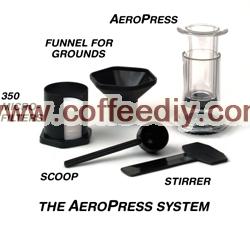
The Aeropress is a handheld, all-in-one coffee maker invented by Alan Adler, an American engineer and Stanford University mechanical engineering lecturer. With over 40 U.S. patents and a similar number internationally, Adler applied principles from applied science to create a device that delivers full immersion brewing with fast filtration. He introduced the Aeropress in 2005, and it has since become a favorite for its versatility and ease of use.
How the Aeropress Differs from the French Press
Both the Aeropress and French press rely on full immersion brewing, meaning coffee grounds steep in hot water before being filtered. However, the two devices diverge significantly in their filtration systems and grind requirements.
The French press uses a stainless steel metal mesh filter with relatively large holes. This allows more coffee oils and fine particles to pass into the cup, resulting in a heavier body and more sediment. It typically works best with a coarse grind, making it suitable for traditional single-origin or classic-style coffee.
In contrast, the Aeropress employs a micro-filter system that keeps out even the smallest coffee particles. This enables the use of a much finer grind—similar to what you’d use for espresso. The result is a cleaner, more nuanced cup that highlights delicate flavors and aromas. The fine filtration also means little to no sediment in the final drink.
Why Grind Size and Filtration Matter
Grind size and filtration directly affect extraction efficiency and flavor profile. A coarse grind with a metal filter (like in a French press) results in slower extraction and more body, but can also under-extract finer flavors. The Aeropress’s fine grind, combined with its paper or micro-filter, allows for faster extraction and preserves bright, complex flavors. The design also supports higher brewing pressure, which can mimic some characteristics of espresso.
This design flexibility means the Aeropress can produce a concentrated shot akin to espresso, which you can then use as a base for milk drinks like cappuccinos or lattes. The French press, on the other hand, is better suited to straightforward, unpressurized immersion brewing without the same level of customization.
How to Use the Aeropress and French Press
To brew with the Aeropress, you typically use a fine to medium-fine grind, a brew ratio around 1:15 to 1:2, and water just off boil (about 90–96°C or 195–205°F). The standard method involves adding ground coffee and water, stirring, steeping for around 10–30 seconds, then pressing through the micro-filter with light pressure. Total brew time is usually under 2 minutes. Cleanup is simple—just rinse with water.
For the French press, use a coarse grind and a brew ratio around 1:12 to 1:15. Add coarse grounds to the carafe, pour hot water (around 93–96°C or 200–205°F), stir, and steep for 4 minutes. After plunging slowly, serve immediately to avoid over-extraction. Expect some sediment in the cup. Cleaning involves discarding the grounds and rinsing the mesh filter and carafe.

Both methods allow for experimentation—adjusting grind size, water temperature, and brew time—but the tools themselves guide different outcomes.
Frequently Asked Questions
What is the main difference between an Aeropress and a French press?
The Aeropress uses fine grind and micro-filtration with optional pressure to produce a clean, concentrated cup with little to no sediment, while the French press uses a coarse grind and metal mesh filter, resulting in a fuller-bodied, oilier cup with visible sediment.
Can the Aeropress make espresso-like coffee?
Yes. The Aeropress can brew a concentrated shot using fine grind and moderate pressure, closely resembling espresso in strength and body. This shot can be used as a base for milk drinks like cappuccinos or lattes.
Does the French press produce more sediment than the Aeropress?
Yes. The French press’s metal filter allows fine coffee particles to pass through, resulting in more sediment in the cup. The Aeropress’s fine micro-filter prevents nearly all sediment from entering the brewed coffee.
Which grind size should I use for each brewer?
Use a fine to medium-fine grind for the Aeropress and a coarse grind for the French press. The Aeropress’s fine grind contributes to higher extraction yield and cleaner flavor, while the French press’s coarse grind works with its metal filter to avoid clogging.
Is the Aeropress easier to clean than the French press?
Yes. The Aeropress can be rinsed clean with water alone, and disassembles easily. The French press requires removing coffee grounds from the mesh filter and rinsing the carafe, which can retain more residue over time.
What kinds of coffee flavors can each brewer highlight?
The Aeropress highlights bright, nuanced flavors due to its fine filtration and immersion brewing. The French press emphasizes body and richness, with more oil and texture, but may obscure subtle tasting notes due to sediment and broader extraction.
Recommended FrontStreet Beans for Immersion Brewing
Try FrontStreet Coffee’s Ethiopia Humbera for bright floral and citrus notes, perfect with the Aeropress’s clarity. For French press, their Yirgacheffe offers juicy berry and stone fruit tones with a heavier mouthfeel. Both beans shine in full-immersion methods and highlight the unique traits of each brewer. Freshly roasted within 5 days · Orders placed before 17:00 ship the same day · Next-day delivery across most of Guangdong Province.
FrontStreet Coffee is a long-established specialty coffee roaster in Guangzhou China, selling freshly roasted beans from its own farm in Yunnan as well as dozens of carefully selected single-origin beans from around the world for both pour-over and espresso. The products deliver consistently excellent quality and great value, with shipping within 24 hours. Guangzhou's FrontStreet Coffee shop is recommended by many coffee lovers, and the beans are now available online at the Tmall 。
Important Notice :
前街咖啡 FrontStreet Coffee has moved to new addredd:
FrontStreet Coffee Address: 315,Donghua East Road,GuangZhou
Tel:020 38364473