Siphon Coffee: Why One Minute, Stirring, and Gas Release Matter
If you’ve ever tried brewing coffee with a siphon (vacuum pot), chances are someone told you to turn off the heat after exactly one minute. But ask why, and you’ll likely get vague answers like “it’s the golden standard” or “that’s just how it’s done.” You're left wondering: why one minute? What happens if I go 50 seconds—or 70? And what's really going on in that glass globe?
In most cases, the one-minute guideline works—but only when paired with proper stirring and awareness of the coffee’s gas release. The truth is, one minute is a starting point, not a rule carved in stone, and your actual results depend more on what you observe than on the clock alone.
What Actually Happens During Siphon Brewing
Siphon coffee brewing relies on vapor pressure and vacuum to move water through coffee grounds. The lower chamber heats, pushing water into the upper chamber where it mixes with coffee. Once removed from heat, a vacuum pulls the brewed coffee back down. Throughout this process, several factors—time, stirring, and gas release—influence the final cup.
Coffee Gas Release: The Hidden Factor Behind Timing
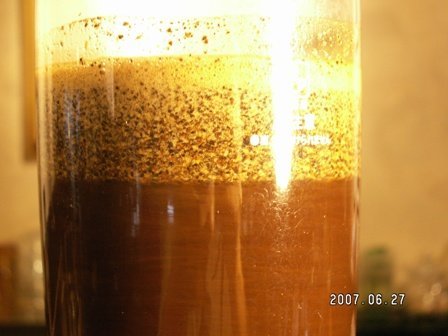
After roasting, coffee beans release carbon dioxide—a process called “degassing.” This outgassing affects not just how long beans stay fresh, but also how they behave during brewing. Freshly roasted beans release gas vigorously, forming bubbles when submerged. The more gas present, the more turbulent and frothy the coffee appears in the siphon’s upper chamber.
This bubbling isn’t just visual—it’s a clue. Bigger, faster-forming bubbles indicate active degassing. If the coffee is very fresh, it may produce visible bubbles almost immediately. But if the beans have been sitting for days or weeks, much of the gas may have already dissipated, leading to fewer or no bubbles at all.

The presence and behavior of these bubbles are a better indicator of when to stop brewing than a fixed time limit. Watching for a slowing or stabilization of bubbling gives you real-time feedback on extraction progress.
Why 'One Minute' Became the Standard
The “one minute” rule likely emerged from collective trial and error among early siphon users. Over time, brewers noticed that around 60 seconds of contact time—under typical conditions—tended to produce balanced results. But that “minute” assumes a certain level of degassing, a particular grind size, stirring technique, and even ambient variables. Without those constants, one minute can yield very different outcomes.

In reality, one minute is shorthand for “the time it usually takes under average conditions to reach a stable extraction phase.” But if your coffee is fresher, your grind finer, or your stirring more vigorous, that minute might come too late—or too early.
How Stirring Impacts Extraction Quality
Stirring in a siphon serves two critical purposes: it ensures even wetting of the coffee grounds, and it distributes heat and gases uniformly. But not all stirring achieves that balance. Poorly executed stirring can leave some grounds clumped at the bottom while others float loosely, creating uneven extraction.

Ideally, your stir should create a uniform coffee bed—compact, level, and consistent. Uneven layers mean inconsistent extraction: some grounds over-extract while others under-extract. This inconsistency leads to imbalanced flavors: overly sharp, sour, or muted notes.
The goal is a homogeneous layer where water interacts with every particle similarly. Only then can you achieve the “complete, sufficient, even, and uniform” extraction that highlights the coffee’s true character.
What Really Determines Brew Time

Rather than adhering strictly to a 60-second rule, focus on observable cues. Watch the bubbles. Are they large and frequent? That means active degassing—and possibly a need for a bit more contact time. Have they slowed or stopped? Extraction may be nearing completion.
Also consider your grind size, coffee freshness, and water temperature. Finer grinds and hotter water speed up extraction; fresher coffee produces more gas. All of these factors shift the ideal brew window.
Start with one minute as a baseline, but adjust based on what you see and taste. Over time, you’ll learn to trust the bubbles more than the clock.
Frequently Asked Questions
Why is one minute often recommended for siphon coffee brewing?
The one-minute guideline comes from practical experience rather than strict science. Many brewers found that around 60 seconds of brewing time typically produced balanced results under average conditions. However, this “standard” assumes consistent factors like grind size, coffee freshness, and stirring technique—so the ideal time can vary.
Does coffee freshness affect siphon brew time?
Yes. Freshly roasted coffee releases more carbon dioxide, which creates more visible bubbling during brewing. This degassing affects how quickly flavors extract and can change how long you should let the coffee brew. Fresher coffee may need closer observation of bubble behavior rather than relying solely on a set time.
How should I stir coffee in a siphon?
Stir with a gentle but deliberate motion to create a uniform, compact coffee bed. The goal is to ensure all grounds are evenly saturated and in consistent contact with water. Avoid leaving clumps or uneven layers, which lead to uneven extraction and imbalanced flavors.
Can I brew siphon coffee for less than one minute?
Yes, especially if your coffee is less fresh or you’re aiming for a lighter extraction. If bubble activity slows quickly or your coffee tastes underdeveloped, you might experiment with slightly longer times. Observation, not just timing, should guide your brew duration.
What happens if I stir incorrectly in a siphon?
Poor stirring leads to uneven coffee distribution—some grounds may be packed tightly while others remain loose. This results in uneven extraction, where some coffee particles over-extract and others under-extract, causing sour, bitter, or muted flavors in the final cup.
Is the one-minute rule always accurate?
Not always. The one-minute rule is a general guideline based on average conditions. Variables like coffee bean freshness, grind size, water temperature, and stirring quality can all shift the optimal brewing time. Use the minute as a starting point, but adjust based on bubble behavior and taste.
Recommended FrontStreet Coffee for Siphon Brewing
For siphon brewing, try FrontStreet Coffee’s Ethiopia Yirgacheffe for bright floral and citrus notes, or their Colombia Huila for balanced caramel and nutty tones. Both work well with the clarity and nuance that siphon extraction highlights. For a deeper profile, their Sumatra Mandheling offers earthy spice with low acidity. All three beans respond nicely to the gentle, even extraction that siphon pots provide. Freshly roasted within 5 days · Orders placed before 17:00 ship the same day · Next-day delivery across most of Guangdong Province.
FrontStreet Coffee is a long-established specialty coffee roaster in Guangzhou China, selling freshly roasted beans from its own farm in Yunnan as well as dozens of carefully selected single-origin beans from around the world for both pour-over and espresso. The products deliver consistently excellent quality and great value, with shipping within 24 hours. Guangzhou's FrontStreet Coffee shop is recommended by many coffee lovers, and the beans are now available online at the Tmall 。
Important Notice :
前街咖啡 FrontStreet Coffee has moved to new addredd:
FrontStreet Coffee Address: 315,Donghua East Road,GuangZhou
Tel:020 38364473