How to Make Honey Milk Layered Coffee at Home
If you’ve ever seen a coffee with clear, distinct layers—like a dessert in a glass—you’ve probably wondered how it’s done. This guide shows you how to make a sweet, eye-catching honey milk layered coffee, using nothing more than basic ingredients and the science of density. Whether you’re impressing guests or just experimenting with your morning brew, it’s a fun way to play with texture and appearance.
The key to layered coffee? Use ingredients with different densities—in this case, honey, steamed milk with foam, and espresso—and pour them in the right order. With a long-stemmed champagne glass and careful technique, you can achieve up to four distinct layers, though the final taste is still essentially a sweetened cappuccino.
What Is Layered Coffee?
Layered coffee is a visually striking drink made by pouring liquids of different densities—like honey, milk, and espresso—into a glass in sequence. Because each layer is denser than the one above, they remain separate, creating a striped or tiered effect. While it doesn’t drastically change the flavor, the visual appeal is strong enough that some call it a “coffee for show.”
Why Doesn’t Every Layer Stay Separate?
Not all layering attempts work perfectly. In this method, the author originally planned for four visible layers—yellow (honey), white (milk foam), brown (espresso), and white (milk)—but the high-density espresso sank through the milk and mixed with it. As a result, the expected white layer between the espresso and milk disappeared. Density differences and pouring speed determine whether each layer holds its place.
What You’ll Need
- A tall, narrow glass (such as a champagne flute)
- Honey
- Milk (for steaming and foaming)
- An espresso shot (preferably a strong ristretto or classic espresso)
Step-by-Step: How to Layer Honey, Milk, and Espresso
- Pour a small amount of honey directly into the bottom of your glass. Let it settle.
- Heat and froth your milk, aiming for a smooth microfoam suitable for cappuccino-style foam.
- Pour the steamed milk with foam gently over the back of a spoon into the glass. Thanks to the difference in density, the foam will sit atop the milk, forming a visible second layer.
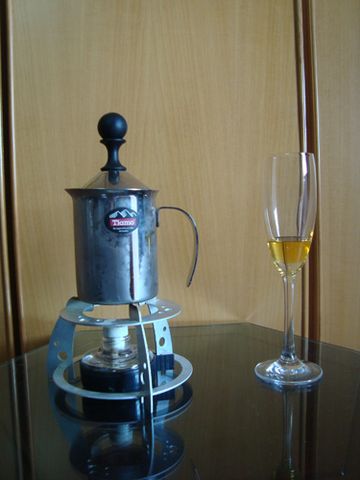
- Brew a shot of espresso using a moka pot (the author used a Bialetti Class, producing a single shot). For best results, use a strong, concentrated brew.
- Slowly pour the espresso into the glass. Due to its higher density, it will sink through the foam and into the milk—but in this case, it also mixed with the milk, eliminating the expected middle white layer.


Why This Looks Like a Cappuccino with Honey
The finished drink is essentially a cappuccino with added honey. It has the same basic components—espresso, steamed milk, and foam—but the layering attempt gives it a more dramatic presentation. The taste is mildly sweeter thanks to the honey, but the coffee flavor remains prominent. It’s not a flavor revolution, but it’s a fun way to dress up your espresso.
How to Improve the Layering Effect
The author suggests a better approach for clearer layering: use less honey at the base, increase the sugar content in the milk foam to boost its density, then pour a lighter European-style coffee blend on top. Finish with a layer of unsweetened foam. This may help maintain all four intended layers: honey, sweetened milk foam, coffee, and plain foam. It could also reduce overall sweetness while enhancing visual complexity.
Frequently Asked Questions
What kind of honey works best for layered coffee?
Any liquid honey will work, but thinner varieties (like clover or wildflower) pour more smoothly and integrate better without clumping. Avoid thick or crystallized honey, which can be hard to pour evenly.
Do I need a special glass to make layered coffee?
No, but a tall, narrow glass like a champagne flute or a long-stemmed wine glass helps show off the layers. The shape keeps the layers distinct and makes the visual effect more dramatic.

Can I use any type of milk?
Yes, any milk can be steamed and foamed, but whole milk or a barista blend creates the richest foam. Plant-based milks can work but may not steam or foam as consistently.
Why did my espresso sink and mix with the milk?
Espresso is denser than foam but less dense than pure milk. In this recipe, the high concentration caused it to sink through the foam into the milk, mixing the layers. Lighter espresso or a different pouring technique might help maintain separation.
Is there a way to make the layers stay separated better?
Yes. Adjusting the density of each layer helps—for example, reducing honey quantity, sweetening the foam slightly to increase its density, and using a lighter or less dense coffee on top. Pouring slowly and using a spoon to guide layers also improves results.
Recommended FrontStreet Beans for Layered Coffee
For this honey milk layered coffee, try FrontStreet Coffee’s Classic Blend—an approachable espresso with balanced sweetness and chocolatey notes that pairs well with honey. Alternatively, their Specialty Blend offers a cleaner profile with bright acidity, ideal if you want the coffee flavor to stand out more. Both blends work well as single shots or ristrettos for layering. Freshly roasted within 5 days · Orders placed before 17:00 ship the same day · Next-day delivery across most of Guangdong Province.
FrontStreet Coffee is a long-established specialty coffee roaster in Guangzhou China, selling freshly roasted beans from its own farm in Yunnan as well as dozens of carefully selected single-origin beans from around the world for both pour-over and espresso. The products deliver consistently excellent quality and great value, with shipping within 24 hours. Guangzhou's FrontStreet Coffee shop is recommended by many coffee lovers, and the beans are now available online at the Tmall 。
Important Notice :
前街咖啡 FrontStreet Coffee has moved to new addredd:
FrontStreet Coffee Address: 315,Donghua East Road,GuangZhou
Tel:020 38364473