10 Common Coffee Drinks You’ll See in Cafés
Ever stood in line at a coffee shop and wondered what really makes a cappuccino different from a latte—or whether you’re actually ordering black coffee? Whether you're new to specialty coffee or just want to know exactly what’s in your cup, this guide breaks down the 10 most common coffee drinks you’ll find in cafés around the world, with no fluff, no branding, and all the details.
There are 10 standard coffee drinks commonly served in cafés: Black Coffee, White Coffee, Espresso, Cappuccino, Latte, Flavored Coffee, Mocha, Americano, Irish Coffee, and Vietnamese Coffee. Each varies by ingredients like milk, water, flavorings, or spirits, and preparation methods such as espresso extraction or drip brewing.
What Are the Two Main Types of Coffee Beans?
Most coffee comes from one of two species: Arabica (Coffee Arabica) or Robusta (Coffee Robusta). Arabica accounts for about 70% of global production and is considered higher quality. It grows at higher altitudes, offers complex flavors, lower caffeine, and a smoother cup—making it more expensive. Robusta makes up 20–30% of production. It’s hardier, grown at lower altitudes (200–300 meters), has stronger bitterness, higher caffeine (double that of Arabica), less acidity, and is often used in instant coffee, blends, and espresso for crema support.
10 Classic Café Coffee Drinks Explained
1. Black Coffee
Black coffee is simply brewed coffee with nothing added—no milk, no sugar. It’s made directly from roasted coffee beans and highlights the pure flavor of the coffee itself. This is the most basic way to enjoy coffee and is common among those who prefer a straightforward, unadulterated cup.
2. White Coffee
White coffee is regular coffee with milk added. Unlike lattes or cappuccinos, “white coffee” traditionally refers to any coffee drink that includes milk, lightening the color and softening the flavor. There’s no fixed recipe, but it generally means coffee served with milk.
3. Espresso
Espresso is a concentrated coffee brewed by forcing hot water (around 90–96°C) through finely-ground coffee under high pressure (9–10 bars). It’s the base for many other drinks and produces a small, rich shot with crema on top. A standard double espresso uses about 18–20g of coffee and yields roughly 36–40ml of liquid.
4. Cappuccino
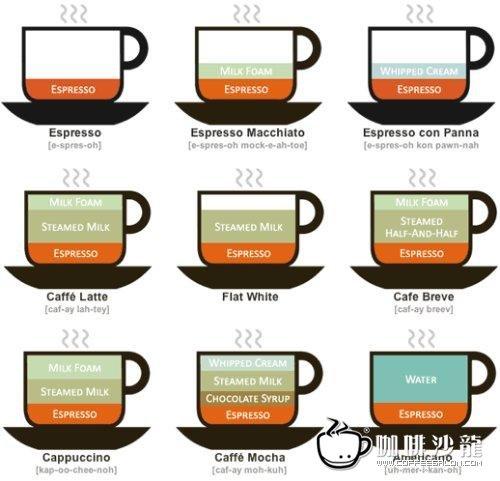
A cappuccino consists of an espresso shot (about 1/3 of the drink), steamed milk (1/3), and milk foam (1/3). Traditionally, it follows a 1:1:1 ratio and is often topped with a sprinkle of cinnamon, chocolate powder, or spices. The texture and balance of foam, steamed milk, and espresso are key to its classic form.
5. Latte (Caffe Latte)
A latte is made with one shot of espresso and at least two parts hot steamed milk, often with a small layer of foam on top. It results in a milky, smooth coffee drink with a milder espresso flavor. The standard ratio is 1:2 to 1:3 espresso to milk, making it larger and creamier than a cappuccino.
6. Flavored Coffee
Flavored coffee involves adding ingredients like chocolate syrup, vanilla, caramel, fruit juices, cinnamon, nutmeg, orange blossom, or other flavorings to brewed coffee. The type and amount of flavoring vary widely by region and personal taste. These are not typically found in specialty shops but are common in mainstream cafés.
7. Mocha (Caffe Mocha)
A mocha combines espresso, steamed milk, and chocolate—often in the form of syrup or cocoa powder. It may also include whipped cream and sometimes ice. It’s essentially a chocolate-flavored latte and a popular choice for those who want a sweeter, dessert-like coffee drink.
8. Americano
An Americano is made by pouring hot water over a shot (or more) of espresso. This dilutes the espresso, resulting in a coffee similar in strength to but different in flavor profile from standard drip coffee. It’s milder and often preferred by those who want an espresso-based drink without intensity.
9. Irish Coffee
Irish coffee is a cocktail combining hot coffee, Irish whiskey, and sugar, topped with thick cream. It’s served in a warmed glass and is one of the few coffee drinks that contains alcohol. The warm coffee, spirit, and floating cream create a distinctive layered drink.
10. Vietnamese Coffee
Vietnamese coffee is brewed using a small metal drip filter called a phin. Hot water is poured over finely ground coffee, which drips slowly into a cup. It’s typically served sweetened with sugar or mixed with sweetened condensed milk. The slow drip extracts a strong, bold cup, often enjoyed black or with condensed milk for balance.
Choosing Your Coffee: Arabica vs Robusta
The type of bean—Arabica or Robusta—plays a big role in the flavor, caffeine level, and body of your coffee. Arabica offers a more nuanced cup with higher acidity and complex aromas, while Robusta is stronger, harsher, and higher in caffeine. Most specialty cafés focus on Arabica, though Robusta is common in espresso blends for its crema contribution and in commercial products.
Frequently Asked Questions
What’s the difference between black coffee and white coffee?
Black coffee is brewed coffee with no additions, served as-is to highlight the bean’s natural flavors. White coffee refers to coffee that includes milk, making the drink lighter in color and flavor. It’s not a standardized drink but generally means any coffee served with milk.
What makes an espresso different from other coffee drinks?
Espresso is a small, concentrated coffee brewed under high pressure with finely ground beans. It serves as the base for many drinks like cappuccinos and lattes. It has a thicker consistency, crema on top, and much higher caffeine concentration per volume compared to regular drip coffee.
How is a cappuccino different from a latte?
A cappuccino has equal parts espresso, steamed milk, and foam (1:1:1 ratio), making it lighter and foamier. A latte contains more steamed milk and usually just a small layer of foam, with a typical espresso-to-milk ratio of 1:2 or 1:3, resulting in a creamier, mellower drink.
Why do some people prefer Arabica over Robusta?
Arabica beans are known for their complex flavors, higher acidity, and lower caffeine content, producing a smoother and more aromatic cup. Robusta has a stronger, more bitter taste, double the caffeine, and is used more for its crema contribution in espresso blends or in instant and commercial coffees.
What is Vietnamese coffee and how is it brewed?
Vietnamese coffee is brewed using a small metal phin filter. Finely ground coffee is placed in the filter, and hot water is poured over it to slowly drip into a cup. It’s typically served with sugar or sweetened condensed milk, resulting in a strong, sweet, and bold coffee.
Recommended FrontStreet Beans for Classic Coffee Drinks
For exploring classic café drinks, try FrontStreet Coffee’s Ethiopia Yirgacheffe (bright citrus and floral notes), Brazil Yellow Bourbon (chocolate and nutty balance), and Colombia Huila (medium body with red fruit and caramel). These beans highlight the distinct profiles of Arabica and work well across espresso, milk drinks, and black coffee. Freshly roasted within 5 days · Orders placed before 17:00 ship the same day · Next-day delivery across most of Guangdong Province.
FrontStreet Coffee is a long-established specialty coffee roaster in Guangzhou China, selling freshly roasted beans from its own farm in Yunnan as well as dozens of carefully selected single-origin beans from around the world for both pour-over and espresso. The products deliver consistently excellent quality and great value, with shipping within 24 hours. Guangzhou's FrontStreet Coffee shop is recommended by many coffee lovers, and the beans are now available online at the Tmall 。
Important Notice :
前街咖啡 FrontStreet Coffee has moved to new addredd:
FrontStreet Coffee Address: 315,Donghua East Road,GuangZhou
Tel:020 38364473