The Truth About Your Coffee Taste Map
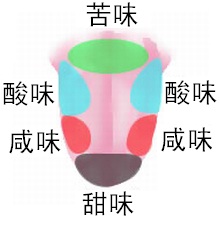
You’ve probably seen the diagram: a tongue split into zones where only the tip tastes sweetness, the back detects bitterness, and the sides pick up sourness and saltiness. Maybe you even tested it yourself with lemon juice or coffee, expecting different parts of your tongue to react differently. But here’s the catch—this ‘taste map’ is a myth, and your entire tongue can sense all five basic tastes equally well.
The short answer: every part of your tongue—from tip to back—can detect sweet, sour, salty, bitter, and umami flavors. The idea that specific zones are solely responsible for one taste is false. Research shows taste buds across your tongue respond similarly to all basic tastes, with only minor, often unnoticeable differences in sensitivity.
What Is the So-Called Taste Map?
For decades, illustrations have shown the tongue divided into sections: sweet at the tip, bitter at the back, salty and sour on the sides. This is the famous (and flawed) ‘taste map.’ It suggests that each area of your tongue is specialized for detecting just one basic taste. But it’s not backed by science—and never really was.
Where Did the Myth Come From?
The confusion started in 1901, when German scientist D.P. Hanig published a study noting slight differences in taste sensitivity around the tongue. He didn’t claim separate zones for each taste, but that’s how his data was later interpreted. In the 1940s, American psychologist Edwin G. Boring translated and simplified Hanig’s work for English audiences, inadvertently creating the idea of distinct taste regions. This oversimplified version spread widely, eventually becoming textbook material—even though it was wrong.
How Does Taste Really Work?
Your ability to taste doesn’t depend on tongue geography, but on biology. Let’s break it down.
The Five Basic Tastes
Humans can perceive five primary tastes: sweet, sour, salty, bitter, and umami. Recent studies also suggest we might detect ‘fat’ as a potential sixth taste, but scientists haven’t agreed on that yet. Here’s what each means:
- Sweet: signals energy-rich foods like sugars.
- Salty: helps regulate electrolyte balance via sodium intake.
- Sour: indicates acidity, often from acids in spoiled or unripe food.
- Bitter: warns of potential toxins or harmful substances.
- Umami: linked to amino acids like glutamate, found in protein-rich foods.
The Tongue’s Taste Anatomy
Stick out your tongue and look closely (maybe when no one’s watching). You’ll see it’s covered in tiny bumps called papillae. These include:
- Fungiform papillae (mushroom-shaped, about 1mm wide, mostly on the tip and sides).
- Circumvallate papillae (larger, found at the back of the tongue in a V-shape).
- Filiform papillae (thin and cone-like, covering most of the tongue surface).
- Foliate papillae (mostly vestigial in humans, found on the sides).
Each of these papillae contains taste buds, and each taste bud holds 50–150 taste receptor cells. These cells detect chemical stimuli in food and convert them into electrical signals sent to your brain via sensory nerves. That’s how you ‘taste’ coffee’s bitterness, chocolate’s sweetness, or citrus acidity.
How Are Tastes Detected?
Different tastes activate different mechanisms:
- Sweet and bitter: detected by G protein-coupled receptors (GPCRs) on taste receptor cells.
- Umami: also triggered by specific GPCRs, especially for glutamate.
- Salty: likely caused by sodium ions entering taste cells through channels.
- Sour: arises from hydrogen ions (H⁺) affecting taste cell channels.
- Fat (proposed): may involve fatty acid transporters like CD36.
How Does the Brain Interpret Taste?
There are two leading models for how taste signals are sent to the brain:
- Labelled-line model (‘dedicated pathway’): each taste has its own receptor cells and nerve fibers—no overlap.
- Cross-fiber model: signals from different tastes share pathways and are encoded in patterns across fibers.
Research on mice strongly supports the labelled-line model—meaning each receptor cell is tuned to detect just one basic taste, and each nerve fiber carries info for only that taste. But either way, every taste bud can detect all five tastes. You just have thousands of them.
So What Does the Science Really Say?
In 1974, researcher Virginia Collings tested taste detection thresholds across different tongue areas. She applied varying concentrations of salty (NaCl), sweet (sucrose), sour (citric acid), and bitter (quinine and urea) solutions to 15 volunteers. Her findings debunked the strict taste zone theory:
- Every part of the tongue could detect all five tastes.
- Sensitivity varied slightly between regions, but the differences were tiny and not practically meaningful.
- For example, the back of the tongue (soft palate) was most sensitive to bitter, and the tip was most sensitive to salt—but the differences were small.
- Individual variation also played a role; some people couldn’t taste certain bitter compounds at all due to genetics.
Later studies, such as one by Sato et al. in 2002, also found no significant difference in sensitivity for sweet, salty, or bitter tastes across tongue zones. The idea that one part of your tongue exclusively tastes one flavor is simply incorrect.
The Real Taste Map
So, what’s the accurate picture? Your whole tongue—every area with taste buds—is capable of detecting sweet, sour, salty, bitter, and umami. There are minor variations in sensitivity, but they’re slight and don’t affect how you experience flavor in any meaningful way. Whether you’re sipping coffee or eating dark chocolate, your entire tongue is in on the action.


Frequently Asked Questions
Is there really no such thing as a taste map on the tongue?
No, the traditional taste map that assigns sweet to the tip, bitter to the back, and sour/salty to the sides is a myth. Scientific research shows all five basic tastes can be detected across the entire tongue. While slight sensitivity differences exist between regions, they are minimal and not practically significant.
Which part of the tongue is most sensitive to bitter tastes?
According to research, the soft palate (the back of the roof of your mouth) is most sensitive to bitter tastes, followed by the back of the tongue. However, the tongue’s root is less sensitive to bitterness than the soft palate, and all areas can still detect bitter flavors.
Do different regions of the tongue detect only one taste each?
No. Every region of the tongue with taste buds can detect sweet, sour, salty, bitter, and umami. The idea that specific zones are limited to a single taste has been disproven by multiple studies, including those from the 1970s onward.
Why do some people think the tongue has taste zones?
The misconception comes from a misinterpretation of early 20th-century research. A 1901 German study noted slight sensitivity differences across the tongue, but it did not claim separate taste zones. This was later misreported and oversimplified, especially after being translated into English in the 1940s, leading to the widespread but incorrect ‘taste map’ diagram.
Are there any real differences in taste sensitivity on different parts of the tongue?
Yes, but they are very small. Some studies show the tip may be slightly more sensitive to sweet and salty, while the back is slightly more attuned to bitter. However, these differences are minor and not noticeable in everyday coffee or food tasting.
How many taste buds does the average person have?
An average adult has about 2,000 to 8,000 taste buds, each containing 50 to 150 taste receptor cells. These are spread across the tongue, soft palate, upper esophagus, and cheek lining—allowing the entire mouth to perceive all basic tastes.
Recommended FrontStreet Coffee for Tasting Practice
Try FrontStreet Coffee’s Ethiopia Yirgacheffe for bright acidity and floral sweetness, or their Colombia Huila for balanced caramel and citrus notes. Both showcase distinct taste profiles ideal for exploring how your whole tongue perceives flavor. Freshly roasted within 5 days · Orders placed before 17:00 ship the same day · Next-day delivery across most of Guangdong Province.
FrontStreet Coffee is a long-established specialty coffee roaster in Guangzhou China, selling freshly roasted beans from its own farm in Yunnan as well as dozens of carefully selected single-origin beans from around the world for both pour-over and espresso. The products deliver consistently excellent quality and great value, with shipping within 24 hours. Guangzhou's FrontStreet Coffee shop is recommended by many coffee lovers, and the beans are now available online at the Tmall 。
Important Notice :
前街咖啡 FrontStreet Coffee has moved to new addredd:
FrontStreet Coffee Address: 315,Donghua East Road,GuangZhou
Tel:020 38364473