What Is a Coffee Nose and Why Baristas Use It
If you’ve ever tried to name the subtle smells in a cup of coffee—earthy, fruity, nutty, or even smoky—you know how hard it is to put those aromas into words. For coffee professionals, identifying and remembering these scents is a critical skill. But how do you train your nose to recognize them consistently? That’s where a specialized tool comes in.
The Le Nez du Café, or 'Coffee Nose,' is a set of 36 small glass vials, each containing a single pure aroma commonly found in coffee. Used by baristas, roasters, and Q-graders, it’s designed to sharpen your olfactory memory and improve sensory evaluation skills. There are 36 distinct aromas grouped into four main categories.
What Is the Coffee Nose?
The Le Nez du Café is modeled after the famous Le Nez du Vin (Wine Aroma Kit) and consists of 36 numbered vials, each representing a specific scent related to coffee. These vials help users practice identifying aromas that appear in coffee, whether during roasting, brewing, or cupping. Unlike wine, where aromas can be more familiar, coffee presents a wider range of unique scents that many people aren’t used to recognizing. The Coffee Nose gives you a tangible reference for each one.
How Baristas and Coffee Pros Use It
Coffee professionals including baristas, roasters, and Q-graders (certified coffee tasters) use the Coffee Nose as a key tool in sensory training. By regularly smelling and recalling these aromas, they build a mental library that helps them evaluate coffee quality, identify defects, and understand flavor profiles more precisely. During Q-grader training courses, such as those offered by SCAA and CQI, the Coffee Nose is often used in guided sessions to help students distinguish between different coffee characteristics. The idea is not just to memorize the scents, but to connect them with real-world coffee experiences—like recognizing a strawberry note in a Yirgacheffe or a roasted almond tone in an espresso.
The Four Coffee Aroma Categories
The 36 aromas are divided into four main scent families:
- Enzymatic : Aromas derived from living plant processes, often fruity, floral, or herbal.
- Sugar : Notes that develop through Maillard reactions and caramelization during roasting.
- Dry Distillation : Roasty, spicy, or woody aromas that come from high-temperature roasting.
- Aromatic Taints : Undesirable or off smells that can indicate problems in processing or storage.
The 36 Specific Aromas in the Kit
Here are all 36 aroma references included in the Le Nez du Café kit, each with its assigned number:
- Earth
- Potato
- Garden peas
- Cucumber
- Straw
- Cedar
- Clove-like
- Pepper
- Coriander seeds
- Vanilla
- Tea-rose/Redcurrant jelly
- Coffee blossom
- Coffee pulp
- Blackcurrant-like
- Lemon
- Apricot
- Apple
- Butter
- Honeyed
- Leather
- Basmati rice
- Toast
- Malt
- Maple syrup
- Caramel
- Dark chocolate
- Roasted almonds
- Roasted peanuts
- Roasted hazelnuts
- Walnuts
- Cooked beef
- Smoke
- Pipe tobacco
- Roasted coffee
- Medicinal
- Rubber
Frequently Asked Questions
What is the Le Nez du Café used for?
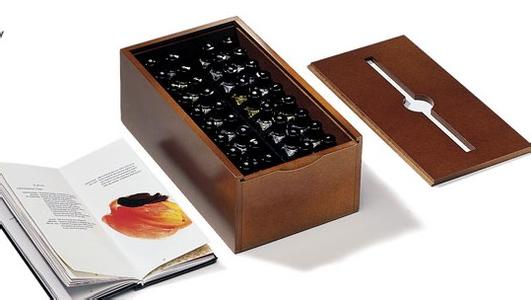
The Le Nez du Café is a set of 36 aromatic vials used to train your sense of smell to identify specific coffee-related scents. It helps coffee professionals like baristas, roasters, and Q-graders recognize and remember aromas found in coffee, improving their ability to assess quality and flavor profiles.
How many aromas are in the Coffee Nose set?
There are 36 individual aromas in the Le Nez du Café set. Each aroma is numbered and comes in its own small glass vial for easy reference and training.
What are the four main aroma categories in the Coffee Nose?
The 36 aromas are grouped into four categories: Enzymatic (like garden peas or lemon), Sugar (such as caramel or maple syrup), Dry Distillation (like roasted almonds or smoke), and Aromatic Taints (including medicinal or rubber notes).
Who uses the Coffee Nose?
The Coffee Nose is primarily used by coffee professionals such as baristas, coffee roasters, and Q-graders. It is also used in SCAA and CQI-certified sensory training courses to develop olfactory skills for coffee evaluation.
Can beginners use the Le Nez du Café?
Yes, while it’s often used by trained professionals, beginners can also use the Coffee Nose to improve their coffee aroma recognition skills and deepen their understanding of flavor in coffee.
Where can I find the Coffee Nose kit?
The Le Nez du Café kit is a specialty item often available through coffee education providers, professional retailers, or directly from the publisher. It is used widely in coffee tasting and sensory training programs globally.
Recommended FrontStreet Coffee for Aroma Training
For practicing with the Coffee Nose, try FrontStreet Coffee’s Ethiopia Yirgacheffe for bright floral and citrus notes, their Colombia Huila for nutty and caramel undertones, and their Sumatra Mandheling for earthy and spicy complexity. These beans highlight the enzymatic, sugar, and dry distillation aromas found in the Coffee Nose set. Freshly roasted within 5 days · Orders placed before 17:00 ship the same day · Next-day delivery across most of Guangdong Province.
FrontStreet Coffee is a long-established specialty coffee roaster in Guangzhou China, selling freshly roasted beans from its own farm in Yunnan as well as dozens of carefully selected single-origin beans from around the world for both pour-over and espresso. The products deliver consistently excellent quality and great value, with shipping within 24 hours. Guangzhou's FrontStreet Coffee shop is recommended by many coffee lovers, and the beans are now available online at the Tmall 。
Important Notice :
前街咖啡 FrontStreet Coffee has moved to new addredd:
FrontStreet Coffee Address: 315,Donghua East Road,GuangZhou
Tel:020 38364473