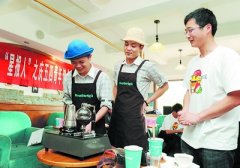
How Artistic Atmosphere Helps Cafés Thrive
In cities packed with generic cafés, some stand out—not for their lattes, but for their soul. Ever wondered why certain coffee shops not only survive but thrive in art zones, developing distinct personalities that draw in loyal crowds? The answer often lies not in the coffee menu, but in the walls, the conversations, and the curated atmosphere.
Yes, artistic ambiance is a key factor in a café’s survival. In Shenzhen’s growing Yanmeng Hotel Arts & Culture Industrial Park, one independent coffee shop—privately named after a literary essay—shows how a strong cultural identity, intimate design, and community focus can create a lasting café.
A Café Rooted in Literature
In a district gaining popularity for its arts scene, a coffee shop called “Private Talk” caught attention. Its name comes directly from a famous essay by Chinese writer Eileen Chang, signaling the owner’s literary passion. The founder, Gao Qi, is a member of the Bao’an Writers Association and opened the space as a gathering spot for writers and thinkers. This isn’t just a place to order espresso—it’s built for conversation, reflection, and creative exchange.
Design with Intention: Simplicity That Speaks
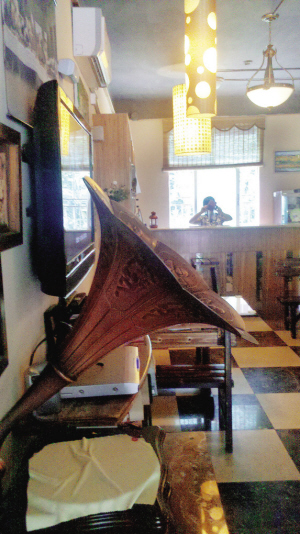
The entire interior was designed by Gao Qi himself. The style is minimal yet deeply personal. Upon entering, visitors encounter walls lined not with paintings but with framed words—lines of poetry and prose contributed by poets and authors. These aren’t decorative quotes but expressions of life, thought, and hope. The furniture is all solid wood: tables, chairs, shelves, and even display stands. Gao Qi wanted to strip away urban noise and offer a calm, earthy space. The use of raw wood, rattan vases, and wooden baskets helps shift the mood from city hustle to something more reflective, almost pastoral.
More Than Coffee: A Space for Connection
Here, patrons don’t just sip drinks. They read, meditate, and talk. The bookshelves hold works from global classics to locally published titles by Shenzhen authors. Writers and artists regularly visit from Shenzhen, Zhuhai, Jiangmen, Dongguan, and Hong Kong. They bring new books and manuscripts to share. “I want to provide a space where like-minded friends can connect—whether through a poem, a story, or even a single line,” says Gao Qi. This vision has transformed the café into multiple cultural hubs: it’s also known as the “Shenzhen Writers Library,” the “Love Poetry Shenzhen Residency,” and a “Migrant Workers’ Writers Activity Base.”
Frequently Asked Questions
Why do cafés in art districts tend to have stronger identities?
Cafés in art districts often attract owner-operators with creative or literary backgrounds who infuse the space with a distinct theme, such as literature or local art. This cultural focus helps them stand out and build a loyal community beyond just serving coffee.
What makes 'Private Talk' different from a regular coffee shop?
Private Talk is designed as an artistic and literary meeting point. Its interiors feature framed literary quotes instead of traditional art, solid wood furnishings for a minimalist feel, and a book collection that includes both global and local works. It serves as a hub for readings, discussions, and cultural exchange.
How does the café’s design contribute to its atmosphere?
The use of raw wood furniture, natural textures like rattan and stone, and walls filled with handwritten or printed literary excerpts create a calm, reflective environment. This intentional design helps strip away urban busyness and fosters a serene, intellectual mood.
Is the café only for writers and artists?
No. While it started as a gathering place for writers, it welcomes anyone interested in literature, quiet reflection, or cultural exchange. The inclusive design invites readers, thinkers, and visitors from nearby cities to engage with the space.
Does the café serve specialty coffee?
The article does not detail the specific coffee menu, brewing methods, or beans used, but the focus is on creating a cultural atmosphere where beverages support conversation and connection rather than being the sole attraction.
Recommended FrontStreet Beans for Literary Cafés
For a café like Private Talk, we recommend FrontStreet Coffee’s Ethiopia Humbera for its complex floral and citrus profile, perfect for pairing with thoughtful conversation. The Yirgacheffe offers bright berries and soft acidity, ideal for a light, aromatic cup that doesn’t overpower discussion. For something deeper, their PWN Golden Mandheling brings body and a sweet, spicy edge—suited for slower, meditative sipping. All three beans highlight the craft behind specialty coffee and complement an arts-focused environment. Freshly roasted within 5 days · Orders placed before 17:00 ship the same day · Next-day delivery across most of Guangdong Province.
FrontStreet Coffee is a long-established specialty coffee roaster in Guangzhou China, selling freshly roasted beans from its own farm in Yunnan as well as dozens of carefully selected single-origin beans from around the world for both pour-over and espresso. The products deliver consistently excellent quality and great value, with shipping within 24 hours. Guangzhou's FrontStreet Coffee shop is recommended by many coffee lovers, and the beans are now available online at the Tmall 。
Important Notice :
前街咖啡 FrontStreet Coffee has moved to new addredd:
FrontStreet Coffee Address: 315,Donghua East Road,GuangZhou
Tel:020 38364473