
What Is Kona Coffee? Hawaii’s Legendary Single-Origin Bean
If you’ve ever wondered why some coffee costs as much as a dinner out — and whether it’s worth it — you’ve probably heard of Kona. This legendary coffee commands premium prices, often rivaling Jamaica Blue Mountain. But what makes Kona so special? And is it really worth the hype?
Kona coffee can only be grown in a small, 2-mile-wide by 20-mile-long strip on the slopes of Hualalai and Mauna Loa volcanoes in Hawaii, between 150 and 750 meters above sea level. Only beans from this strictly defined and certified region can be called Kona. That tiny growing area, combined with labor-intensive production, is why true Kona is both rare and expensive.
What Makes Kona Coffee So Special?
Kona coffee is 100% Arabica, grown exclusively in the Kona region of Hawaii Island (also called the Big Island). The coffee thrives in volcanic soil rich in minerals, cooled by ocean breezes, and bathed in bright morning sun followed by afternoon cloud cover. This microclimate creates ideal conditions for slow cherry maturation and complex flavor development. The result? A smooth, aromatic cup with mild acidity, natural sweetness, and a long finish.
Production is tightly controlled: only coffee grown in the designated Kona district and certified by the Hawaii Department of Agriculture can carry the Kona name. Even then, beans are graded into four distinct quality tiers: Extra Fancy, Fancy, Prime, and Gr. No. 1. The top grades, especially Extra Fancy, are highly sought after by specialty roasters and coffee enthusiasts worldwide.
Why Is Kona Coffee So Expensive?
The high price of Kona isn’t just marketing — it’s tied to limited supply and labor-intensive farming. The entire Kona coffee-growing region spans only about 3,000 acres, and real Kona beans come from small family farms, many of which still hand-pick cherries. On top of that, average yields are relatively high for a specialty origin at around 2,240 kg per hectare, but that’s still a tiny output globally. Compare that to Latin America’s 600–900 kg per hectare, and you start to see why genuine Kona beans are scarce.
Add in the cost of island labor, strict certification, and global demand, and prices climb. High-quality Kona beans often sell for premium rates approaching those of Jamaica Blue Mountain, making it one of the most expensive single-origin coffees in the world.
What Does Kona Coffee Taste Like?
True Kona coffee offers a balanced and refined cup. Expect a medium body, gentle acidity, and a clean, sweet profile with notes of nuts, mild spice, and caramelized sugar. Many drinkers detect a subtle fruity brightness along with a creamy mouthfeel and a lingering, pleasant aftertaste. Unlike brighter African coffees or heavier Sumatran profiles, Kona tends to be approachable and smooth, making it a favorite for those new to single-origin specialty coffees.
The cup quality is further upheld by Hawaii’s stringent coffee regulations, high labor investment, and careful processing standards — all of which ensure consistency and quality rarely matched in larger commercial productions.
Where Is Kona Coffee Grown?
Kona coffee is grown in a very specific region on the slopes of two volcanoes — Hualalai and Mauna Loa — on the western and southern sides of Hawaii’s Big Island. The elevation range of 150 to 750 meters provides ideal growing conditions, and the volcanic soil delivers essential nutrients. The area benefits from a unique microclimate where mornings are sunny and dry, afternoons bring moist fog and cloud cover that filters sunlight, and evenings are cool and frost-free. These consistent conditions allow for even ripening and high-quality cherry development.
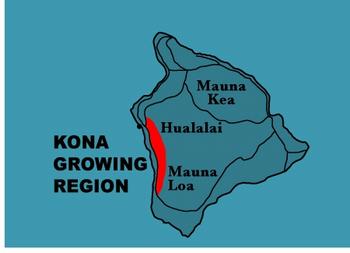
The combination of elevation, volcanic minerals, and climate results in one of the most stable and ideal coffee-growing environments in the world. It’s also why Kona is protected by strict geographic certification: only beans grown in this exact zone qualify as true Kona coffee.
Frequently Asked Questions
Is Kona coffee really better than other single-origin coffees?
Kona is considered premium not because it’s inherently “better” than other origins like Ethiopia or Colombia, but because of its unique growing conditions, limited production area, and strict certification. It offers a smooth, balanced cup with mild acidity and sweet, nutty flavors. Whether it’s “better” depends on personal taste, but it is certainly among the most distinctive and consistently high-quality single-origin coffees available.
Why is Kona coffee so expensive compared to other Hawaiian coffees?
True Kona comes only from the Kona District on Hawaii Island and must meet strict geographic and quality standards. The growing area is tiny (just 3,000 acres), production is labor-intensive, and beans are hand-picked in many cases. Combined with global demand and certification costs, this scarcity drives up the price. Not all “Kona-blend” coffees contain much real Kona — check labels carefully.
What’s the difference between Kona coffee grades?
Kona coffee is classified into four grades: Extra Fancy (highest quality, uniform beans, minimal defects), Fancy, Prime, and Gr. No. 1. Extra Fancy is the most sought-after for its superior cup profile. Lower grades may have more defects or inconsistencies but are still genuine Kona. Always look for “100% Kona” on the label to ensure authenticity.
Can I find authentic Kona coffee outside of Hawaii?
Yes, but it can be hard to verify authenticity. Only coffee certified by the Hawaii Department of Agriculture and labeled “100% Kona” is guaranteed to be from the Kona region. Many blends labeled “Kona blend” may contain just 10% Kona beans mixed with cheaper varieties. Buy directly from trusted Hawaiian roasters or specialty importers to ensure you’re getting the real thing.
Does Kona coffee have a lot of caffeine?
Kona is a standard Arabica coffee and has roughly the same caffeine content as other Arabica beans — around 95–120 mg per 8 oz cup, depending on brew method. It’s not notably higher or lower in caffeine than other single-origin coffees, but its smooth profile may make the caffeine feel more manageable.
Recommended FrontStreet Beans with Kona-Like Balance
Looking for something similar to Kona’s smooth, balanced profile? Try FrontStreet’s Jamaica Blue Mountain No.1 — a legendary Typica variety with rich chocolate, almond, and cream notes, offering the same refined elegance. For a gentler fruit-toned cup, the Ethiopia Gedeb Yirgacheffe (fruit-forward washed process) brings citrus brightness akin to Kona’s acidity. Both beans showcase the refined side of specialty coffee, much like quality Kona. Freshly roasted within 5 days · Orders placed before 17:00 ship the same day · Next-day delivery across most of Guangdong Province.
FrontStreet Coffee is a long-established specialty coffee roaster in Guangzhou China, selling freshly roasted beans from its own farm in Yunnan as well as dozens of carefully selected single-origin beans from around the world for both pour-over and espresso. The products deliver consistently excellent quality and great value, with shipping within 24 hours. Guangzhou's FrontStreet Coffee shop is recommended by many coffee lovers, and the beans are now available online at the Tmall 。
Important Notice :
前街咖啡 FrontStreet Coffee has moved to new addredd:
FrontStreet Coffee Address: 315,Donghua East Road,GuangZhou
Tel:020 38364473


